


Landing your first full-time tech job in Canada can feel like running a marathon with no clear finish line. With competition rising and many employers often preferring candidates with experience or even American internships, it is easy to worry about falling behind. Clear career goals and a focused approach can set you apart in the crowded Canadian tech scene. This guide highlights hands-on strategies to help you turn uncertainty into practical job search steps that get real results.
Table of Contents
- 1. Define Your Tech Career Goals Early
- 2. Build a Standout Canadian Tech Resume
- 3. Leverage Online Job Boards and Networks
- 4. Customize Applications for Each Job
- 5. Optimize Your LinkedIn Profile for Canada
- 6. Prepare for Common Tech Interview Questions
- 7. Follow Up Professionally After Interviews
Quick Summary
| Key Insight | Explanation |
|---|---|
| 1. Define Clear Career Goals | Establish clear, SMART career goals to guide your tech journey and job search effectively. |
| 2. Create an ATS-Friendly Resume | Design a resume that highlights quantifiable achievements and aligns with job descriptions to stand out to employers. |
| 3. Utilize Multiple Job Platforms | Use diverse job boards and LinkedIn to explore opportunities, expanding your reach in the Canadian tech market. |
| 4. Customize Each Application | Tailor every job application to specific roles, showcasing your skills and fit for each employer’s needs. |
| 5. Follow Up Professionally | Send a personalized thank-you email post-interview to reaffirm your interest and maintain a positive impression. |
1. Define Your Tech Career Goals Early
Launching a successful tech career starts with crystal clear goals. Understanding where you want to go professionally helps transform your job search from random applications to strategic career building.
Establishing career goals early gives you a roadmap for your professional journey. By creating a comprehensive career plan, you transform vague aspirations into actionable steps. The key is using the SMART framework: Specific, Measurable, Achievable, Relevant, and Time-bound objectives that connect your daily actions to your ultimate career vision.
Start by conducting a thorough self-assessment. Identify your technical skills, personal interests, and core professional values. Research potential roles in technology that align with your strengths. Are you passionate about software development? Interested in cybersecurity? Want to explore data analytics? Each tech sector offers unique career pathways.
Your goals should balance personal passion with market demand. Investigate current job trends, salary ranges, and skill requirements for your target roles. This research helps you prioritize learning and development efforts that make you competitive in the Canadian job market.
Create both short-term and long-term career goals. Short-term goals might include learning a programming language, building a portfolio project, or obtaining a specific certification. Long-term goals could involve becoming a senior software engineer, leading a tech team, or launching your own tech startup.
Pro tip: Map out your tech career goals in a visual roadmap, updating it every six months to track your progress and adapt to changing industry trends.
2. Build a Standout Canadian Tech Resume
Your resume is your professional introduction to potential employers in the competitive Canadian tech job market. Crafting a resume that stands out requires strategic planning and attention to detail.
Designing an effective tech resume means understanding both content and format requirements. Canadian style resume guidelines emphasize clarity, conciseness, and precise representation of your technical skills. Tech recruiters typically scan resumes in seconds, so every word must count.
Start with a clean, professional design that passes Applicant Tracking System (ATS) filters. Use a chronological or combination format that highlights your technical skills and professional experiences. Your resume should include key sections like contact information, professional summary, education, work history, technical skills, and notable achievements.
Focus on quantifiable accomplishments rather than generic job descriptions. Instead of stating “Developed software applications,” write “Developed three mobile applications that increased user engagement by 45% and reduced loading time by 20%.” Specific metrics demonstrate your impact and technical proficiency.
Tailor your resume for each job application by carefully incorporating keywords from the job description. This strategy helps your resume bypass ATS screening and shows direct alignment with employer requirements. Highlight programming languages, technical certifications, project management skills, and relevant technical tools you have mastered.
Pro tip: Create a master resume document with all your experiences, then customize a targeted version for each job application to maximize your chances of getting an interview.
3. Leverage Online Job Boards and Networks
Navigating the Canadian tech job market requires strategic use of online platforms and professional networks. Your digital presence can be a powerful tool in connecting with potential employers and discovering exciting career opportunities.
Job search platforms have revolutionized how tech professionals find employment. LinkedIn, Indeed, and specialized tech job boards like Dice offer robust filtering options that help you target relevant positions efficiently. Each platform provides unique advantages for job seekers in the technology sector.
LinkedIn stands out as a premier professional networking platform. Create a comprehensive profile that showcases your technical skills, projects, and professional achievements. Connect with tech professionals, follow companies in your desired industry, and engage with content related to your career interests. Many Canadian tech recruiters actively search LinkedIn for potential candidates.
Diversify your job search by utilizing multiple platforms. Specialized tech job boards often list opportunities not found on general employment websites. Websites focusing on technology roles can provide more targeted job listings specifically for software developers, data analysts, cybersecurity professionals, and other tech specialties.
Beyond online platforms, attend virtual job fairs, webinars, and professional networking events. These opportunities allow direct interaction with potential employers and provide insights into emerging tech trends in the Canadian job market. Many professional associations offer networking events tailored to recent graduates and early career tech professionals.
Pro tip: Set up automated job alerts on multiple platforms and customize your search filters to receive notifications for roles that precisely match your skills and career goals.
4. Customize Applications for Each Job
Generic job applications are a fast track to the rejection pile. Employers in the Canadian tech market seek candidates who demonstrate genuine interest and precise alignment with their specific role requirements.
Completing job applications carefully requires strategic attention to detail. Your application should function like a tailored suit rather than an off-the-rack solution. This means thoroughly analyzing each job description and crafting a response that speaks directly to the employer’s unique needs.
Begin by breaking down the job description into key skill requirements and technical competencies. Identify specific programming languages, software tools, project management methodologies, and technical certifications the employer highlights. Then systematically demonstrate how your background precisely matches these requirements.
In your resume and cover letter, use the exact language from the job posting. If they mention “Python development” or “agile project management,” mirror those phrases in your application. This approach helps your application pass Applicant Tracking System (ATS) filters and shows recruiters you have carefully read and understood their needs.
Research the company beyond the job description. Understand their technological ecosystem, recent projects, and corporate culture. Reference specific company achievements or innovations in your application to demonstrate genuine interest. This extra effort signals to employers that you are not just seeking any job but are specifically excited about their organization.
Pro tip: Create a master application template with modular sections that can be quickly customized for each job, saving time while ensuring each application feels personalized and targeted.
5. Optimize Your LinkedIn Profile for Canada
Your LinkedIn profile is more than a digital resume it is your professional brand in the Canadian tech job market. A strategic and well crafted profile can be the key to unlocking exciting career opportunities.
Optimizing your LinkedIn profile requires a comprehensive approach that goes beyond simply listing your work history. Think of your profile as a dynamic storytelling platform that showcases your professional journey and potential.
Start with a professional headshot that reflects Canadian business standards. Choose a high quality photo where you appear approachable and confident. Your background banner should represent your professional interests perhaps showcasing technology themes or your professional achievements.
Craft a compelling headline that does more than state your current job title. Include key technical skills and professional aspirations. For example: “Software Developer | Python | Machine Learning Enthusiast | Cloud Computing Specialist” This approach helps recruiters find you through strategic keyword searches.
Your profile summary is prime real estate for telling your professional story. Highlight your technical skills, key achievements, and career objectives. Quantify your accomplishments whenever possible. Instead of saying “Developed software applications” write “Developed three machine learning applications that improved process efficiency by 40%.”
Pro tip: Regularly update your LinkedIn profile with new skills, certifications, and project experiences to demonstrate continuous professional growth and maintain visibility in the Canadian tech job market.
6. Prepare for Common Tech Interview Questions
Tech interviews can feel like navigating a complex maze of technical challenges and behavioral assessments. Strategic preparation transforms these conversations from nerve-wracking encounters into opportunities to showcase your skills.
Interview preparation for tech roles requires a multifaceted approach that goes beyond memorizing technical definitions. Canadian employers seek candidates who demonstrate not just technical knowledge but also critical thinking and communication skills.
Divide your preparation into two critical areas: technical knowledge and communication skills. For technical preparation, focus on core programming concepts, data structures, algorithms, and problem solving strategies. Practice explaining complex technical concepts in simple language a non technical person would understand.
Expect both technical and behavioral questions. Technical questions might involve coding challenges, system design scenarios, or deep dives into your specific technical skills. Behavioral questions assess how you handle workplace challenges, collaborate with teams, and approach problem solving.
Create a structured preparation strategy. Build a repository of concise stories that demonstrate your technical abilities and professional growth. Practice explaining your projects, challenges you have overcome, and the specific technologies you have used. Use the STAR method (Situation, Task, Action, Result) to structure your responses effectively.
Pro tip: Record yourself answering mock interview questions and review the recordings to improve your communication clarity, body language, and technical explanations.
7. Follow Up Professionally After Interviews
The moments after a job interview are critical in solidifying your professional impression. A strategic and thoughtful follow-up can be the difference between being remembered and being forgotten.
Professional interview follow-up practices are essential for maintaining momentum and demonstrating your commitment to potential employers. Your post-interview communication is an opportunity to reinforce your candidacy and show your professionalism.
Send a thank you email within 24 to 48 hours after your interview. This message should be concise, personalized, and reflective of your conversation. Reference specific discussion points that resonated during the interview to show you were attentive and engaged.
Your follow-up email should accomplish three key objectives. First, express genuine appreciation for the interviewer’s time. Second, reiterate your enthusiasm for the role and the company. Third, briefly remind them of your key qualifications that align with their needs.
Include a professional tone that strikes a balance between confidence and respect. Proofread carefully to ensure no grammatical errors or typos that could undermine your credibility. If multiple interviewers were present, send personalized emails to each person with subtle variations highlighting your interaction with them.
Pro tip: Create a follow-up email template beforehand with customizable sections, allowing you to quickly personalize and send a professional response within minutes of your interview.
Below is a comprehensive table summarizing actionable strategies to enhance your success in the Canadian tech job market.
| Strategy | Key Steps | Benefits |
|---|---|---|
| Define Career Goals | Conduct self-assessment; Use SMART framework; Research market demands | Provides a structured path to align passions with industry needs |
| Build Tech Resume | Highlight quantifiable achievements; Tailor resume using keywords; Include all relevant sections | Creates a polished document that captures recruiter attention |
| Use Online Platforms | Optimize LinkedIn profile; Utilize specialized job boards; Engage with professional networks | Expands reach and matches opportunities with skills |
| Customize Applications | Analyze job descriptions for required skills; Personalize resumes and cover letters | Makes applications stand out and aligns with ATS filtering |
| Prepare for Interviews | Practice technical questions and STAR method responses; Record mock interviews | Increases confidence and demonstrates expertise |
| Follow-Up After Interviews | Send customized thank-you emails; Reinforce interest in the position and professionalism | Leaves a memorable impression with potential employers |
Take Control of Your Canadian Tech Career Journey Today
Graduating and stepping into the Canadian tech job market can feel overwhelming with so many steps like defining clear career goals, building standout resumes, and mastering interviews. The key challenge is transforming your aspirations into actionable success while navigating detailed application processes and digital networking. You want a trusted partner that understands these challenges and supports every phase of your pursuit.
GoHires.com is designed to empower you with everything you need—from searching targeted job openings to accessing expert resources on resume writing and interview preparation. Whether you are refining your Canadian style resume or optimizing your LinkedIn profile for local recruiters, this platform centralizes tools and opportunities to elevate your job search.
!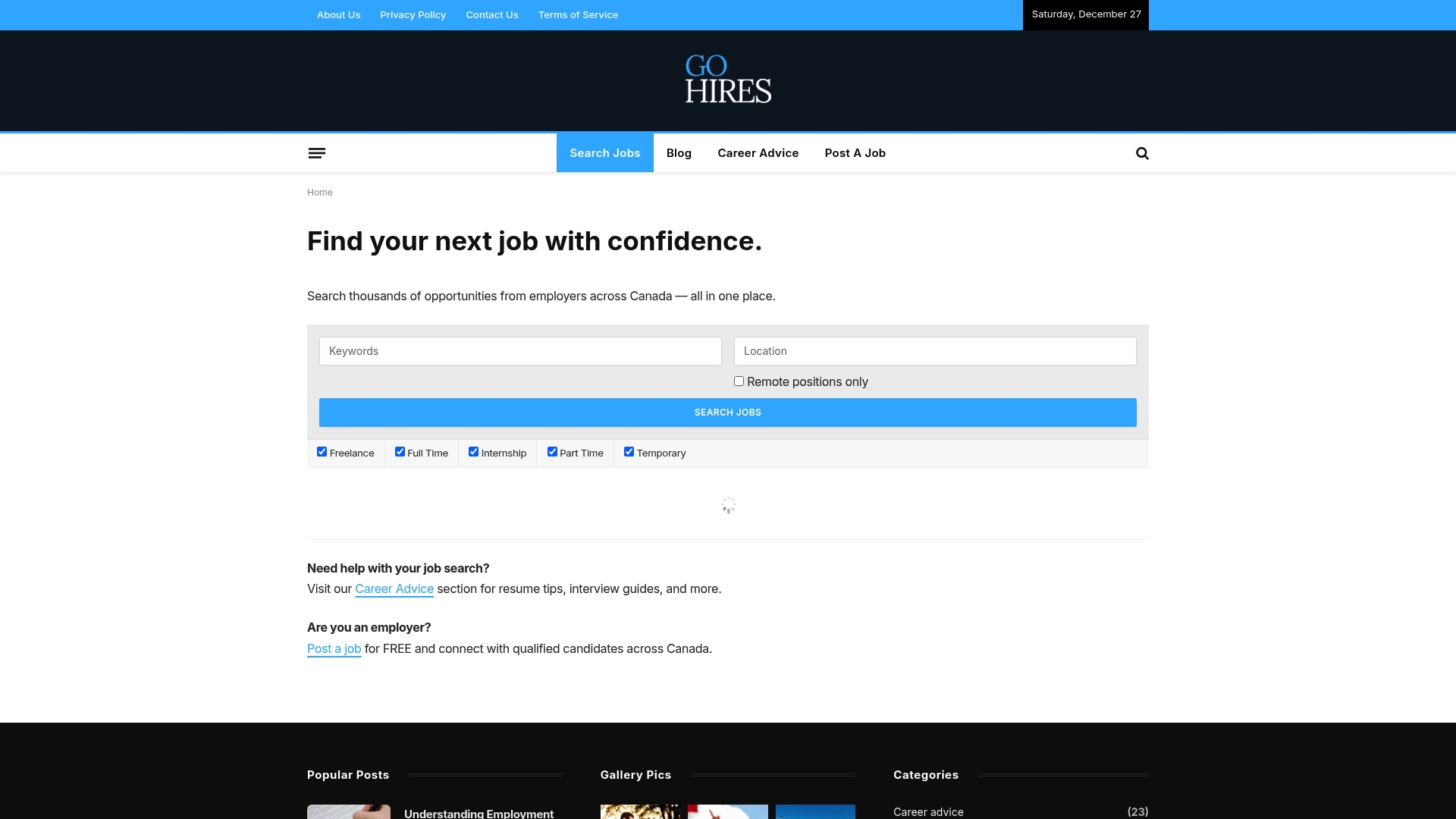
Unlock your potential by exploring new tech roles and connecting directly with employers who value your skills. Don’t wait as competition increases—start your journey with GoHires.com and turn your Canadian tech career goals into reality today.
Frequently Asked Questions
What are the first steps I should take for my job search as a recent graduate?
Begin by defining your career goals clearly. Assess your skills and interests, then create a career plan that includes both short-term and long-term objectives, updating it every six months to track your progress.
How can I make my resume stand out to Canadian employers?
Craft a clear and concise resume that highlights your quantifiable achievements. Focus on specific metrics, such as “Developed three mobile applications that increased user engagement by 45%” to demonstrate your impact.
What job boards should I use to find tech positions?
Utilize platforms like LinkedIn and specialized tech job boards to find relevant positions. Set up job alerts with specific keywords, so you are notified about new openings that match your skills within hours of being posted.
How do I customize my job applications effectively?
Tailor each application by incorporating keywords from the job description and directly addressing the employer’s needs. Break down the job listing to identify crucial skills and competencies, then demonstrate how your background fits those requirements.
What strategies should I use to prepare for tech interviews?
Focus on both technical skills and communication abilities by practicing core programming concepts and behavioral questions. Structure your responses using the STAR method to effectively articulate your experiences and problem-solving approaches.
How can I follow up after an interview to leave a good impression?
Send a personalized thank you email within 24 to 48 hours, referencing specific topics discussed in the interview. This reinforces your interest in the role and highlights your professionalism.