


More than 500,000 international students choose Canadian cities for study and work each year, including many American students aiming to expand their experience abroad. Competing with rising living expenses and strict work hour limits, finding reliable part-time jobs feels urgent for those wanting flexibility and real-world skills. This guide helps you understand key pathways, Canadian rules, and job types so you can confidently build financial independence and a strong professional network during your studies.
Table of Contents
- Defining International Student Work In Canada
- Work Eligibility And Legal Requirements
- Financial Motives And Living Expenses
- Career Growth And Networking Opportunities
- Risks, Work Hour Limits, And Common Challenges
Key Takeaways
| Point | Details |
|---|---|
| Work Eligibility | International students must be enrolled full-time at a designated learning institution and hold a valid study permit to work legally in Canada. |
| Part-Time Work | Students are allowed to work up to 24 hours per week during academic sessions and full-time during breaks to help manage living expenses. |
| Networking Opportunities | Engaging in part-time employment enhances professional networks and develops skills that improve future employability in Canada. |
| Compliance Risks | Students should carefully track work hours to avoid exceeding limits, as violations can lead to serious consequences, including loss of student status. |
Defining International Student Work in Canada
International student work in Canada represents a dynamic opportunity for students to gain professional experience while pursuing their academic goals. Students can engage in multiple employment streams, including on-campus and off-campus positions that align with their educational journey. Canadian immigration regulations provide clear guidelines defining the parameters of student employment across different academic contexts.
The core framework for international student work involves specific eligibility criteria and employment limitations. Students must be enrolled full-time in a designated learning institution and maintain valid study permits. Typically, international students can work up to 24 hours per week during active academic sessions, with the flexibility to work full-time during scheduled academic breaks. These work opportunities are not just financial support mechanisms but critical pathways for gaining practical Canadian work experience.
Employment options for international students span diverse categories. On-campus positions might include roles within university departments, research assistantships, or campus service positions. Off-campus work can encompass part-time jobs in local businesses, internships related to academic programs, and co-op placements that provide direct industry exposure. Importantly, these work experiences are strategically designed to complement academic learning and help students develop professional networks within the Canadian job market.
Here is a summary of key work opportunities for international students in Canada:
| Employment Type | Typical Job Roles | Permit Requirements | Professional Benefit |
|---|---|---|---|
| On-Campus | Library assistant, barista | Study permit only | Campus networks, skill growth |
| Off-Campus | Retail, food service, intern | Study and SIN required | Canadian workplace experience |
| Co-op/Internship | Industry placements | Additional co-op permit | Direct career-specific exposure |
Pro Tip: Always verify your specific work permit conditions and maintain accurate documentation to ensure compliance with Canadian immigration regulations.
Work Eligibility and Legal Requirements
Understanding the legal framework for international student employment in Canada requires careful attention to specific regulatory requirements. Legal compliance for working while studying involves multiple critical factors that students must navigate precisely. International students must maintain full-time enrollment in a designated learning institution and possess a valid study permit with explicit work authorization to legally work in Canada.
The Canadian government establishes clear parameters for student employment. During active academic sessions, students are permitted to work up to 24 hours per week off-campus, with unlimited work hours allowed during scheduled academic breaks. Specialized work scenarios such as co-op placements or internships may require additional permits. Students must also obtain a Social Insurance Number and ensure their employment aligns with their academic program requirements, understanding that violation of these regulations could result in serious consequences including potential loss of student status.
Eligibility for work is closely tied to specific documentation and institutional requirements. International students must be enrolled in programs at designated learning institutions that are at least six months long and leading to a recognized degree, diploma, or certificate. Different work opportunities exist across various contexts—on-campus positions typically do not require additional permits, while off-campus and co-op work have more stringent documentation requirements. Students should maintain meticulous records of their enrollment, study permit, and work hours to demonstrate ongoing compliance.
Pro Tip: Always keep copies of your study permit, enrollment verification, and work documentation in a secure digital and physical location to quickly address any potential immigration inquiries.
Financial Motives and Living Expenses
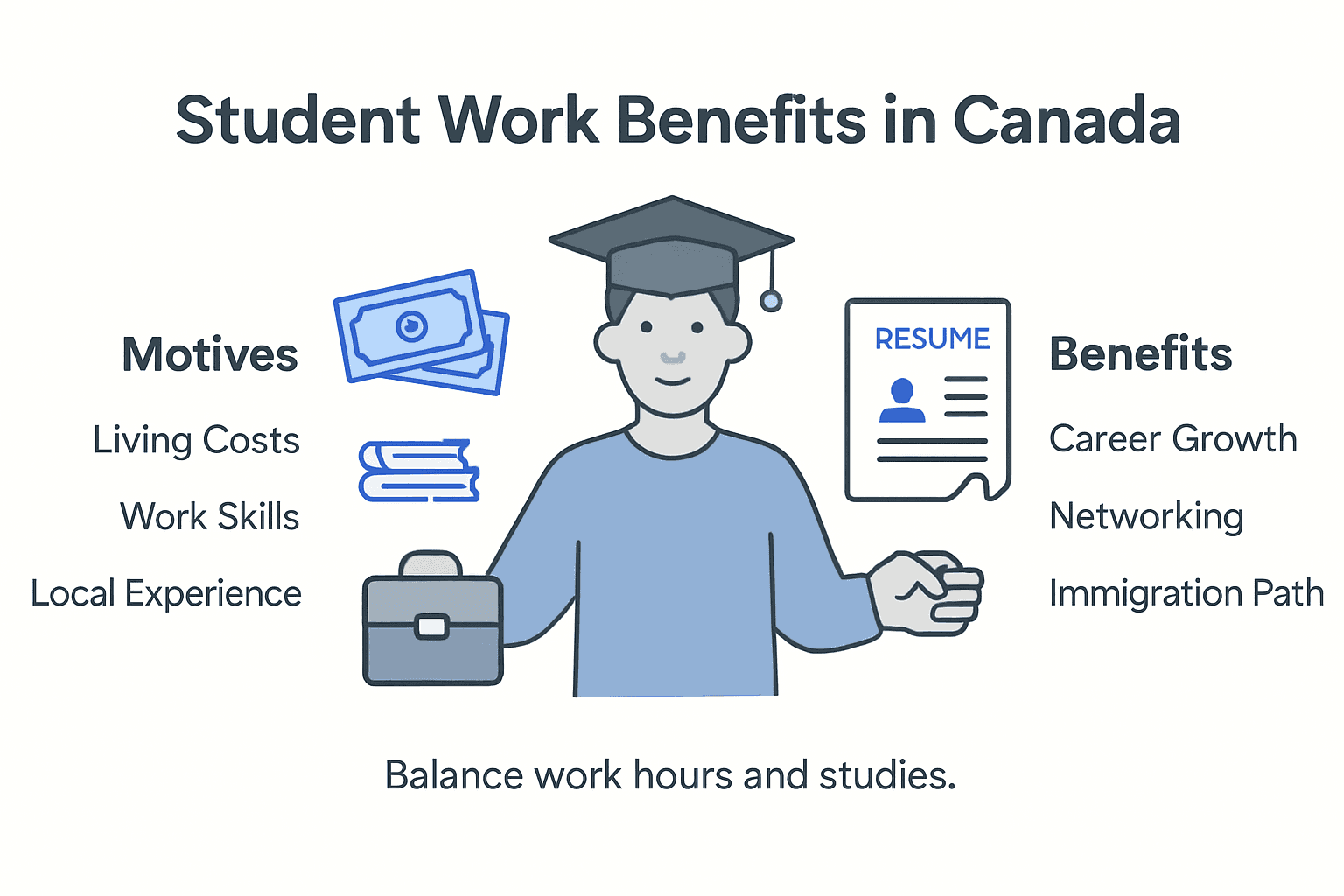
International students in Canada face substantial financial challenges that necessitate strategic employment opportunities. Comprehensive budget management for international students reveals that annual living expenses can range from CAD 15,000 to CAD 20,000, excluding tuition costs. These significant financial demands make part-time work not just a preference, but often a critical necessity for maintaining academic and personal sustainability.
The financial landscape for international students encompasses multiple expense categories including housing, food, transportation, academic materials, and personal needs. Urban centers like Toronto and Vancouver present higher living costs, making strategic employment even more crucial. Working part-time allows students to offset expenses, reduce reliance on family support, and develop financial independence. Beyond immediate monetary benefits, these work experiences provide valuable Canadian workplace exposure, helping students build professional networks and enhance their future employability.
Beyond immediate financial relief, part-time work offers international students profound economic advantages. Students can strategically select jobs aligned with their academic programs, creating opportunities for skill development while earning income. Many employers offer flexible scheduling that accommodates academic commitments, enabling students to balance work and study effectively. The income generated helps cover essential expenses and provides a buffer against unexpected financial challenges, ultimately reducing stress and improving overall academic performance.
To better understand cost management, here is a breakdown of major monthly living expenses for international students:
| Expense Category | Typical Monthly Cost (CAD) | Budgeting Tip |
|---|---|---|
| Housing | $800–$1,500 | Consider shared accommodation |
| Food | $300–$500 | Cook meals to save money |
| Transportation | $90–$150 | Use student transit discounts |
| Academic Materials | $100–$200 | Buy used textbooks |
| Personal/Misc. | $150–$300 | Track discretionary spending |
Pro Tip: Create a detailed monthly budget spreadsheet tracking all expenses and potential income sources to maintain precise financial control during your studies.
Career Growth and Networking Opportunities
International students working in Canada gain extraordinary opportunities for professional development beyond mere income generation. Strategic career development for international students emphasizes the critical role of workplace experiences in building long-term career trajectories. By engaging in part-time work, students develop crucial professional skills, cultural competencies, and industry-specific knowledge that significantly enhance their future employability in the Canadian job market.

Networking represents a fundamental advantage of working while studying in Canada. Each part-time job serves as a potential gateway to professional connections, offering students opportunities to interact with managers, colleagues, and industry professionals. These interactions help international students understand workplace dynamics, develop communication skills, and create potential references for future job applications. Career fairs, professional workshops, and institutional networking events further complement workplace connections, providing structured environments for expanding professional networks.
Canadian employers value international students who demonstrate proactive career development through work experience. Part-time employment allows students to showcase adaptability, cross-cultural communication skills, and professional initiative. Many industries actively seek candidates with diverse backgrounds and international perspectives, making work experience during studies a significant differentiator in competitive job markets. Students can strategically select roles that align with their academic programs, creating synergies between academic learning and practical work experience that strengthen their professional profiles.
Pro Tip: Document your workplace achievements and skills gained during part-time work to create a compelling narrative for future job applications and interviews.
Risks, Work Hour Limits, and Common Challenges
International students in Canada must navigate complex legal requirements surrounding employment, with strict work hour regulations defining their professional boundaries. Typically, students are permitted to work up to 24 hours per week during academic sessions, with unlimited hours allowed during scheduled breaks. Exceeding these limits can result in severe consequences, including potential loss of student status, future work permit restrictions, and even deportation.
The financial pressures faced by international students create significant challenges in maintaining compliance with work regulations. Urban living expenses and tuition costs can tempt students to work additional hours or seek unauthorized employment. Student organizations have raised concerns about the potential for exploitation, highlighting the delicate balance between financial survival and maintaining legal work status. The risk of unintentional violations is particularly high for students who may not fully understand the nuanced immigration and employment regulations.
Coping with work limitations requires strategic planning and proactive approach. Students must carefully track their work hours, maintain clear communication with employers, and prioritize their academic commitments. Understanding the potential risks involves more than simply counting hours—it requires a comprehensive approach to managing time, finances, and legal obligations. International students should regularly consult their educational institution’s international student office and stay updated on current immigration policies to ensure full compliance and protect their academic and professional futures.
Pro Tip: Maintain a detailed log of your work hours and consistently verify your work permit conditions to prevent unintentional regulatory violations.
Find Your Perfect Part-Time Job and Boost Your Canadian Experience Today
Navigating the challenges of balancing work hour limits and gaining valuable Canadian workplace experience can feel overwhelming. Whether you are searching for part-time roles that fit within the 24-hour work restriction during academic sessions or looking for internships and co-op opportunities aligned with your career goals, you need a trusted platform designed to support international students just like you. Many students struggle to find relevant jobs that meet legal eligibility requirements while managing living expenses and building professional networks. Gohires.com is created to make your search easier, faster, and more effective.
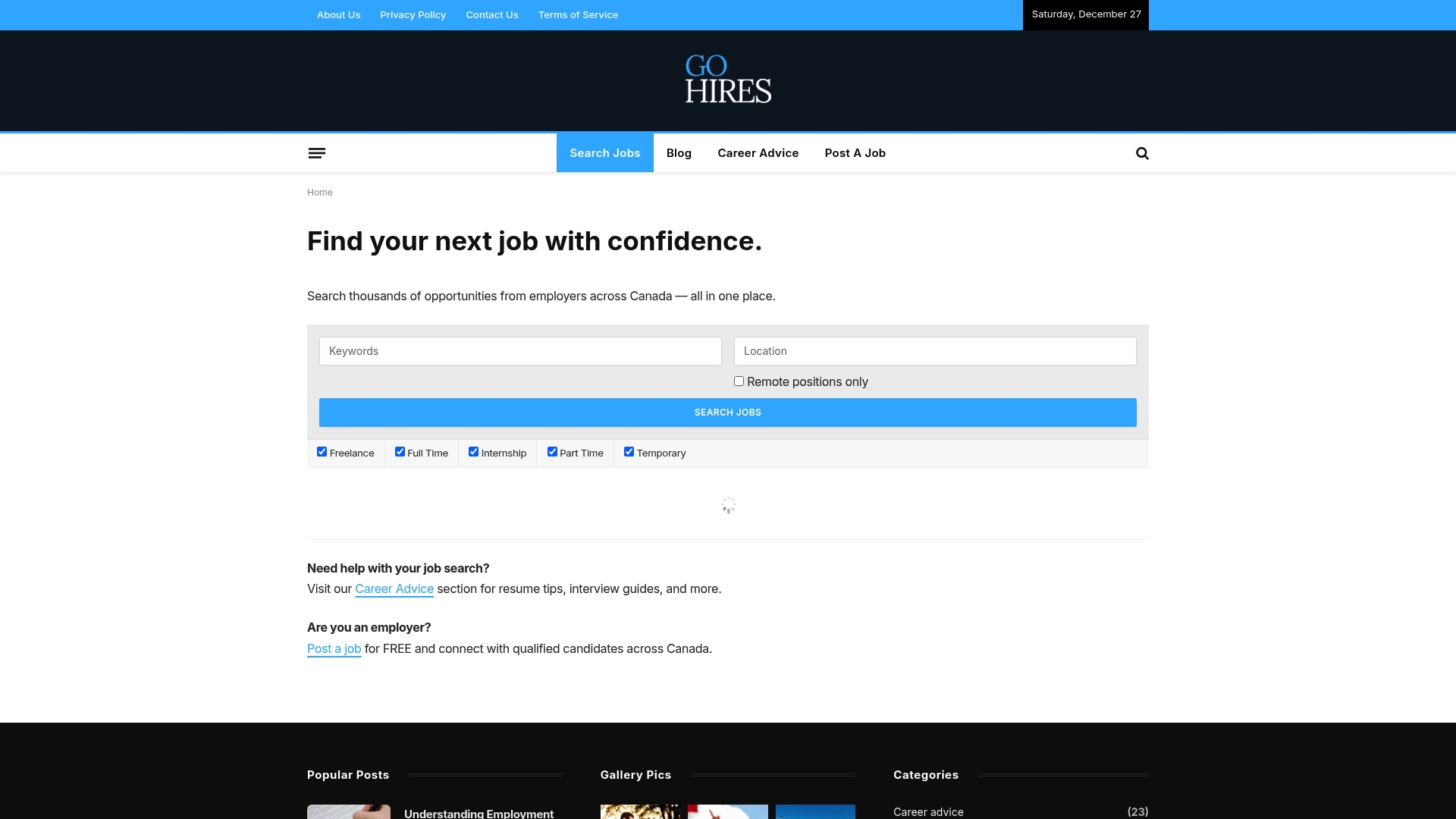
Start exploring thousands of Canadian job openings right now at Gohires.com. With user-friendly search tools, you can find positions by location, job type, and industry that comply with Canadian immigration work regulations. Plus, gain access to career advice, resume tips, and interview guidance to strengthen your applications. Don’t wait until financial pressures or work hour limits get tougher. Take control of your student work journey and discover opportunities that fuel your career growth while supporting your studies.
Frequently Asked Questions
What are the main reasons international students work while studying in Canada?
International students work while studying in Canada primarily to offset living expenses, gain practical experience, develop professional networks, and enhance their employability after graduation.
How many hours can international students work during their studies in Canada?
International students can work up to 24 hours per week during active academic sessions and may work full-time during scheduled academic breaks.
What types of jobs are available for international students in Canada?
International students can find various job opportunities, including on-campus positions like research assistantships, off-campus work in local businesses, and internships related to their academic programs.
What are the legal requirements for international students to work in Canada?
To work legally, international students must maintain full-time enrollment in a designated learning institution and possess a valid study permit with work authorization, along with obtaining a Social Insurance Number.