


Most Canadian and American employers receive hundreds of job applications for every entry-level position—standing out is more competitive than ever. For recent graduates and international students in Canada, a carefully crafted cover letter delivers a clear edge over generic submissions. This guide breaks down each step you need to create a customized and compelling cover letter, tailored to both the job and employer, giving you the confidence to present your best self.
Table of Contents
- Step 1: Research The Job And Employer
- Step 2: Organize Your Key Qualifications
- Step 3: Draft Your Cover Letter Content
- Step 4: Customize To Match The Job Posting
- Step 5: Proofread And Finalize Your Letter
Quick Summary
| Key Point | Explanation |
|---|---|
| 1. Research the Job Thoroughly | Understand the job description and employer by analyzing their website, LinkedIn, and job postings for key skills and culture. |
| 2. Organize Your Qualifications | Develop a narrative that connects your skills to the job requirements, focusing on relevant experiences and quantifying achievements. |
| 3. Draft with Purpose | Create a compelling narrative for your cover letter, highlighting skills, experiences, and achievements that align with the job needs. |
| 4. Customize for Each Application | Tailor your cover letter to precisely mirror the job posting’s language and requirements to stand out as the ideal candidate. |
| 5. Proofread for Perfection | Review your letter multiple times for errors and clarity, using a checklist to ensure a polished and professional presentation. |
Step 1: Research the Job and Employer
Researching the job and employer is your strategic first move in crafting a compelling cover letter that stands out. Your goal is to demonstrate deep understanding and genuine interest in the specific role and organization.
Start by thoroughly analyzing the job description and company details. Dive into the company website, explore their LinkedIn profile, and carefully review every section of the job posting. Look for key skills, values, and qualities they emphasize. Pay attention to language used in the description and mission statements that reveal the company culture and expectations.
While researching, create a targeted list of skills and experiences that directly match what the employer seeks. For instance, if they mention teamwork and problem solving, highlight specific projects where you demonstrated these abilities. Your research allows you to customize your cover letter so it feels like a personalized pitch rather than a generic application. The more precisely you can align your background with their needs, the more likely you are to catch a hiring manager’s attention.
Pro tip: Use professional networking platforms and company review sites to gain insider insights about the organizational culture and specific team dynamics that might not be obvious from the official job description.
Here’s a quick comparison of methods for gathering company insights during job search research:
| Research Method | Depth of Insight | Common Uses | Potential Limitations |
|---|---|---|---|
| Company Website | Official information | Mission, values, leadership | May omit cultural details |
| Employee perspectives | Team structure, recent hires | Limited to public posts | |
| Review Sites (e.g., Glassdoor) | Unfiltered feedback | Workplace culture, salaries | Subjective reviewer opinions |
| Networking | Insider knowledge | Team dynamics, hidden factors | Access may be restricted |
Step 2: Organize Your Key Qualifications
Organizing your key qualifications is about creating a strategic narrative that connects your background directly to the job requirements. Your goal is to craft a compelling story that showcases why you are the ideal candidate.

Structuring your cover letter effectively means breaking down your qualifications into clear and purposeful paragraphs. Start with a concise introduction that states your professional interest. Then dedicate two focused body paragraphs to highlighting specific experiences and skills that match the job description. Each paragraph should feature concrete examples demonstrating your capabilities.
Think of your cover letter as a targeted marketing document. Select achievements that directly align with the employer’s needs. If the job description emphasizes project management, share a specific project where you successfully led a team and delivered results. Quantify your accomplishments whenever possible. Numbers and metrics make your claims more credible and help the hiring manager visualize your potential impact.
Pro tip: Create a side-by-side comparison worksheet matching your skills and experiences against the job requirements to ensure you highlight the most relevant qualifications.
Step 3: Draft Your Cover Letter Content
Drafting your cover letter content is your opportunity to transform your professional background into a compelling narrative that captures a hiring manager’s attention. Your goal is to create a dynamic document that breathes life into your resume and demonstrates your unique value.
Crafting an effective cover letter requires strategic storytelling that goes beyond simply listing your qualifications. Begin by addressing the hiring manager directly and introducing yourself with confidence. Share brief but powerful stories that illustrate your skills and connect them directly to the job requirements. Each paragraph should serve a specific purpose: introduce your professional interest, highlight your most relevant achievements, and demonstrate how your background makes you an exceptional candidate.
Remember that your cover letter is not a replica of your resume. Instead, it is a narrative that provides context and depth to your professional experiences. Choose achievements that showcase your problem solving abilities, leadership potential, and alignment with the company’s goals. Use specific examples that prove you understand the role and have the skills to excel. Aim to create a document that is concise yet impactful generally no more than one page in length.
Pro tip: Read your draft aloud to ensure it sounds natural and conversational while maintaining a professional tone.
Step 4: Customize to Match the Job Posting
Customizing your cover letter to match the job posting is the secret weapon that transforms an average application into a standout candidate profile. Your mission is to create a laser focused document that speaks directly to the employer’s specific needs and expectations.
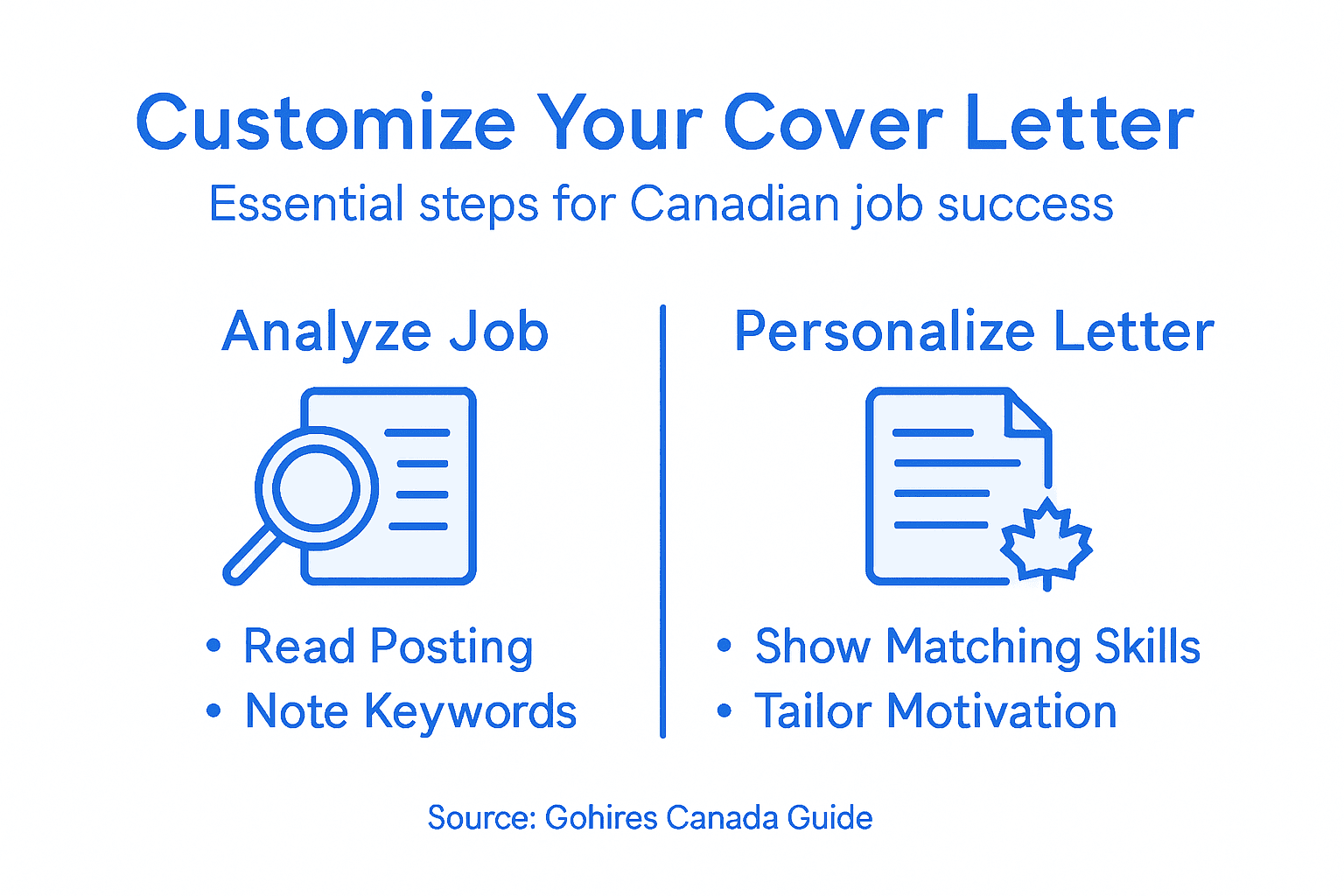
Tailoring your application precisely requires careful analysis of the job description. Start by thoroughly reviewing the posting and identifying key skills, qualifications, and responsibilities. Pay close attention to the language used and mirror those exact terms in your cover letter. If the job description emphasizes collaborative project management, highlight similar experiences from your background using matching terminology.
Think of customization as strategic translation. Your goal is to demonstrate that you are not just qualified but the ideal match for this specific role. Analyze each job requirement and develop targeted examples that prove you possess those exact skills. Quantify your achievements whenever possible using concrete metrics that demonstrate your impact. For example instead of saying you managed a team say you led a team of 12 professionals that increased productivity by 27 percent. This approach shows you have not only read the job description but deeply understand what the employer seeks in an ideal candidate.
Pro tip: Create a color coded comparison document matching your skills directly against the job requirements to ensure you address every key qualification.
Step 5: Proofread and Finalize Your Letter
Proofreading and finalizing your cover letter is your final opportunity to ensure a polished professional document that represents your best self. This critical step transforms your draft from good to exceptional by eliminating errors and refining your presentation.
Professional letter proofreading techniques require a systematic approach. Read your document multiple times using different strategies. First scan for overall flow and coherence. Then conduct a detailed grammar and spelling check. Use digital tools like spell check but do not rely on them exclusively. Print a physical copy and read it aloud this helps catch awkward phrasing and subtle errors that digital screens might miss.
Consider recruiting a second set of eyes to review your cover letter. A trusted friend professional colleague or career mentor can provide objective feedback and catch mistakes you might overlook. Pay special attention to critical details like correct company name spelling contact information and ensuring you have addressed the specific hiring manager. Verify that your formatting remains consistent professional and aligns with standard Canadian business communication practices.
Pro tip: Create a final checklist with key proofreading criteria and systematically review each item before submitting your application.
Use this proofreading checklist to finalize your cover letter with confidence:
| Proofreading Step | Goal | Tools or Resources | Common Mistakes to Avoid |
|---|---|---|---|
| Read for flow | Logical progression | Printed copy | Awkward phrasing |
| Grammar and spelling | Error-free writing | Spell check, colleagues | Overreliance on digital tools |
| Check details | Accuracy of specifics | Job posting | Misspelling company names |
| Consistent formatting | Professional presentation | Templates, guides | Irregular font or alignment |
Elevate Your Job Hunt with Tailored Support from Gohires
Crafting a compelling cover letter is just one crucial step toward job success in Canada. This process requires deep understanding of the role, precise customization to match job descriptions, and flawless presentation. Yet without the right opportunities to apply your tailored cover letter, all the effort can feel like a shot in the dark. At Gohires.com, we solve this challenge by providing a centralized hub where Canadian job seekers can connect with employers across industries and employment types.
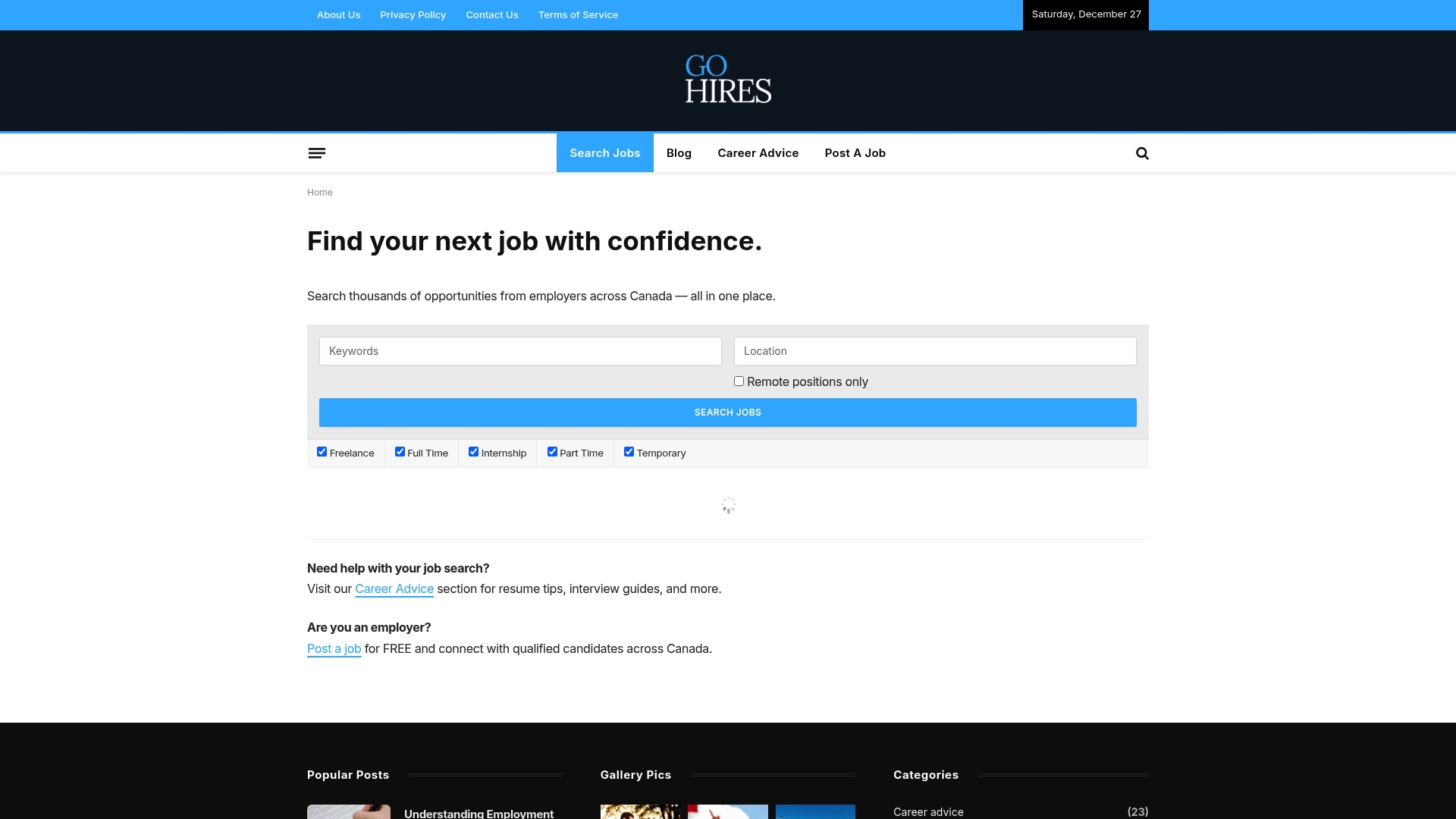
Take control of your career journey today by exploring thousands of job openings designed to match your skills and ambitions. Use our advanced search to find full-time, part-time, freelance, and internship positions that align with your carefully researched qualifications. Combine your perfectly crafted cover letter with real-time access to employers actively hiring in Canada. Visit Gohires.com now to turn your cover letter success strategy into tangible job offers and start your path toward your dream role.
Discover expert resume tips and interview guidance as well at Gohires.com to complement your cover letter efforts. Don’t wait to seize your opportunity—navigate the Canadian job market with confidence using Gohires as your trusted partner.
Frequently Asked Questions
How can I effectively research a job and employer for my cover letter?
To effectively research a job and employer, start by analyzing the job description and company details from their website and LinkedIn profile. Create a targeted list of skills and experiences that match the job requirements, ensuring you can customize your cover letter to reflect the employer’s values and needs.
What key qualifications should I highlight in my cover letter?
Highlight key qualifications by aligning your experiences with the job requirements outlined in the job posting. Use specific examples from past roles to demonstrate your capabilities, such as mentioning a project where you led a team to success, which can help showcase your relevant skills.
How do I start drafting my cover letter content?
Begin drafting your cover letter content by introducing yourself directly to the hiring manager and stating your professional interest in the position. Focus on telling your story through compelling examples that illustrate your skills and align with the job responsibilities highlighted in the posting.
What are the best practices for customizing my cover letter?
Customize your cover letter by mirroring the language used in the job description and emphasizing experiences that reflect the exact skills the employer is seeking. This approach not only shows your qualifications but also demonstrates your understanding of the role, making your application stand out.
How can I ensure my cover letter is error-free before submission?
To ensure your cover letter is error-free, proofread it multiple times with a focus on grammar, spelling, and overall flow. Consider printing a copy to read aloud, as this can help you catch awkward phrases and mistakes that you might not notice on a screen.
What should I include in a final checklist to review my cover letter?
Create a final checklist that includes reviewing for flow, checking grammar and spelling, verifying the accuracy of details, and ensuring consistent formatting. This systematic approach will help you submit a polished and professional cover letter that accurately reflects your qualifications.