


Over 80 percent of international students in Canada view internships as vital for gaining hands-on experience and preparing for the competitive job market. Whether you’re an American student adjusting to Canadian work culture or planning your next career move, internships offer practical training and real connections with local employers. This guide clarifies the types, eligibility, and legal rights tied to Canadian internships so you can confidently shape your professional future.
Table of Contents
- Defining Internships in Canada: Core Concepts
- Major Types of Internships for Students
- Eligibility Criteria and Application Process
- Key Labor Laws and Student Rights
- How Internships Benefit International Students
Key Takeaways
| Point | Details |
|---|---|
| Internship Definition | Internships in Canada are structured programs that connect academic knowledge with practical workplace experience for students and recent graduates. |
| Types of Internships | Key internship categories include academic co-op placements and professional development internships, each with distinct purposes and structures. |
| Eligibility Requirements | Students must meet specific criteria, such as having a valid study permit and being enrolled in a recognized post-secondary institution, to partake in internships. |
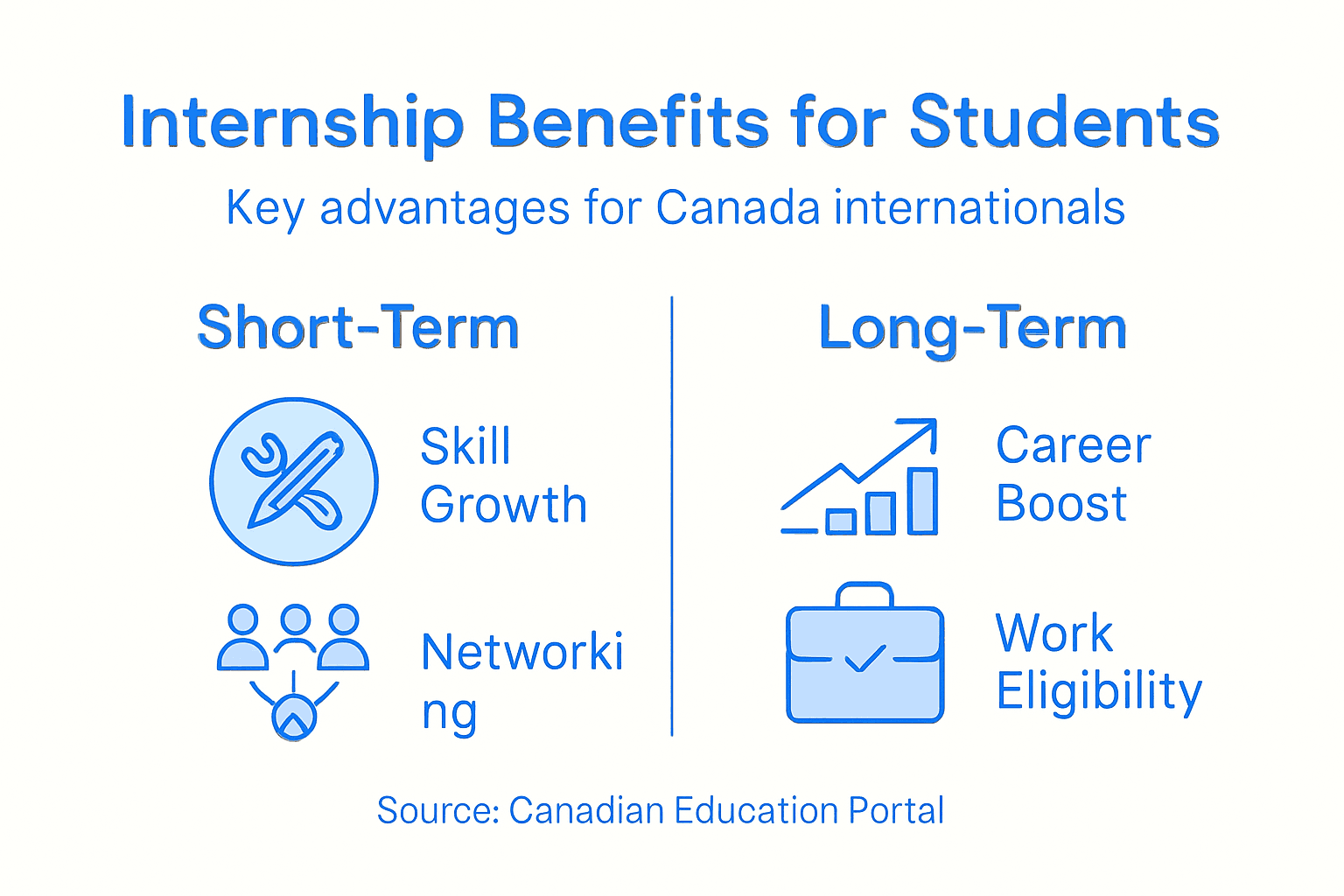
| Benefits for International Students | Internships offer international students crucial work experience, skill development, and networking opportunities essential for career advancement in Canada. |
Defining Internships in Canada: Core Concepts
Internships in Canada represent strategic learning opportunities designed to bridge academic knowledge with professional workplace experience. These structured programs enable students and recent graduates to gain practical skills within their chosen fields while simultaneously connecting with potential employers. Canada’s official internship definitions emphasize that interns are individuals primarily seeking knowledge and professional development rather than traditional employment.
Typically, Canadian internships fall into two primary categories: academic-mandated co-op placements and professional development internships. Academic internships are directly integrated into educational programs, requiring students to complete work terms as part of their degree requirements. Professional development internships, by contrast, are more flexible opportunities often pursued by individuals seeking to enhance their career trajectories or transition between professional domains.
The Post-Secondary Co-op/Internship Program highlights critical eligibility criteria for student internships. Participants must be full-time students enrolled in validated post-secondary institutions, with internships forming a mandatory component of their academic curriculum. These programs strategically connect students with employers across diverse industries, creating pathways for meaningful professional engagement and potential future employment.
Internship Characteristics in Canada:
Here’s a quick reference comparing co-op and professional development internships in Canada:
| Aspect | Academic Co-op Internships | Professional Development Internships |
|---|---|---|
| Integration with Studies | Mandatory part of degree | Optional and flexible arrangement |
| Supervision | Closely monitored by institution | Often employer supervised |
| Typical Compensation | Frequently paid roles | Payment varies by placement |
| Career Networking | Partnerships with academic partners | Builds external employer relationships |
- Structured learning experiences
- Direct connection to academic programs
- Hands-on professional skill development
- Potential pathway to future employment
- Regulated by specific labor standards
Pro tip: Research your specific academic program’s internship requirements early and maintain proactive communication with your university’s career services department to maximize your internship opportunities.
Major Types of Internships for Students
Internships for students in Canada encompass diverse opportunities designed to provide practical workplace experiences aligned with academic and professional development goals. Multiple internship categories exist, each offering unique pathways for students to gain valuable skills and industry exposure.

The primary types of internships include academic co-op placements, professional development internships, and specialized work experience programs. Academic co-op internships are structured work terms integrated directly into educational curricula, requiring students to complete mandatory work experiences as part of their degree requirements. These placements typically provide supervised professional environments where students can apply theoretical knowledge to real-world scenarios.
The Student Work Placement Program supports various internship models across different industries. These include research-focused internships, employer-specific training programs, and cross-sector professional development opportunities. International students often participate in these programs, with specific work permit requirements ensuring compliance with Canadian labor regulations.
Major Internship Categories:
- Academic Co-op Placements
- Professional Development Internships
- Research-Based Internships
- Employer-Specific Training Programs
- Federal Student Internship Initiatives
Internship Type Comparison:
| Internship Type | Duration | Compensation | Academic Credit |
|---|---|---|---|
| Co-op Placement | 4-8 months | Typically Paid | Often Required |
| Professional Dev | 3-6 months | Variable | Optional |
| Research Internship | 2-12 months | Partially Paid | Frequently Credited |
Pro tip: Investigate your specific academic program’s internship requirements and maintain close communication with your university’s career services to maximize your professional development opportunities.
Eligibility Criteria and Application Process
Navigating the internship application process in Canada requires understanding specific work permit and eligibility requirements. International students must meet several key criteria to participate in Canadian internship programs, with careful attention to academic and immigration regulations.
To be eligible for internships, students typically need to fulfill comprehensive requirements. These include maintaining a valid study permit, being enrolled in a recognized post-secondary institution, and having a program that mandates work experience as part of the curriculum. Academic institutions play a crucial role in validating internship placements, often serving as intermediaries between students and potential employers.
The Public Service Commission’s internship application process highlights the importance of institutional support and comprehensive documentation. Students must prepare a detailed application package, which usually includes academic transcripts, letters of recommendation, and a comprehensive resume demonstrating relevant skills and educational background. Some internship programs may require additional steps such as interviews, skills assessments, or specialized testing.
Key Eligibility Requirements:
- Valid study permit
- Full-time student status
- Program requiring work experience
- Good academic standing
- Compliance with work hour restrictions
Application Documentation Checklist:
| Document | Purpose | Required |
|---|---|---|
| Study Permit | Legal Work Authorization | Yes |
| Academic Transcript | Performance Verification | Yes |
| Internship Approval Form | Institutional Confirmation | Yes |
| Resume | Skill Demonstration | Yes |
| Reference Letters | Professional Recommendation | Recommended |
Pro tip: Start preparing your internship application materials at least three months in advance and schedule regular consultations with your university’s career services to ensure comprehensive preparation.
To help international students plan for internship success, review this timeline of crucial steps:
| Timeline Phase | Action Item | Purpose |
|---|---|---|
| 4-6 Months Prior | Research internship programs | Identify suitable options early |
| 3 Months Prior | Prepare application materials | Ensure complete and accurate documents |
| 2 Months Prior | Submit applications | Meet program deadlines |
| 1 Month Prior | Complete interviews and tests | Demonstrate required skills |
| Last Month | Finalize work permits and agreements | Secure legal compliance and placement |
Key Labor Laws and Student Rights
Understanding the legal framework governing internships is crucial for international students in Canada. Federal labor standards establish comprehensive protections for interns, ensuring fair treatment and defined workplace rights across various professional settings.
Intern classification in Canada carries specific legal implications. While student interns are not considered traditional employees, they are still protected under specific labor regulations. The Canada Labour Code provides guidelines that distinguish between paid and unpaid internships, with careful provisions addressing minimum wage requirements, working hours, and workplace safety standards. International students must understand that their legal status impacts their rights, with some protections varying based on their specific internship category and immigration context.
The student employment programs in the federal government highlight additional nuanced legal considerations. Eligibility often requires full-time student status, Canadian citizenship or permanent residency, and compliance with specific age and work restrictions. These regulations aim to balance educational opportunities with workforce integration while protecting student workers from potential exploitation.
Key Student Intern Rights:
- Minimum wage protections
- Safe working environment
- Limited standard working hours
- Protection against workplace discrimination
- Right to refuse unsafe work conditions
Legal Protections Comparison:
| Intern Type | Wage Rights | Overtime | Work Restrictions |
|---|---|---|---|
| Paid Intern | Full Protection | Limited | Standard Hours |
| Academic Intern | Variable | Typically No | Educational Terms |
| Federal Program Intern | Comprehensive | Regulated | Specific Guidelines |
Pro tip: Document all workplace interactions and maintain open communication with both your academic institution and internship supervisor to ensure your legal rights are consistently respected.
How Internships Benefit International Students
Internships offer transformative opportunities for international students seeking to establish professional roots in Canada. Work experience opportunities provide crucial pathways for skill development, cultural integration, and potential long-term career advancement in the Canadian job market.
Beyond academic learning, internships serve as critical platforms for international students to develop practical workplace competencies. These experiences enable students to translate theoretical knowledge into real-world applications, build professional networks, and gain insights into Canadian workplace dynamics. By participating in structured internship programs, students can develop essential soft skills such as communication, teamwork, and professional etiquette that are highly valued by Canadian employers.
The Federal Internship for Newcomers Program exemplifies how targeted internship initiatives support international students’ professional integration. These programs provide mentorship, exposure to government sector operations, and structured learning environments that help newcomers overcome common professional adaptation challenges while building credibility within the Canadian workforce.
Key Benefits for International Students:
- Practical Canadian work experience
- Professional skill development
- Networking opportunities
- Cultural workplace adaptation
- Potential pathway to permanent employment
Professional Development Impact:
| Benefit Category | Short-Term Impact | Long-Term Potential |
|---|---|---|
| Skill Acquisition | Immediate Learning | Career Advancement |
| Cultural Understanding | Workplace Adaptation | Professional Integration |
| Network Building | Initial Connections | Sustainable Relationships |
Pro tip: Approach your internship as a comprehensive learning experience by maintaining a reflective journal, actively seeking feedback, and building meaningful professional relationships.
Unlock Your Canadian Internship Potential with Gohires
Navigating the complex landscape of internships in Canada can feel overwhelming, especially for international students striving to balance academic requirements, work permits, and labor regulations. This article highlights critical challenges such as securing the right internship that matches your academic program and understanding your rights within Canadian labor standards. If you want to transform these challenges into opportunities for professional growth and meaningful workplace experience, Gohires is here to guide you.

Discover thousands of internship openings tailored for students and recent graduates across Canada on Gohires.com. Whether you seek paid co-op placements, professional development internships, or specialized work experience, our user-friendly platform makes it easy to find opportunities that fit your goals and eligibility. Start building your Canadian career path today by searching roles, uploading your resume, and accessing expert career advice designed to maximize your internship success. Visit Gohires.com now and take the first step toward turning your educational journey into a professional triumph.
Frequently Asked Questions
What is the purpose of an internship in Canada?
Internships in Canada are designed to provide students and recent graduates with practical workplace experience, helping them bridge academic knowledge with real-world applications while connecting with potential employers.
What types of internships are available for students?
In Canada, internships mainly include academic co-op placements, professional development internships, research-focused internships, employer-specific training programs, and various federal student internship initiatives.
What are the eligibility requirements for internships in Canada?
Eligibility requirements typically include having a valid study permit, being enrolled as a full-time student in a recognized post-secondary institution, and participating in a program that mandates work experience as part of the curriculum.
How do internships benefit international students?
Internships provide international students with practical work experience, enhance their professional skills, offer networking opportunities, and allow them to adapt to Canadian workplace culture, ultimately improving their chances of future employment.