


Over sixty thousand American and international graduates apply for Canadian jobs every year, searching for entry-level positions that align with future career goals. As the Canadian job market shifts toward technology, digital skills and adaptability are valued more than ever. Understanding how employers prioritize real-world experience over traditional degrees will help you make smarter decisions and stand out among thousands of applicants in a marketplace full of opportunity and competition.
Table of Contents
- Defining The Canadian Job Market In 2026
- Types Of Employment And Key Sectors
- Entry-Level Roles And In-Demand Skills
- Application Process And Hiring Practices
- Legal Requirements For International Candidates
- Risks, Challenges, And Success Strategies
Key Takeaways
| Point | Details |
|---|---|
| Shift to Skills-Based Hiring | Employers are prioritizing practical skills over traditional credentials in response to technological advancements. |
| Emerging Growth Sectors | Key sectors like technology, healthcare, and renewable energy are expanding, creating diverse opportunities for international graduates. |
| Importance of Adaptability | Employers value candidates who demonstrate a combination of technical skills and soft skills such as communication and cultural intelligence. |
| Navigating Legal Requirements | International graduates must understand work permit processes and immigration regulations to successfully secure employment in Canada. |
Defining the Canadian Job Market in 2026
The Canadian job market in 2026 is experiencing a transformative period driven by technological innovation and strategic workforce adaptation. Digital skills and technological proficiency are becoming essential prerequisites across multiple industries, signaling a significant shift in employment dynamics.
Employers are increasingly prioritizing skills-based hiring strategies that value practical capabilities over traditional credentials. This approach reflects the rapidly evolving technological landscape, where adaptability and continuous learning have become critical professional attributes. Tech sectors, healthcare, infrastructure development, and specialized trades are emerging as key growth areas, demanding professionals who can navigate complex technological environments while demonstrating strong soft skills like communication and problem solving.
The Canadian labor market is simultaneously experiencing nuanced changes. Organizations are balancing technological innovation with workforce stability, creating opportunities for professionals who can demonstrate versatility. Emerging trends suggest a hybrid approach where artificial intelligence complements human expertise rather than completely replacing traditional roles. This means international graduates must develop a sophisticated skill set that combines technical proficiency with uniquely human capabilities like emotional intelligence, creative thinking, and cross-cultural communication.
Key Market Characteristics in 2026:
- Accelerated digital transformation across industries
- Increased demand for adaptive skill sets
- Growing emphasis on technological literacy
- Hybrid work models becoming standard
- Sector-specific technological integration
Pro tip: Focus on developing a multidimensional skill profile that combines technical expertise with strong interpersonal capabilities to maximize your employability in the evolving Canadian job market.
Types of Employment and Key Sectors
The Canadian employment landscape offers international graduates a diverse array of opportunities across multiple sectors, each with unique characteristics and potential career pathways. Understanding employment contracts is crucial for navigating these opportunities effectively, with employment types ranging from full-time and part-time positions to contract and freelance work.
Key sectors attracting international talent include technology, healthcare, engineering, finance, and renewable energy. The technology sector continues to be a robust area of growth, with software development, cybersecurity, and artificial intelligence creating significant employment opportunities. Healthcare remains consistently strong, particularly in specialized areas like medical technology, clinical research, and elder care support. Engineering disciplines such as environmental, mechanical, and software engineering also present substantial prospects for skilled international professionals.

The Canadian job market increasingly values flexible work arrangements, with hybrid and remote work models becoming more prevalent across industries. This shift allows international graduates to access opportunities beyond traditional geographic limitations, enabling professionals to connect with employers nationwide. Emerging sectors like green technology and sustainable infrastructure are also creating innovative career paths, particularly for graduates with interdisciplinary skill sets that combine technical expertise with environmental consciousness.
Employment Types in Canada:
- Full-time permanent positions
- Contract-based roles
- Part-time employment
- Freelance and gig economy opportunities
- Seasonal and project-based work
Emerging Sectors for International Graduates:
Here is a summary of how key employment sectors in Canada benefit international graduates:
| Sector | Main Opportunities | Preferred Skillset |
|---|---|---|
| Technology | Software, cybersecurity | Coding, data analysis, problem-solving |
| Healthcare | Medical tech, support | Clinical, interpersonal, digital literacy |
| Engineering | Infrastructure projects | Project management, technical design |
| Renewable Energy | Sustainable systems | Environmental awareness, engineering |
| Finance | Banking, logistics | Analytical skills, financial modeling |
- Technology and software development
- Renewable energy systems
- Healthcare and medical technologies
- Digital transformation consulting
- Sustainable infrastructure development
Pro tip: Develop a flexible, adaptable professional profile that demonstrates proficiency across multiple work formats and remain open to opportunities in emerging and traditional sectors.
Entry-Level Roles and In-Demand Skills
International graduates seeking employment in Canada can leverage a diverse range of entry-level opportunities across multiple sectors, with entry-level jobs offering salaries between CAD 40,000 to CAD 60,000 annually. Technology, healthcare, finance, and skilled trades represent particularly promising fields for newcomers to the Canadian job market.
Digital literacy has become a fundamental requirement across industries, with employers seeking candidates proficient in cloud computing, data management, and communication technologies. Core technical skills in software development, cybersecurity, and data analytics are increasingly valuable, while soft skills like adaptability, critical thinking, and cross-cultural communication distinguish top candidates. Healthcare support roles, IT support positions, and trades apprenticeships provide structured pathways for international graduates to gain professional experience and establish their careers in Canada.
The Canadian job market places significant emphasis on practical skills and real-world experience. Employers value candidates who can demonstrate not just academic knowledge, but the ability to apply skills in dynamic workplace environments. Specialized sectors such as renewable energy, digital transformation, and infrastructure development offer unique opportunities for graduates with interdisciplinary backgrounds and a willingness to continuously learn and adapt.
Top Entry-Level Skills in Demand:
- Advanced digital literacy
- Cloud computing proficiency
- Data analytics capabilities
- Cybersecurity fundamentals
- Soft skills: communication and adaptability
Promising Entry-Level Career Sectors:
- Information Technology
- Healthcare support
- Skilled trades
- Renewable energy
- Finance and logistics
Pro tip: Develop a comprehensive professional profile that highlights both technical expertise and adaptable soft skills, and remain open to continuous learning opportunities across different sectors.
Application Process and Hiring Practices
International graduates navigating the Canadian job market must understand the complex landscape of work permits and immigration requirements. The process involves multiple steps, including obtaining appropriate documentation, understanding employer expectations, and complying with specific regulatory guidelines for foreign workers.
The Post-Graduation Work Permit (PGWP) provides a critical pathway for international students to gain Canadian work experience. Employers are required to follow specific hiring protocols, including potential Labour Market Impact Assessment (LMIA) processes that demonstrate the necessity of hiring foreign talent. Hiring practices in 2026 emphasize not just technical qualifications, but also cultural adaptability, communication skills, and the ability to integrate seamlessly into Canadian workplace environments.
Navigating the Canadian job application process requires strategic preparation. Employers increasingly use digital platforms for recruitment, with emphasis on comprehensive online profiles, targeted resumes, and professional networking platforms. International graduates should be prepared for multi-stage interview processes that assess both technical competencies and soft skills. The recruitment landscape continues to evolve, with companies seeking candidates who can demonstrate flexibility, cross-cultural communication, and the potential for long-term professional growth.
Key Application Requirements:
- Valid work permit
- Comprehensive professional resume
- Digital professional profile
- Language proficiency documentation
- Credential evaluation certificates
Critical Hiring Documentation:
- Post-Graduation Work Permit
- Labour Market Impact Assessment
- Proof of qualifications
- Valid identification documents
- Professional references
Pro tip: Develop a comprehensive professional portfolio that highlights your international experience, technical skills, and adaptability to maximize your employability in the Canadian job market.
Legal Requirements for International Candidates
International graduates must navigate complex immigration regulations and work permit requirements that determine their eligibility to work in Canada. These legal frameworks are designed to protect both foreign workers and the Canadian labor market, with specific guidelines governing different types of employment and visa categories.
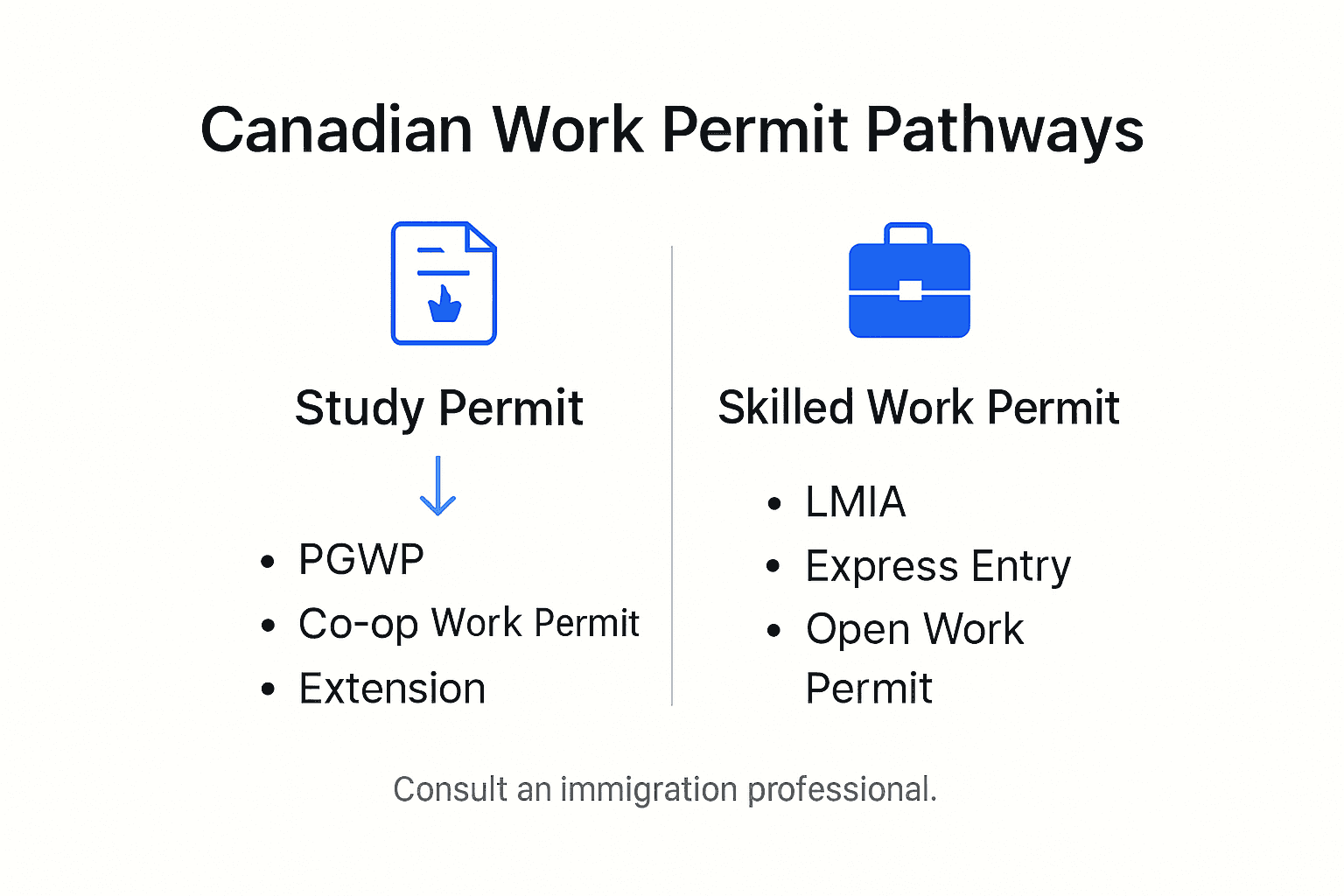
The primary legal pathways for international candidates include obtaining a Labour Market Impact Assessment (LMIA), applying for LMIA-exempt work permits, or utilizing specialized immigration streams such as the Post-Graduation Work Permit (PGWP). Different work permit categories exist for specific scenarios, including open work permits for international students, employer-specific permits, and mobility work permits that allow professionals to work for multiple employers within designated sectors.
Canada’s 2026 immigration landscape emphasizes more stringent selection criteria, with increased focus on occupation-based immigration and alignment with national labor market needs. International candidates must demonstrate not only professional qualifications but also adaptability to Canadian workplace standards. This includes providing comprehensive documentation, proving language proficiency, and understanding the nuanced legal requirements that vary across different provinces and territories.
Key Legal Documentation Requirements:
- Valid work permit
- Labour Market Impact Assessment (if applicable)
- Educational credential assessment
- Proof of language proficiency
- Valid passport and identification documents
Work Permit Categories:
Below is a comparison of popular work permit types for international graduates in Canada:
| Permit Type | Who It’s For | Major Benefits | Typical Limitations |
|---|---|---|---|
| Post-Graduation Permit | Recent graduates | Enables Canadian experience | Valid for limited years |
| Employer-Specific Permit | Sponsored professionals | Secure job placement | Limited to assigned employer |
| Open Work Permit | Students, skilled labor | Work for any employer | Not always renewable |
| Provincial Nominee Permit | Selected nominees | Pathway to PR in provinces | Requires provincial nomination |
- Open work permits
- Employer-specific work permits
- Post-Graduation Work Permits
- International Experience Canada permits
- Provincial Nominee Program permits
Pro tip: Consult with a certified immigration professional to ensure comprehensive understanding of your specific work permit requirements and maintain meticulous documentation throughout your application process.
Risks, Challenges, and Success Strategies
International graduates navigating the Canadian job market encounter multifaceted challenges that require strategic navigation and resilience. Research indicates significant employment barriers including credential recognition issues and workplace cultural adaptations, which demand proactive professional development and targeted skill enhancement.
The primary challenges include language proficiency nuances, limited professional networks, unfamiliarity with Canadian workplace norms, and potential unconscious bias during recruitment processes. International graduates must develop comprehensive strategies that go beyond traditional job application methods, focusing on building local professional connections, understanding cultural communication expectations, and translating their international experiences into compelling professional narratives that resonate with Canadian employers.
Successful integration requires a multifaceted approach that combines continuous learning, strategic networking, and personal brand development. International graduates should invest in professional development opportunities, seek mentorship programs, participate in local industry events, and leverage digital platforms to showcase their unique skill sets. Understanding that employment success involves more than technical qualifications, candidates must demonstrate adaptability, cultural intelligence, and a commitment to understanding the intricate dynamics of the Canadian professional landscape.
Key Challenges for International Graduates:
- Credential recognition barriers
- Limited professional networks
- Cultural communication differences
- Unconscious workplace biases
- Navigating complex immigration regulations
Recommended Success Strategies:
- Develop robust professional networking skills
- Invest in Canadian workplace communication training
- Build a comprehensive professional portfolio
- Seek mentorship and professional guidance
- Continuously upgrade skills and certifications
Pro tip: Create a strategic professional development plan that includes language skill enhancement, cultural adaptation training, and targeted networking approaches to maximize your employability in the Canadian job market.
Navigate Your Path in the Canadian Job Market with Gohires.com
International graduates often face unique challenges such as credential recognition, adapting to Canadian workplace culture, and understanding diverse employment types. With the job market evolving rapidly around technological skills and hybrid work models, finding reliable, up-to-date job opportunities can feel overwhelming. Gohires.com helps you bridge this gap by offering a comprehensive platform tailored to connect you directly with Canadian employers seeking your skills.
Start exploring thousands of full-time, part-time, contract, and freelance jobs across key sectors like technology, healthcare, engineering, and renewable energy. Maximize your chances by accessing career resources that cover everything from resume tips to interview preparation. Don’t wait to adapt and thrive in Canada’s 2026 job market landscape. Visit Gohires.com now and take the first step toward a rewarding Canadian career. Discover your opportunity at Gohires.com and understand employment contracts in Canada to secure a position that fits your professional goals.
Frequently Asked Questions
What are the key skills needed for international graduates in the Canadian job market?
International graduates should focus on developing advanced digital literacy, cloud computing proficiency, data analytics capabilities, cybersecurity fundamentals, and strong soft skills like communication and adaptability to succeed in the Canadian job market.
How can international graduates navigate the Canadian job application process?
International graduates should prepare a valid work permit, create comprehensive resumes and online profiles, understand employer expectations, and be ready for multi-stage interviews that assess both technical and soft skills.
What types of employment opportunities are available to international graduates in Canada?
International graduates can find diverse employment opportunities in sectors such as technology, healthcare, engineering, finance, and renewable energy, with options ranging from full-time permanent positions to freelance work.
What challenges do international graduates face when seeking employment in Canada?
International graduates may encounter challenges such as credential recognition issues, limited professional networks, cultural communication differences, and potential unconscious biases during recruitment processes.