


More than half of Canadian mid-career professionals feel uncertain about where their American counterparts find success when making industry shifts. Changing direction after years in one field brings both risk and reward, making every decision count. This guide breaks down each step with practical tools, government resources, and proven strategies you can use right now to build confidence and turn uncertainty into real career progress.
Table of Contents
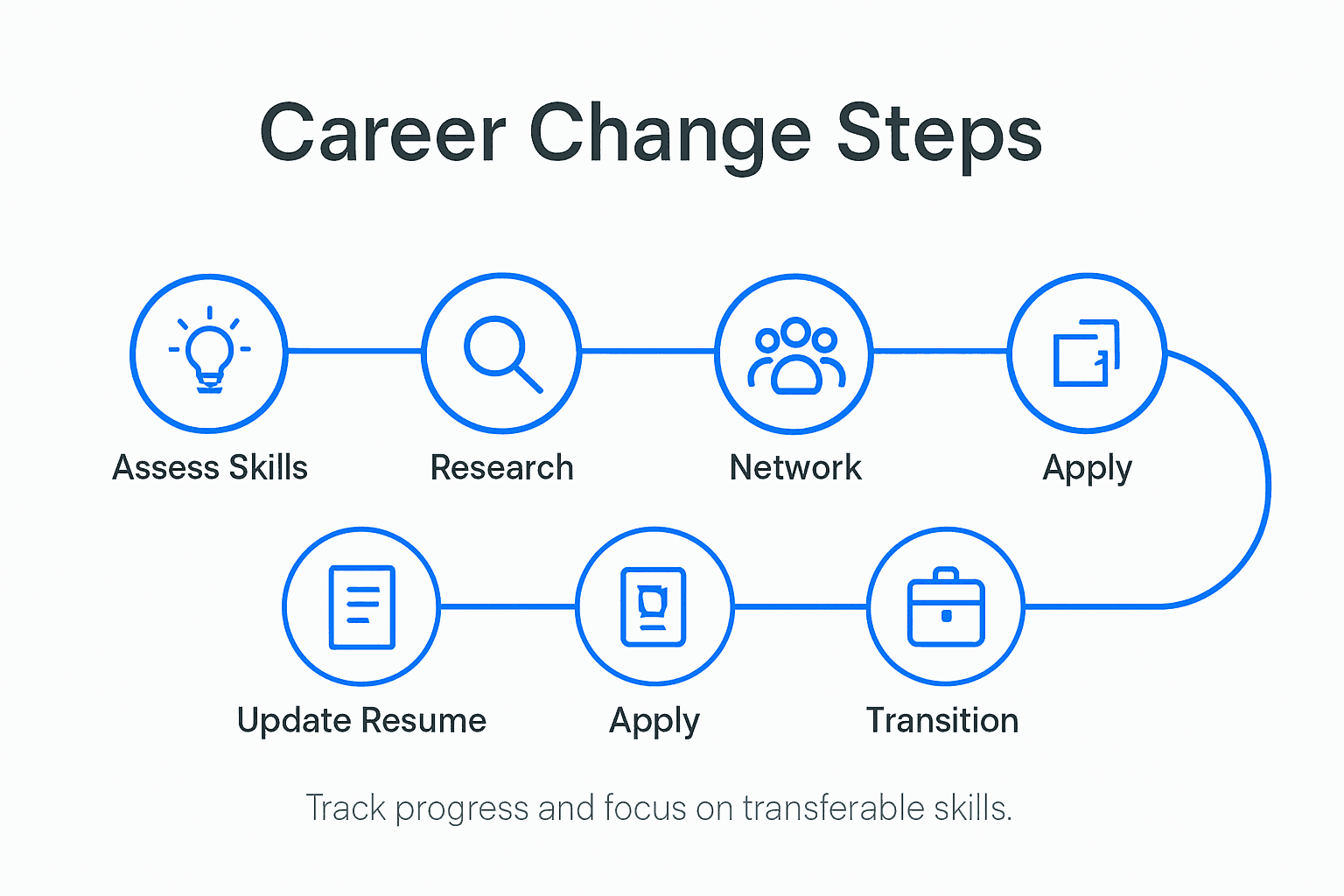
- Step 1: Assess Your Transferable Skills
- Step 2: Research Emerging Opportunities
- Step 3: Update Your Resume and Online Profiles
- Step 4: Network With Industry Professionals
- Step 5: Apply Strategically and Track Progress
- Step 6: Verify Offer Fit and Make the Transition
Quick Summary
| Key Insight | Explanation |
|---|---|
| 1. Assess Your Transferable Skills | Conduct a personal skills audit to map your strengths for new career paths. |
| 2. Research Emerging Industry Trends | Investigate growing sectors and job markets to find career opportunities. |
| 3. Revise Your Resume and Profiles | Update your resume and online profiles to highlight relevant skills for your transition. |
| 4. Network Actively with Professionals | Build connections in your target industry to discover new opportunities and gain insights. |
| 5. Apply Strategically and Track Progress | Maintain a detailed application tracking system to monitor your job search effectively. |
Step 1: Assess Your Transferable Skills
Successfully shifting your career begins with understanding the skills you already possess. In this critical phase, you will identify your existing strengths and map them to potential new professional pathways.
Start by conducting a comprehensive personal skills audit. The Government of Canada Skills for Success initiative provides free tools to help you evaluate your current skill set. Begin by listing every professional ability you have developed across all past roles. Consider both hard skills (technical abilities like software proficiency) and soft skills (communication, problem solving, leadership).
Use a methodical approach to categorize your skills. Group them into broader competencies such as analytical thinking, project management, interpersonal communication, and technical expertise. For each skill, ask yourself: Where and how have I demonstrated this ability? What specific achievements prove my proficiency? The Career Transition Tool can help guide this reflective process, enabling you to connect your existing capabilities with potential new career directions.
Pro tip: Create a living document that tracks your skills and continuously update it as you acquire new competencies through professional development and work experiences.
Step 2: Research Emerging Opportunities
Discovering promising career pathways requires strategic exploration of the job market and emerging industry trends. Your mission is to uncover potential career opportunities that align with your transferable skills and professional aspirations.
Start by examining Canada’s Tech Talent Strategy which highlights cutting-edge sectors experiencing significant growth. Focus on industries with robust job markets such as technology, digital innovation, healthcare, renewable energy, and artificial intelligence. Use online resources like industry reports, professional association websites, labor market information databases, and government employment projections to identify sectors experiencing expansion.
Create a systematic approach to your research. Set up Google alerts for industry keywords, follow thought leaders on professional networks like LinkedIn, attend virtual networking events, and connect with professionals in fields that interest you. Schedule informational interviews with individuals working in potential target industries to gain insider perspectives on skill requirements and emerging trends.
Pro tip: Develop a spreadsheet to track potential career paths, documenting key insights about each industry including growth projections, required skills, average salaries, and potential entry points.
Here’s a summary of major emerging industries and their typical transferable skills:
| Industry | Key Transferable Skills | Common Entry Roles |
|---|---|---|
| Technology | Analytical thinking, coding | Support analyst, QA technician |
| Healthcare | Communication, empathy | Care coordinator, admin staff |
| Renewable Energy | Project management, teamwork | Technician, site planner |
| Artificial Intelligence | Problem solving, data analysis | Data annotator, research assistant |
Step 3: Update Your Resume and Online Profiles
Transitioning your career requires a strategic overhaul of your professional presentation across both traditional and digital platforms. Your goal is to craft a compelling narrative that highlights your transferable skills and positions you for success in your new career trajectory.

Begin by thoroughly revamping your resume to reflect your career change objectives. Writing an effective Canadian style resume involves more than simply updating job titles. Reframe your professional experiences to emphasize skills relevant to your target industry. Use achievement oriented language that demonstrates how your existing capabilities translate into value for potential employers. Highlight transferable competencies such as project management, problem solving, communication, and adaptability that transcend specific job roles.
Simultaneously update your online professional profiles particularly on LinkedIn. Optimize your profile with keywords specific to your target industry, rewrite your professional summary to reflect your career transition goals, and showcase any recent training or certifications that support your new professional direction. Using LinkedIn effectively can significantly expand your visibility to potential employers and networking connections interested in your emerging professional identity.
Pro tip: Create a master document tracking all your professional achievements and skills to easily customize your resume and online profiles for different opportunities.
Step 4: Network With Industry Professionals
Networking is the critical bridge that transforms your career change from a personal aspiration to a professional reality. Your goal is to build meaningful connections that open doors to opportunities in your new chosen field.
Networking strategies from leading universities emphasize the importance of a systematic approach to building professional relationships. Start by creating a targeted networking strategy. Identify key professional associations, online communities, and industry conferences related to your target sector. Attend virtual and in-person events where you can meet professionals working in your desired field. Prepare a concise introduction that explains your career transition and the value you bring from your previous experience.
Expand your networking efforts across multiple platforms. Use LinkedIn to connect with industry professionals, join relevant group discussions, and share thoughtful comments that demonstrate your emerging expertise. Professional networking resources recommend conducting informational interviews with individuals who have successfully transitioned into roles similar to your career goals. Approach these conversations with genuine curiosity, asking about their career journey, challenges they encountered, and advice for someone entering the field.
Pro tip: Create a networking tracking spreadsheet to document each professional contact, including follow-up dates and key conversation points to maintain meaningful connections.
Compare popular professional networking platforms for career changers:
| Platform | Best For | Unique Feature |
|---|---|---|
| Industry connections | Professional endorsements | |
| Meetup | Networking events | Local interest groups |
| Slack | Niche communities | Real-time discussions |
| Association Sites | Formal memberships | Industry-specific resources |
Step 5: Apply Strategically and Track Progress
Your career transition reaches a critical moment when you begin submitting targeted job applications. This stage requires precision, persistence, and a systematic approach to maximize your opportunities and track your professional progress.
Strategic job application guidance from the Public Service Commission emphasizes the importance of meticulous preparation before submitting applications. Develop a comprehensive tracking system to monitor each application. Create a detailed spreadsheet that captures key information including job title, company, application date, application status, follow-up dates, and notes about specific requirements or unique application elements. Customize each application to highlight how your transferable skills directly align with the job description, using specific examples that demonstrate your potential value to the employer.
Implement a disciplined follow-up strategy for every application. Set reminders to check application status, send polite inquiry emails after an appropriate waiting period, and maintain a professional network that might provide insider insights about potential opportunities. Use digital tools and job search platforms to set up alerts for positions matching your career transition goals. Be prepared to apply to multiple positions simultaneously, understanding that each application is a learning opportunity that refines your approach and increases your chances of success.
Pro tip: Develop a color-coded tracking system in your application spreadsheet to quickly visualize your job search progress and identify areas needing additional attention.
Step 6: Verify Offer Fit and Make the Transition
Congratulations on receiving a job offer. This final stage of your career transition requires careful evaluation to ensure the opportunity truly aligns with your professional goals and personal aspirations.
Government of Canada job search guidance recommends thoroughly investigating the job offer beyond its surface attributes. Conduct comprehensive research into the company culture, team dynamics, growth opportunities, and alignment with your long-term career objectives. Schedule conversations with potential colleagues or managers to gain deeper insights into the role’s expectations and workplace environment. Assess not just the job responsibilities, but also the organization’s values, professional development opportunities, and potential for future advancement.
Prepare a strategic transition plan that smoothly bridges your current and future professional roles. Develop a communication strategy for your current employer, ensuring a professional and respectful exit. Create a 30 60 90 day onboarding plan for yourself, outlining key learning objectives, relationship building goals, and initial performance milestones. Anticipate potential challenges in adapting to a new work environment and proactively develop strategies to address them, maintaining flexibility and a growth mindset throughout your career transition.
Pro tip: Create a personal transition journal to document your insights, challenges, and achievements during the first three months in your new role, helping you reflect and continuously improve.
Take Control of Your Career Change Journey Today
Changing careers comes with challenges like identifying your transferable skills, researching new opportunities, and updating your resume to stand out. If you are determined to make your next big move, you need a reliable platform that connects you directly to Canadian employers ready to value your unique abilities. By leveraging strategic networking and tailored job searches, you can transform these challenges into exciting new possibilities.
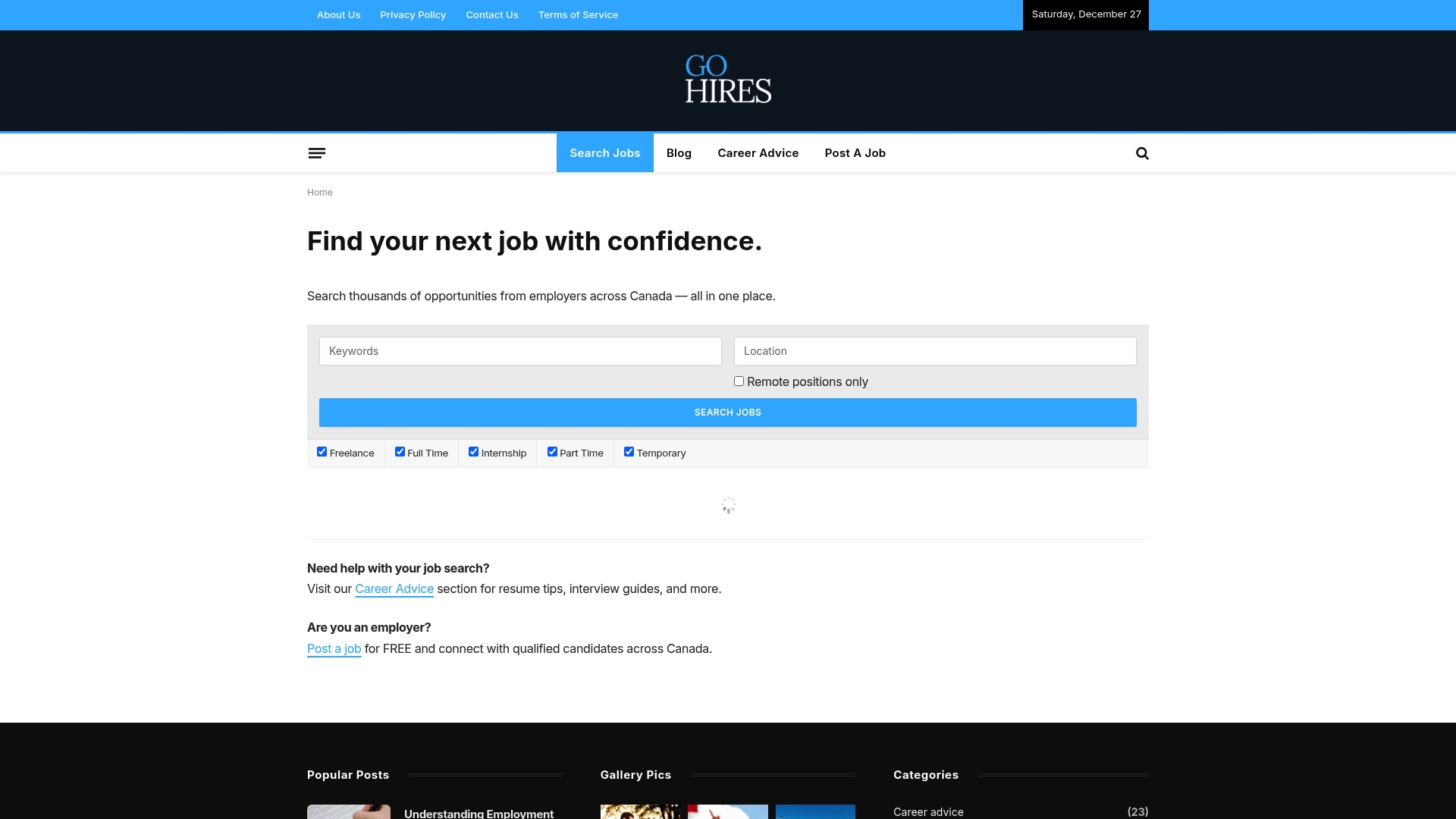
Start exploring a diverse range of job openings that match your evolving career goals at Gohires.com. Use powerful search tools to filter by location, job type, and industry so you can apply strategically. Access resources to polish your resume and prepare for interviews all in one place. Visit Gohires.com now and take the first step toward the fulfilling career you envision. Don’t wait because every day counts when pursuing your next great opportunity.
Frequently Asked Questions
How can I assess my transferable skills for a career change?
Start by conducting a personal skills audit. List all your professional skills, both hard and soft, and categorize them to identify strengths relevant to potential new career opportunities.
What emerging industries should I consider for my career change?
Focus on industries experiencing growth, such as technology, healthcare, renewable energy, and artificial intelligence. Research these sectors to find job opportunities that align with your transferable skills and interests.
How do I update my resume for a career transition?
Revamp your resume to emphasize transferable skills relevant to your target industry. Use achievement-oriented language to showcase how past experiences demonstrate your value to potential employers.
What strategies can I use to network with industry professionals?
Create a targeted networking strategy that includes attending industry events and conducting informational interviews. Engage with professionals on platforms like LinkedIn to build relationships and gain insights into your desired field.
How should I track my job applications during a career change?
Develop a detailed spreadsheet to monitor each application, noting job titles, companies, application statuses, and follow-up dates. This organized approach helps you stay on top of your job search progress.
What should I consider before accepting a job offer?
Evaluate the company culture, growth opportunities, and alignment with your long-term career goals. Conduct research and have conversations with potential colleagues to ensure the role fits your aspirations.