


Over half of Canadian university students struggle to find part-time jobs that fit with their study schedules. With employers increasingly expecting well-prepared applications, learning how to organize your documents and stand out is vital for success. Understanding these steps can make a real difference whether you aim for a Canadian company or an American brand and will help you avoid common mistakes that cost students valuable work opportunities.
Table of Contents
- Step 1: Prepare Your Resume and Documents
- Step 2: Search for Part Time Jobs Online
- Step 3: Submit Tailored Applications
- Step 4: Track Your Application Status
- Step 5: Ace Your Job Interview
Quick Summary
| Key Insight | Explanation |
|---|---|
| 1. Create a Professional Resume | Tailor your resume to highlight specific skills and experiences for each job application. |
| 2. Organize Essential Documents | Keep digital copies of critical documents, including ID, social insurance number, and references, easily accessible. |
| 3. Utilize Job Search Platforms | Search dedicated job websites and set up alerts to find part-time opportunities that match your skills. |
| 4. Submit Custom Applications | Personalize your resume and cover letter for each job to align closely with the job description requirements. |
| 5. Prepare for Interviews | Use the STAR method to answer behavioral questions and demonstrate your suitability for the role clearly. |
Step 1: Prepare Your Resume and Documents
Preparing a professional resume is your first critical step toward securing part-time work in Canada. Your resume serves as a strategic marketing document that highlights your skills, experiences, and potential value to prospective employers.
Start by creating a clean, well-organized resume that follows Canadian resume formatting standards. Focus on presenting your information clearly and professionally. Include key sections such as contact details, education, work experience, skills, and relevant achievements. Tailor your resume for each job application by emphasizing skills and experiences most aligned with the specific position.
Gather essential documents before applying. These typically include your government issued identification, social insurance number, work permit (for international students), academic transcripts, and references. Organize these documents in a digital folder for quick access during job applications. Keep digital and physical copies well maintained and easily retrievable.
Here is a summary of essential documents you may need during part-time job applications in Canada:
| Document Type | Purpose | Important Notes |
|---|---|---|
| Government ID | Identity verification | Passport or Canadian ID accepted |
| Social Insurance Number | Employment eligibility | Required for all jobs |
| Work Permit | Authorization to work (international) | Only for non-citizens/students |
| Academic Transcripts | Proof of education | Needed for academic-related jobs |
| Reference Letters | Validation of experience | Ensure current contact details |
Pro tip: Create a standardized digital resume template that can be quickly customized for different job applications to save time and maintain consistency.
Step 2: Search for Part Time Jobs Online
Searching for part-time jobs online requires strategic planning and utilizing multiple resources to maximize your opportunities in the Canadian job market. Modern job hunting has shifted predominantly to digital platforms, making online search skills crucial for student employment.

Start by exploring dedicated job search websites like GoHires, Indeed Canada, and LinkedIn. These platforms offer comprehensive listings specifically tailored for part-time work. You can also leverage government job resources which frequently post flexible employment opportunities. Utilize advanced search filters to narrow down results based on your location, preferred work hours, and skill set. Many websites allow you to set up job alerts that will notify you about new openings matching your preferences.
Dont limit yourself to general job sites. Check university career centers, student employment boards, and industry specific websites relevant to your field of study. Professional networking platforms can provide unexpected connections and job leads. Create a professional online profile that highlights your skills and experiences, making you more attractive to potential employers.
Compare the main online platforms for part-time job searching in Canada:
| Platform | Key Benefit | Typical Use Case |
|---|---|---|
| Indeed Canada | Large job database | Finding general part-time roles |
| Networking & jobs | Connecting with industry professionals | |
| GoHires | Student focus | Entry-level/student-specific positions |
| Government Portals | Official postings | Public sector and internship options |
Pro tip: Create a dedicated email address for job applications to keep your professional communications organized and prevent important job notifications from getting lost in personal email clutter.
Step 3: Submit Tailored Applications
Submitting tailored job applications is a critical step in securing part-time work that requires careful attention to detail and strategic presentation of your skills. Each application represents an opportunity to showcase why you are the ideal candidate for a specific role.
Carefully review each job description and customize your resume and cover letter to highlight relevant experiences and skills that directly match the employer’s requirements. Pay close attention to keywords used in the job posting and incorporate them naturally into your application materials. This demonstrates that you have carefully read the job description and understand the role’s specific needs.
When submitting applications, ensure all required documents are prepared professionally. Double-check your email attachments, confirm that file names are clear and professional (e.g., JohnSmith_Resume_2023), and include a concise but compelling cover letter that explains your interest and qualifications. Proofread everything meticulously to eliminate any spelling or grammatical errors that could potentially disqualify you from consideration.
Pro tip: Create a standardized digital folder to track your job applications, including copies of submitted documents, application dates, and follow-up notes to maintain organized and professional job search management.
Step 4: Track Your Application Status
Tracking your job application status is a critical part of the job search process that helps you stay informed and demonstrates your professional commitment. Effective follow-up can significantly improve your chances of securing a part-time position in the competitive Canadian job market.
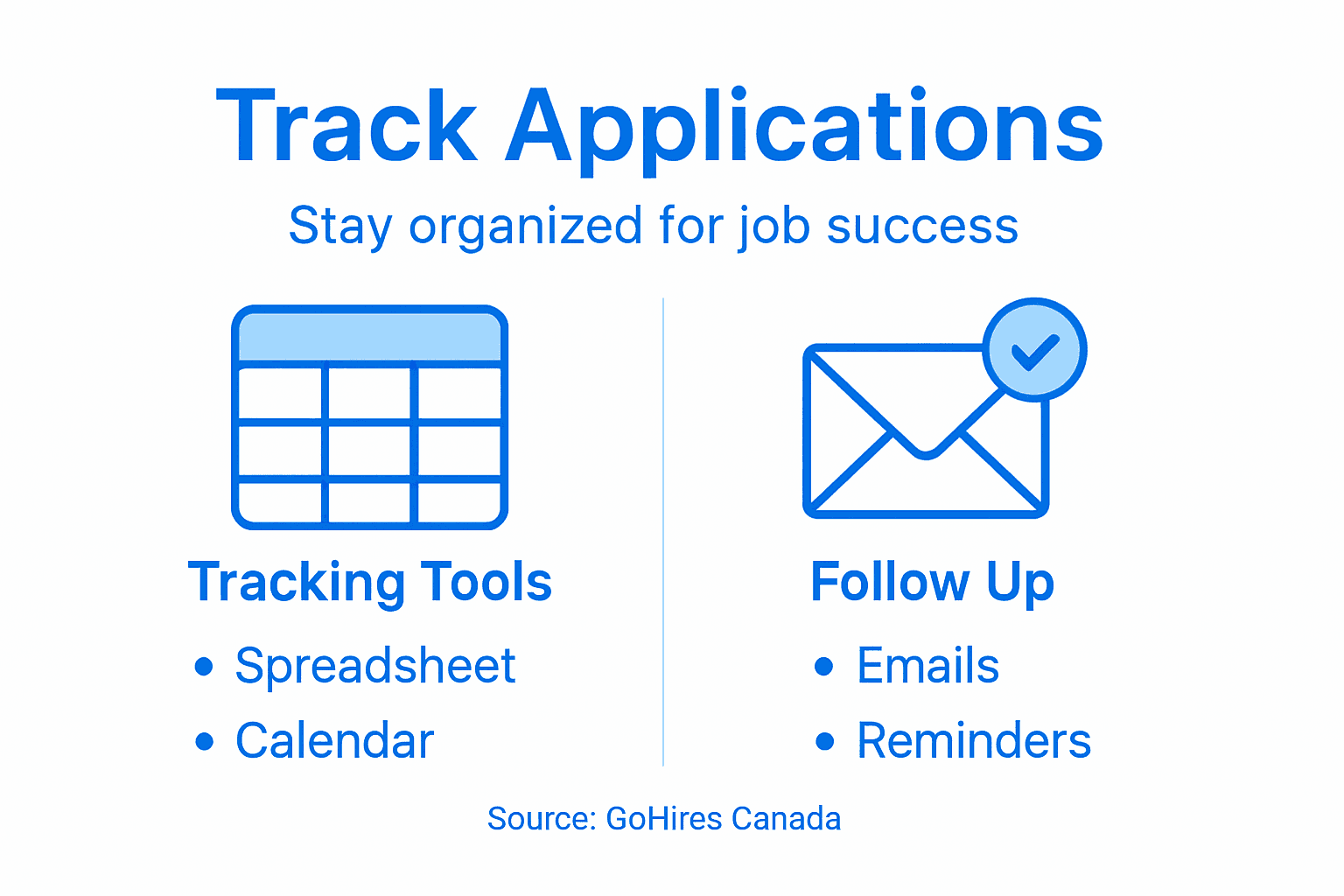
Utilize multiple strategies to monitor your application progress. Check the employer’s website or application status tracking systems regularly. Most employers provide online portals or contact information where you can inquire about your application. Keep a detailed spreadsheet tracking the jobs you have applied to including application date, company name, position, and current status. Follow up with a polite email or phone call approximately one week after submitting your application to express continued interest and confirm receipt of your materials.
Pay attention to communication channels. Some employers prefer email updates while others might use applicant tracking systems. Set up email notifications and check your spam folder regularly to ensure you do not miss any important communications. Be patient but proactive maintaining a professional and courteous approach throughout the follow-up process.
Pro tip: Create email filters and calendar reminders to help you systematically track and follow up on multiple job applications without missing critical communication windows.
Step 5: Ace Your Job Interview
Acing a job interview requires strategic preparation and confident communication. Your interview is the crucial moment where you transform your written application into a compelling personal presentation that demonstrates your potential value to the employer.
Prepare thoroughly by practicing behavioural interview techniques that showcase your skills effectively. Use the STAR method to structure your responses articulating specific Situations, Tasks, Actions, and Results from your past experiences. Research the company beforehand, anticipate potential questions, and prepare thoughtful questions that demonstrate your genuine interest in the role. Select professional attire that matches the company culture and practice confident body language including maintaining eye contact, offering a firm handshake, and sitting with good posture.
During the interview, listen carefully to each question, provide concise and relevant answers, and connect your skills directly to the job requirements. Show enthusiasm for the position and highlight how your unique background makes you an exceptional candidate. After the interview, send a brief thank you email within 24 hours reiterating your interest and briefly referencing a key discussion point to leave a memorable impression.
Pro tip: Record a practice interview on video to objectively analyze your communication style, body language, and identify areas for improvement before the actual job interview.
Find Your Ideal Part-Time Job in Canada with GoHires
Applying for part-time jobs in Canada can feel overwhelming when juggling resume preparation, tailored applications, and interview readiness. The challenge lies in efficiently managing all these steps while finding quality job listings that match your skills and schedule. If you struggle to locate reliable part-time opportunities or want to simplify your job search with tools designed specifically for Canadian job seekers go no further than GoHires.
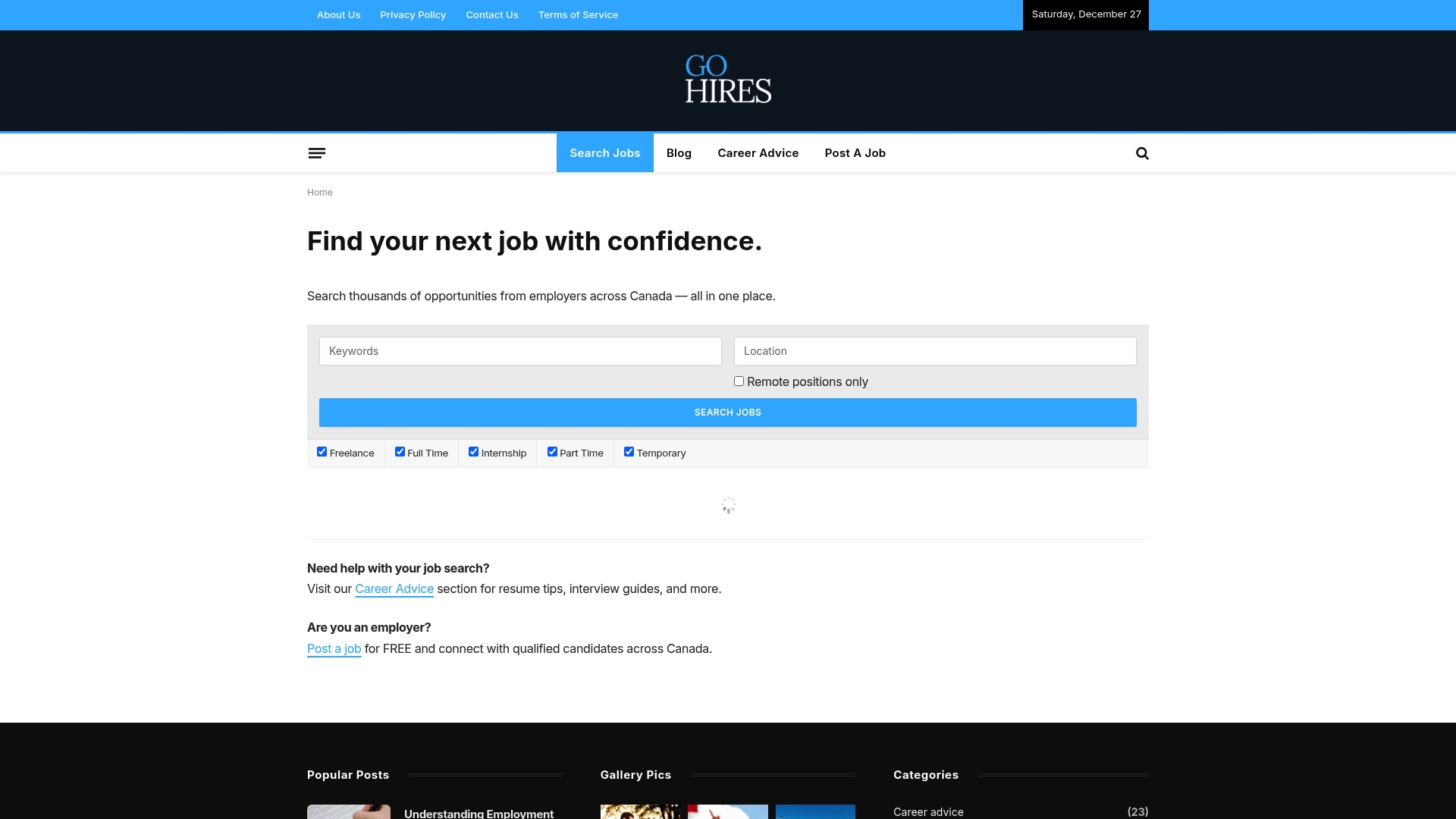
Start exploring thousands of part-time positions curated to meet your needs today at GoHires.com. Our platform offers advanced search options by location and employment type so you never miss a fitting role. Benefit from features that help you stay organized during your job hunt including resume advice and interview tips all in one place. Don’t wait. Take control of your career path now by visiting GoHires and making part-time employment straightforward and accessible.
Frequently Asked Questions
How can I prepare my resume for part-time jobs in Canada?
To prepare your resume for part-time jobs in Canada, ensure it is well-organized and follows Canadian formatting standards. Include key sections like contact information, education, work experience, and skills, and tailor it for each job by emphasizing relevant experiences.
What essential documents do I need to apply for part-time jobs in Canada?
You will need several documents, including a government-issued ID, your Social Insurance Number, and possibly a work permit if you are an international student. Gather these documents and keep them organized in a digital folder for easy access when applying.
How do I effectively search for part-time jobs online in Canada?
To effectively search for part-time jobs online, utilize dedicated job search websites and set up job alerts that match your preferences. Expand your search to university career centers and industry-specific sites for additional opportunities.
What should I include in my cover letter when applying for part-time jobs?
Your cover letter should briefly explain your interest in the position and highlight key qualifications that align with the job requirements. Tailor it to each application by incorporating keywords from the job description for a more compelling case.
How can I track my job application status after applying?
You can track your job application status by checking employer websites or application tracking systems regularly. Maintain a detailed spreadsheet that includes dates and application statuses to stay organized and ensure timely follow-ups.
What strategies should I use to prepare for a job interview?
To prepare for a job interview, practice behavioral interview techniques using the STAR method to frame your responses. Research the company beforehand and prepare thoughtful questions to demonstrate your genuine interest in the role.