

Introduction
In today’s hyper-competitive talent market, organizations face mounting pressure to attract, evaluate, and secure exceptional candidates with both precision and speed. Effective hiring is no longer just about posting job ads—it’s about deploying strategies that reduce bias, enhance efficiency, and boost both candidate satisfaction and organizational performance. Research underscores this shift: structured interviews can improve prediction of job performance by 81%, and streamlining recruitment through automation and pre-screening tools significantly reduces time-to-hire from the typical 42 days talentmsh.com.
The Stakes—and the Opportunity
High-volume recruitment, in particular, magnifies the challenge. Unilever’s overhaul of early-career hiring—from multi-round resume screenings to AI-powered games and video assessments—cut hiring time from four months to just four weeks, slashed costs by 50%, raised diversity by 16%, and achieved an 80% positive candidate experience rating testlify.com. Such transformative outcomes illustrate how smart approaches can turn recruitment into a competitive advantage.
Emerging Trends Fueling Smarter Hiring
AI-powered systems and skills-based hiring are reshaping recruitment by aligning candidate competencies—not just credentials—with job requirements. For instance, skills-based hiring emphasizes applicants’ actual capabilities over academic degrees, making the recruitment process more precise and equitable en.wikipedia.org. Meanwhile, adoption of AI and automation tools in hiring processes has risen dramatically, with around 79% of organizations integrating them into their workflows to streamline applicant screening and selection groomassocies.com.
Setting the Stage for High-Quality Hiring Insights
This article series will explore top-tier strategies, tools, and case studies that exemplify high-return hiring approaches. From AI-powered matching to structured assessments and onboarding optimization, each section will unpack how companies can make smarter, faster, and more equitable hiring decisions. Whether you’re managing mass recruitment or refining your talent acquisition framework, these insights aim to guide you toward the most effective solutions—what many refer to when they seek the best hiring solutions for their organization’s scale and goals.
In the sections that follow, readers will find actionable guidance to adapt these proven strategies to their own context, supporting both immediate improvements and long-term talent success.
Maximizing Efficiency and Impact of Best Hiring Solutions
Building on the strategic foundations outlined earlier, organizations are now exploring specific methods to deepen efficiency and results. One compelling pathway is leveraging AI-powered tools that deliver exceptionally high ROI. For instance, AI resume screening tools have demonstrated average ROI ranges between 250–350% in the first year, slashing screening time by up to 80%, reducing cost-per-hire by around 60%, and offering payback periods within just a few months—some companies even report total ROI exceeding 4,000% in certain cases. HR Agent Labs
Another insightful source offers a balanced, research-driven view: across 200+ organizations, AI-enabled recruitment solutions led to a 42% cut in time-to-hire, a 37% reduction in cost-per-hire (saving approximately $2,800 per hire), and a 35% improvement in quality-of-hire metrics—all contributing to an average 3.2× ROI within the first year. HireGenix
Real-World Applications That Show Results
One practical example comes from AI-powered voice interviews: a large-scale trial involving over 70,000 applicants for customer service roles found AI interviewers produced 12% higher offer rates, with substantially better job start and 30-day retention outcomes compared to human recruiters. The improved structure and richer responses achieved through AI also led to more meaningful transcript evaluations. Business Insider
Complementing AI with Human-Centered Design
Optimal adoption of the best hiring solutions often depends on balancing technology with human-centered methodologies. A study using Design Thinking in recruitment showed that combining iterative, collaborative workshops with digital tools reduces selection time, enhances cultural fit, and improves hire quality by fostering transparency and stakeholder engagement. MDPI research
By blending AI-driven systems with structured human insight and validated behavioral assessments, organizations can cultivate not only speed and efficiency but also equity, candidate satisfaction, and long-term retention. These complementary approaches enable the best hiring solutions to generate both immediate gains and sustainable impact.
Innovative Technologies in Hiring Solutions
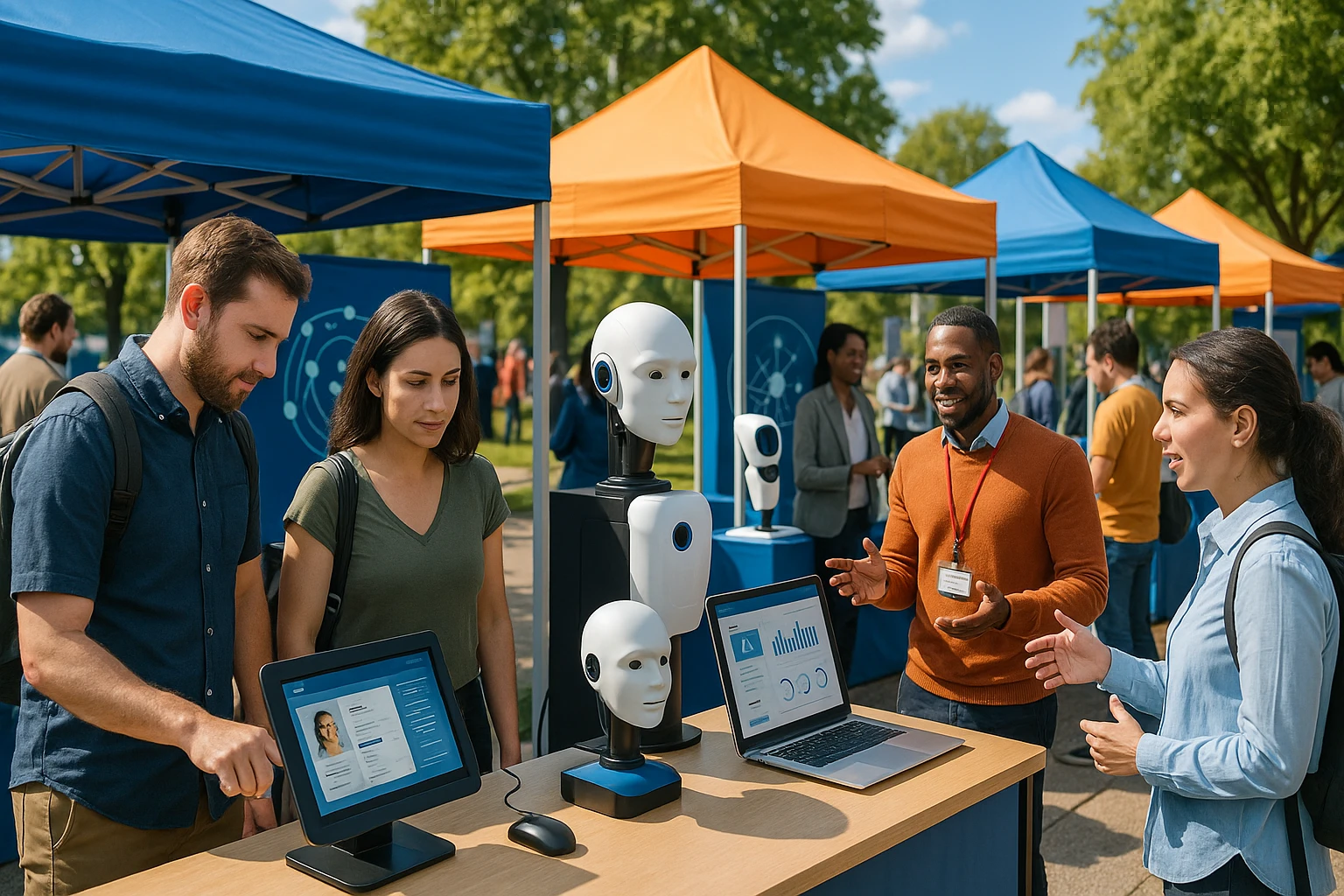
In today’s rapidly evolving job market, leveraging cutting-edge technology has become a pivotal strategy for businesses seeking the best hiring solutions. Human resources departments are increasingly turning to artificial intelligence (AI) to enhance recruitment processes. AI-driven tools can efficiently screen résumés, saving time and reducing biases in the selection process. For instance, AI algorithms can analyze a candidate’s skills and experiences, matching them against job requirements with remarkable accuracy.
One prominent example of AI in recruitment is the use of chatbots. Companies employ chatbots to engage with potential candidates and provide real-time responses to frequently asked questions. This not only streamlines initial interactions but also ensures that candidates receive timely feedback. According to a recent survey, organizations that implemented AI technologies reported a 30% reduction in hiring time source.
Data-Driven Recruitment Strategies
Data analytics is another transformative tool reshaping hiring practices. By analyzing large sets of data, companies can identify patterns and trends that inform recruitment strategies. Data-driven insights enable businesses to target specific talent pools, optimize job descriptions, and improve candidate satisfaction. For instance, retention rates can be enhanced by using data to match employees with roles that align closely with their career aspirations.
Incorporating these analytics into recruitment not only improves the quality of hires but also optimizes operational efficiency. Many businesses are turning to platforms like Go Hires for integrated solutions that seamlessly combine data analytics with recruitment processes. This comprehensive approach helps businesses attract, evaluate, and retain talent effectively.
The Role of Virtual Reality in Recruitment
Virtual Reality (VR) is emerging as a novel tool in recruitment, offering immersive experiences that traditional hiring processes cannot match. VR can simulate job environments, allowing candidates to experience a day in the life at a potential workplace. This innovation helps both the employer and the candidate assess fit and compatibility more accurately.
Some forward-thinking organizations are using VR for onboarding and training, providing realistic scenarios that enhance learning and engagement. As per industry reports, VR has shown to increase engagement and retention during training sessions by up to 75% compared to standard methods source. These advancements demonstrate the profound impact of technology on recruitment, ensuring that businesses can adapt and thrive in the competitive talent market.
Adaptive Employee Assessment Tools
In the ever-evolving landscape of recruitment, adaptive employee assessment tools stand out as a pivotal component of the best hiring solutions. These tools utilize advanced algorithms to adjust the difficulty level of assessment questions based on the candidate’s responses, offering a more accurate evaluation of their abilities. According to HR Examiner, adaptive assessments can reduce testing time by up to 50%, while maintaining high levels of precision in evaluating both cognitive and technical skills.
The Role of Artificial Intelligence
An integral part of these tools is the incorporation of artificial intelligence to enhance the recruitment process. Through AI-driven insights, companies like HireVue have managed to streamline the pre-screening of applicants, significantly cutting down the time recruiters spend on initial evaluations. This integration not only expedites hiring but also ensures that candidates are assessed on a level playing field, removing unconscious biases that may arise in traditional interviewing methods.
For instance, a case study conducted by HireVue revealed that businesses incorporating AI in their recruitment process observed a 30% increase in hiring diversity, underscoring the capacity of AI to foster inclusivity and efficiency. Employing AI in assessments creates opportunities for more personalized and equitable hiring experiences, ultimately leading to better alignment between candidate skills and job requirements.
Real-World Applications
Practical applications of adaptive employee assessment tools are being witnessed across various industries. In the tech sector, companies are deploying these tools to efficiently assess coding skills and problem-solving abilities. This method not only reviews a candidate’s technical competencies but also gauges their adaptability to real-world challenges. By accurately identifying top talent through data-driven assessments, organizations can make informed decisions that align with strategic goals.
Moreover, the retail industry has seen significant improvements by using adaptive assessments to understand customer service aptitude and sales capabilities. Fast-moving companies are tapping into this strategic advantage to accelerate hiring processes and enhance team performance, as evidenced by a study from the Chartered Institute of Personnel and Development.
As businesses continue to evolve, integrating adaptive assessment tools marks a significant stride towards improving talent acquisition strategies. These tools not only facilitate a more effective recruitment process but also help in retaining the best-fit candidates for organizational growth and success.
Conclusion: Embracing the Future with Best Hiring Solutions
In today’s competitive landscape, utilizing best hiring solutions is essential for organizations seeking top talent. As we’ve explored, the integration of AI-driven tools, tech-enabled platforms, and comprehensive recruitment strategies is revolutionizing how companies acquire and retain their workforce. The right hiring solution not only streamlines the process but also enhances the quality of candidates entering the pipeline.
Takeaways and Insights
To stay ahead, businesses must embrace innovative technologies and methodologies. Leveraging AI for candidate screening, using data analytics to refine recruitment strategies, and enhancing the candidate experience are all critical. For instance, companies adopting AI technologies have reported a 20-30% increase in hiring efficiency, according to McKinsey. This not only saves time but also significantly boosts the quality of hires.
Actionable Steps for Implementation
Organizations looking to integrate these solutions should start by assessing their current recruitment strategies. Consider exploring AI assessment tools, updating CRM systems, and providing training for HR teams in new tech applications. Prioritizing diversity and inclusivity within hiring practices can also enhance the company culture and brand reputation, leading to long-term success.
Moving Forward with Go Hires
For businesses looking to quickly adapt these strategies, consider the services provided by Go Hires. They offer comprehensive support and cutting-edge technology solutions to transform your recruitment process. Whether beginner-friendly or advanced, Go Hires ensures your business attracts and retains the best candidates with efficiency and ease.
Ultimately, embracing these hiring solutions equips your company to succeed in a rapidly evolving job market, positioning your brand as an employer of choice. Keeping pace with technological advancements and strategic decision-making will ensure sustained growth and success.