


Bold changes are reshaping the Canadian job market as nearly 60 percent of hiring managers plan to prioritize digital skills by 2026. Whether you are an American graduate or an international professional, understanding which sectors are growing can directly impact your career options. With technology, healthcare, and green energy leading employment trends, knowing where opportunities are emerging will help you prepare and make smart choices for long-term success in Canada.
Table of Contents
- Defining Trending Canadian Job Sectors 2026
- Technology Roles Shaping Future Employment
- Healthcare Opportunities and Skills Needed
- Green Energy Careers and Market Growth
- Qualifications and Certifications in Demand
- Common Challenges for International Applicants
Key Takeaways
| Point | Details |
|---|---|
| Emerging Job Sectors | Technology, healthcare, green energy, and digital services are set to lead job growth in Canada by 2026. |
| Skill Development | Continuous learning in digital skills is essential for remaining competitive in the evolving job market. |
| Regional Job Trends | Provinces like Ontario, British Columbia, and Alberta will be at the forefront of job creation in key sectors. |
| Immigration Alignment | Immigration policies are increasingly aligned with workforce needs, emphasizing credential recognition for international professionals. |
Defining Trending Canadian Job Sectors 2026
The Canadian job market is undergoing significant transformation, with emerging sectors reshaping employment opportunities across the nation. Canadian workforce priorities for 2025-2026 indicate a strategic focus on skill development and labor market adaptation.
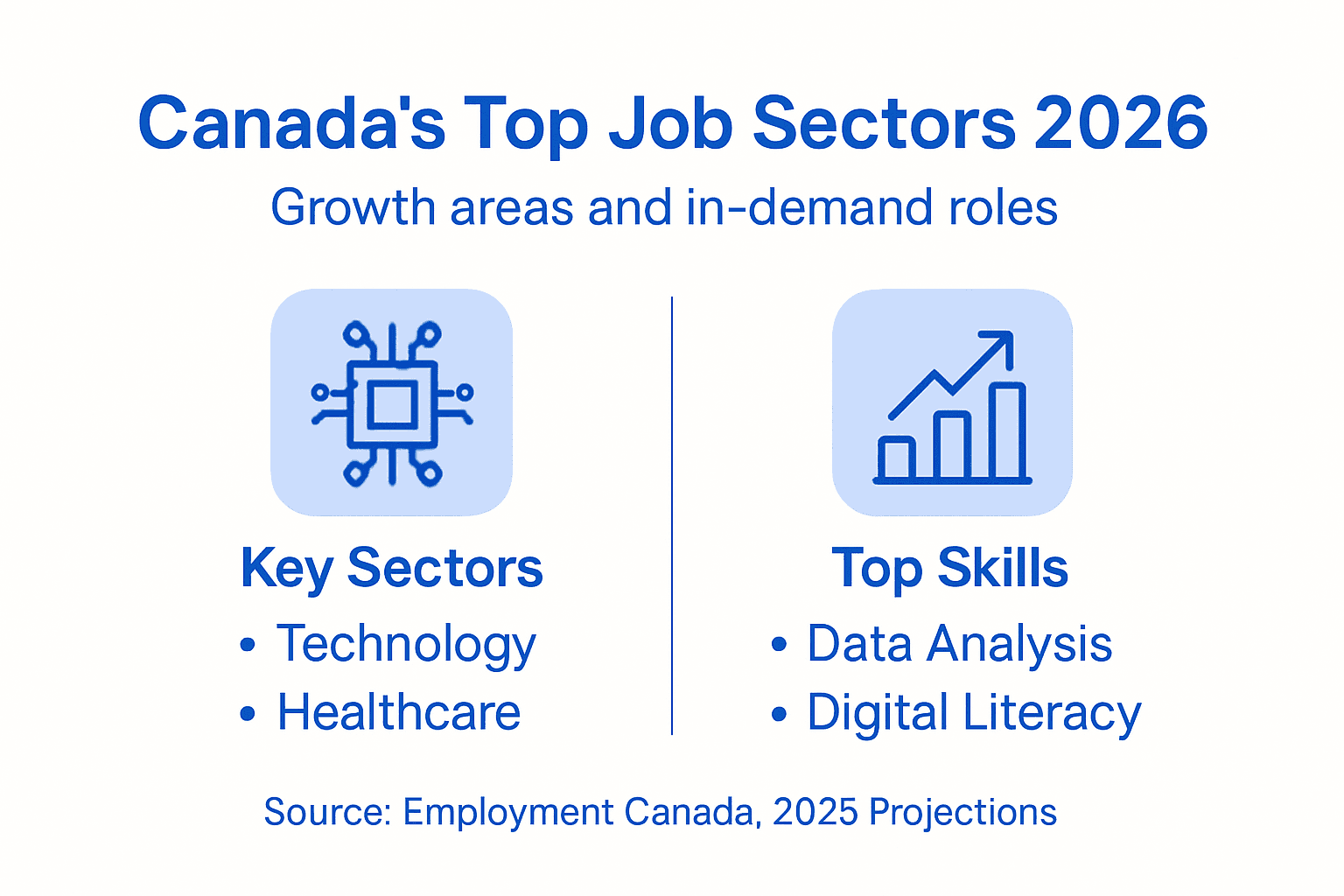
In 2026, several key sectors are expected to drive job growth and innovation. Technology, healthcare, green energy, and digital services are positioned as primary drivers of employment. The digital transformation continues to accelerate, with artificial intelligence, cybersecurity, and data analytics creating unprecedented professional pathways. Skilled trades remain critical, particularly in residential construction and infrastructure development.
Regional variations will significantly influence job sector trends. Provinces like Ontario, British Columbia, and Alberta are anticipated to lead technological and green economy job creation. Emerging labor market trends highlight the increasing importance of adaptable digital skills across industries. Professionals with expertise in machine learning, cloud computing, renewable energy systems, and telehealth technologies will find expanding opportunities.
The integration of immigration policies with workforce needs continues to shape sector growth. The Canadian government is strategically aligning credential recognition programs with genuine employer requirements, ensuring smoother professional transitions for international talent.
Pro tip: Invest in continuous learning and digital skill development to remain competitive in Canada’s evolving job market.
Here’s how trending Canadian job sectors compare for 2026:
| Sector | Primary Roles | Skill Emphasis | Regional Leaders |
|---|---|---|---|
| Technology | AI specialists, engineers | Advanced digital skills | Ontario, BC, Quebec |
| Healthcare | Nurses, telehealth pros | Clinical & digital blend | Ontario, Alberta, BC |
| Green Energy | Solar, wind engineers | Environmental & tech | Ontario, Alberta |
| Digital Services | Data analysts, designers | Adaptability & analysis | Ontario, BC |
Technology Roles Shaping Future Employment
The Canadian technology sector is rapidly evolving, creating unprecedented opportunities for professionals with specialized digital skills. Tech leadership careers in Canada are experiencing significant transformation, with emerging roles demanding a unique blend of technical expertise and strategic vision.
Key technology roles driving future employment include artificial intelligence specialists, cloud computing architects, cybersecurity experts, and data science professionals. These positions require advanced technical skills combined with strong problem-solving capabilities. Software engineering continues to be a critical domain, with senior roles increasingly focused on innovation, system design, and technological strategy.
The Canadian technology landscape is characterized by a growing demand for professionals who can bridge technical complexity with business strategy. Machine learning engineers, quantum computing researchers, and AI ethics specialists are becoming increasingly valuable. Organizations are seeking talent capable of developing cutting-edge technologies while maintaining ethical standards and understanding broader organizational implications.
Regional technology hubs in Toronto, Vancouver, and Montreal are creating dynamic ecosystems that attract global talent. These metropolitan centers are becoming international destinations for technology professionals, offering competitive salaries, innovative work environments, and opportunities to work on groundbreaking projects across multiple industries.
Pro tip: Continuously update your technical skills and pursue interdisciplinary knowledge to remain competitive in Canada’s rapidly changing technology job market.
Healthcare Opportunities and Skills Needed
Canada’s healthcare sector is experiencing unprecedented transformation, with hiring trends revealing critical workforce needs across multiple professional domains. The persistent worker shortages, particularly in an aging population, are creating substantial opportunities for skilled healthcare professionals who can adapt to rapidly changing medical technologies and patient care models.
Key healthcare roles in high demand include registered nurses, personal support workers, medical laboratory technologists, and telehealth specialists. These positions require a sophisticated blend of clinical expertise and digital proficiency. Professionals must demonstrate advanced technical skills, including electronic medical record management, telemedicine communication, and data-driven healthcare analytics.
The evolving healthcare landscape demands interdisciplinary skills that extend beyond traditional clinical training. Professionals who can integrate technological solutions, demonstrate cultural competency, and provide compassionate patient-centered care will be most competitive. Emerging specializations such as digital health management, remote patient monitoring, and AI-assisted diagnostic support are becoming increasingly crucial in healthcare delivery.
Provincial healthcare systems are actively recruiting both domestic and international healthcare professionals to address critical workforce gaps. Provinces like Ontario, British Columbia, and Alberta are offering competitive compensation packages, professional development opportunities, and streamlined immigration pathways for qualified healthcare workers seeking to establish their careers in Canada.
Pro tip: Develop a comprehensive skill set that combines clinical expertise with digital literacy to maximize your healthcare career opportunities in Canada.
Green Energy Careers and Market Growth
Canada’s green energy sector is experiencing remarkable expansion, with federal and provincial investments driving substantial job creation across multiple renewable energy domains. The transformation is creating thousands of opportunities in solar, wind, electric vehicle manufacturing, and advanced energy storage technologies.
Key emerging career paths in the green energy sector include renewable energy engineers, solar installation specialists, wind turbine technicians, electric vehicle design engineers, and sustainability project managers. These roles demand a sophisticated blend of technical expertise, environmental knowledge, and innovative problem-solving skills. Professionals with interdisciplinary backgrounds combining engineering, environmental science, and digital technologies will find themselves particularly well-positioned in this dynamic job market.

The geographic distribution of green energy opportunities varies significantly across Canadian provinces. Ontario and Alberta are leading regional expansions, offering concentrated clusters of employment in clean technology industries. Approximately 350,000 professionals are currently employed in green jobs, with salaries consistently above the national average. The sector’s growth is being driven by sustainability policies, workforce retirements, and continuous investments in clean energy infrastructure.
International workers will find promising pathways into Canada’s green energy sector, with many employers actively recruiting global talent to address skill shortages. Professionals with expertise in hydrogen economy initiatives, grid modernization technologies, and sustainable infrastructure design are especially sought after. The combination of competitive compensation, clear career progression, and meaningful environmental impact makes these roles increasingly attractive to skilled professionals worldwide.
Pro tip: Develop a multilingual skill set and obtain internationally recognized green technology certifications to maximize your employability in Canada’s expanding renewable energy job market.
Qualifications and Certifications in Demand
Canadian employers are increasingly prioritizing specialized credentials across multiple professional sectors. Demand for foreign workers highlights critical credential requirements that go beyond traditional academic degrees, emphasizing practical skills and professional certifications.
Different industries demand specific qualifications that reflect evolving technological and professional landscapes. In the technology sector, advanced cybersecurity certifications, cloud computing credentials, and specialized programming certificates are becoming essential. Healthcare professionals require provincial licenses and specialized training, while skilled trades mandate precise trade certifications that demonstrate technical competency and practical expertise.
International professionals seeking opportunities in Canada must carefully align their educational backgrounds and professional certifications with local industry standards. Recognized credentials from accredited institutions, combined with language proficiency and relevant work experience, significantly enhance employability. Emerging fields like artificial intelligence, renewable energy, and digital healthcare particularly value candidates with interdisciplinary qualifications that demonstrate adaptability and comprehensive skill sets.
Regional variations exist in certification requirements, with provinces like Ontario, British Columbia, and Alberta maintaining distinct professional standards. Professionals should research specific provincial guidelines, engage with professional associations, and consider additional training or bridging programs to maximize their competitive advantage in the Canadian job market.
Pro tip: Invest in obtaining Canadian-recognized professional certifications and continuously update your skills to remain competitive in your chosen industry.
Below is a summary of in-demand certifications by sector:
| Industry | Key Certifications | Typical Requirement | Certification Body |
|---|---|---|---|
| Technology | Cloud, cybersecurity certs | Mandatory for senior | Microsoft, ISC2 |
| Healthcare | Provincial licenses | Required for practice | Provincial Health Boards |
| Skilled Trades | Trade certifications | Essential for entry | Red Seal Program |
| Green Energy | Green tech credentials | Highly valued for jobs | CSA, NABCEP |
Common Challenges for International Applicants
International job seekers and students are facing increasingly complex immigration landscapes in Canada, with immigration policies becoming more stringent and selective in 2026. The regulatory environment demands unprecedented precision and strategic planning from applicants seeking work permits, study visas, and professional opportunities.
The primary challenges for international applicants include navigating tightened application controls, managing complex credential recognition processes, and meeting evolving labor market requirements. Work permit regulations now emphasize stricter eligibility checks that prioritize candidates demonstrating direct alignment with Canadian economic needs. Graduate students and professional immigrants must prepare for enhanced screening processes that evaluate not just academic qualifications, but also potential economic contributions.
Regional variations significantly impact immigration experiences, with provinces like Ontario, British Columbia, and Alberta maintaining distinct criteria for international talent acquisition. Successful applicants must develop comprehensive strategies that include language proficiency, targeted skill development, and proactive engagement with professional networks. Understanding nuanced policy changes, such as updated study permit caps and discretionary processing mechanisms, becomes crucial for maintaining competitive immigration prospects.
Technological and professional sectors are particularly demanding, requiring international applicants to possess not just academic credentials, but also adaptable skill sets that can integrate seamlessly into Canadian workplace cultures. Emerging immigration policies reflect a sophisticated approach to talent recruitment, balancing economic priorities with systematic evaluation of individual professional potential.
Pro tip: Develop a comprehensive immigration strategy that includes professional certifications, language skills, and detailed documentation to navigate Canada’s complex application processes.
Navigate Canada’s Trending Job Sectors with Confidence
The Canadian job market in 2026 is rapidly evolving with high demand in technology, healthcare, and green energy sectors. If you are striving to break into these fields or seeking to advance your career with in-demand skills and certifications, overcoming challenges like credential recognition and digital skill gaps is crucial. Understanding these transforming sectors and the specific roles driving demand can help you confidently target opportunities that fit your expertise and ambitions.
Start exploring the latest job openings and expert career advice on Gohires.com to connect directly with employers who value advanced skills in AI, telehealth, renewable energy, and more.
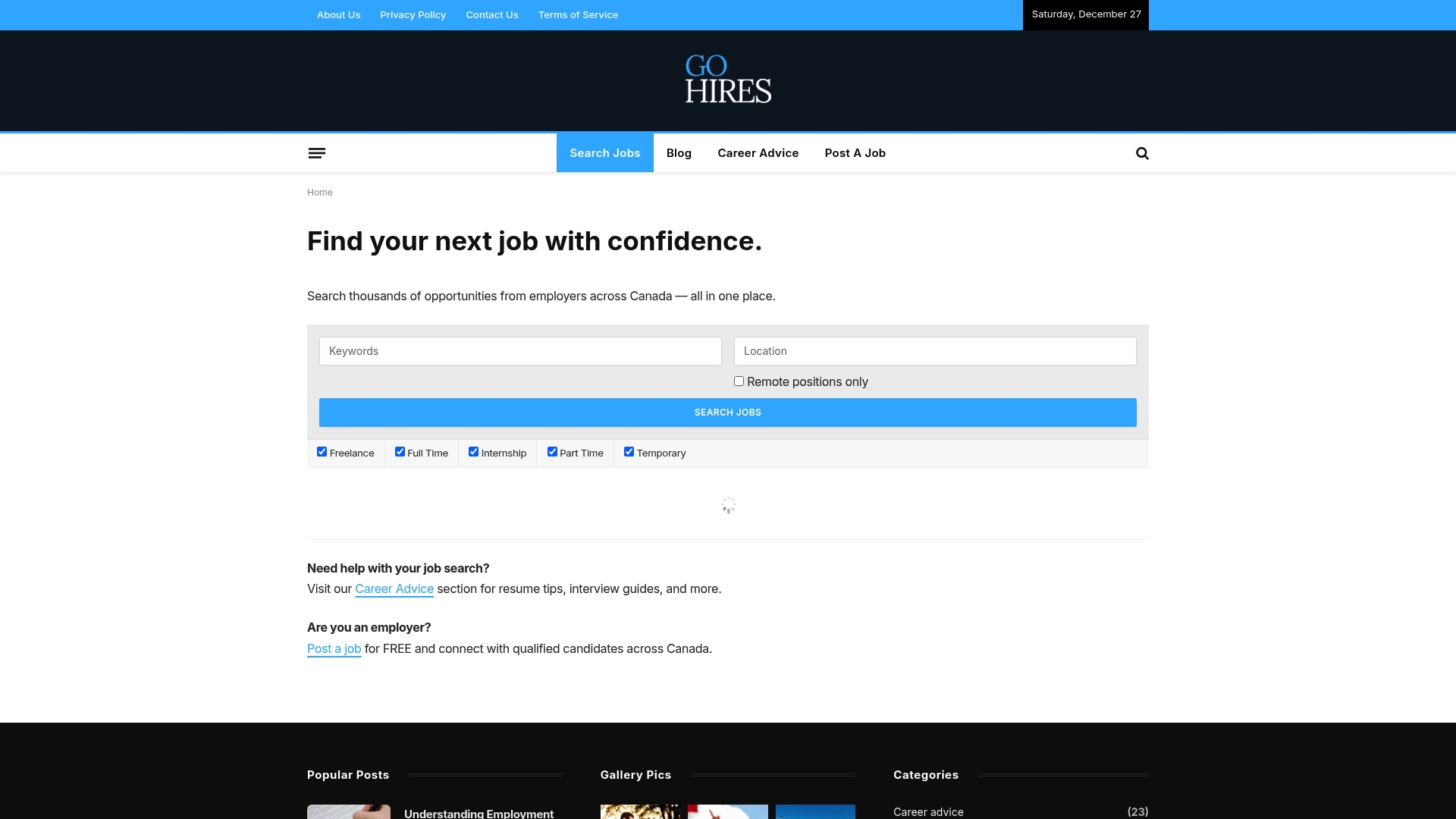
Don’t let complex immigration policies or shifting market needs hold you back. Use Gohires.com today to search flexible openings by location or sector, post your resume to be noticed, and access helpful resources that prepare you for success. Take the first step toward your future in Canada’s most promising industries now by visiting Gohires and discovering how to transform challenges into career wins.
Frequently Asked Questions
What sectors are expected to drive job growth in Canada by 2026?
In 2026, key sectors expected to drive job growth include technology, healthcare, green energy, and digital services. These sectors will be crucial in shaping employment opportunities across the country.
What qualifications are in demand for technology roles in Canada?
For technology roles, advanced digital skills, including expertise in artificial intelligence, cybersecurity, and data analytics are highly sought after. Employers also look for candidates with strong problem-solving capabilities and relevant certifications.
How is the healthcare job market changing in Canada?
The healthcare job market is evolving due to worker shortages and advancements in medical technology. High-demand roles include registered nurses, telehealth specialists, and medical laboratory technologists, who must blend clinical skills with digital proficiency.
What challenges do international job seekers face when applying for jobs in Canada?
International job seekers face challenges such as navigating complex immigration policies, dealing with credential recognition processes, and meeting evolving labor market requirements. Successful applicants need to develop comprehensive strategies that include improving language skills and obtaining relevant professional certifications.
Recommended
- In-Demand Occupations for Immigration to Canada in 2025 – GoHires
- Top Industries in Canada Hiring Immigrants in 2025 – GoHires
- Top 5 Companies to Work for in Canada in 2025 (And How to Get Hired) – GoHires
- How to Get a Job in Canada Before You Immigrate – GoHires
- Wedding Photography Trends 2025 – Impact on Multicultural Toronto Couples | Cinevisualstudios Blog