


More than half of Canadian university students work part-time to manage tuition and living costs while studying. Juggling coursework and a job feels challenging, especially when schedules seem designed for American work habits rather than student priorities. With so many options and responsibilities, finding the right balance can be tough. This guide highlights clear ways to identify flexible roles, maximize professional growth, and avoid common mistakes as you earn valuable experience during your degree.
Table of Contents
- Defining Part-Time Jobs For Students
- Popular Part-Time Roles And Work Settings
- Skills And Experience Developed Through Part-Time Work
- Legal Regulations And Eligibility In Canada
- Financial Benefits And Tax Considerations
- Common Pitfalls And How To Avoid Them
Key Takeaways
| Point | Details |
|---|---|
| Part-Time Jobs Benefit Students | Part-time jobs are essential for students to gain professional experience while balancing academic responsibilities, typically working 15-20 hours weekly. |
| Important Skills Development | Engaging in part-time work helps students develop key skills such as time management, communication, and teamwork, benefiting their future careers. |
| Financial Advantages | Working part-time provides financial support for education and living expenses while allowing students to learn budgeting and financial management. |
| Avoid Common Pitfalls | Students should carefully manage work commitments, prioritize academic responsibilities, and maintain a balance to prevent burnout. |
Defining Part-Time Jobs for Students
Part-time jobs represent a strategic employment approach for students seeking to balance academic commitments with professional experience. These positions are characterized by flexible work schedules that accommodate educational priorities, typically involving fewer hours compared to full-time employment.
Traditionally, part-time employment for students involves working 15 to 20 hours weekly, which allows individuals to maintain academic performance while generating income. According to expert recommendations, maintaining work hours between 15-20 per week helps students preserve a healthy balance between educational responsibilities and professional development.
The key characteristics of student part-time jobs include:
- Flexible scheduling around academic courses
- Reduced weekly work hours (typically 20 hours or less)
- Potential for seasonal or year-round opportunities
- Alignment with academic calendars and study commitments
Students can explore part-time positions across various sectors, including retail, hospitality, tutoring, campus jobs, and freelance opportunities that provide valuable work experience without overwhelming their academic responsibilities.
Pro tip: Research campus job boards and student employment centers to discover part-time opportunities specifically designed for students’ unique scheduling needs.
Popular Part-Time Roles and Work Settings
Student employment spans diverse work environments that accommodate academic schedules and provide valuable professional experience. International and local students frequently find part-time opportunities in sectors like hospitality, retail, campus services, and customer support, offering flexible entry-level positions that align with educational commitments.
The most prevalent part-time roles for students typically include:
- Retail sales associates
- Restaurant and food service staff
- Campus library or administrative assistants
- Tutoring and academic support roles
- Customer service representatives
- Event staff and campus event coordinators
- Freelance and digital work opportunities
Work settings for student employment are strategically designed to provide maximum flexibility. Students can explore opportunities within local businesses, university departments, and service sectors that understand and accommodate academic schedules. These roles not only generate income but also help students develop transferable professional skills and build initial work experience.
Additionally, students should consider factors like language proficiency, work permit requirements, and potential scheduling constraints when exploring part-time employment. Campus career centers and specialized student employment agencies can be excellent resources for finding appropriate and legally compliant work opportunities.
Here’s a quick comparison of common part-time job sectors for students in Canada:
| Sector | Typical Work Hours | Benefits for Students |
|---|---|---|
| Retail | Evenings, weekends | Customer service experience |
| Hospitality | Flexible shifts | Tips and teamwork skills |
| Campus Roles | Daytime, on-site | Convenient location, networking |
| Tutoring | By appointment | Subject mastery, leadership |
| Freelancing | Project-based | Portfolio building, remote work |
Pro tip: Create a flexible resume highlighting your adaptability and willingness to work varied shifts to increase your chances of securing desirable part-time positions.
Skills and Experience Developed Through Part-Time Work
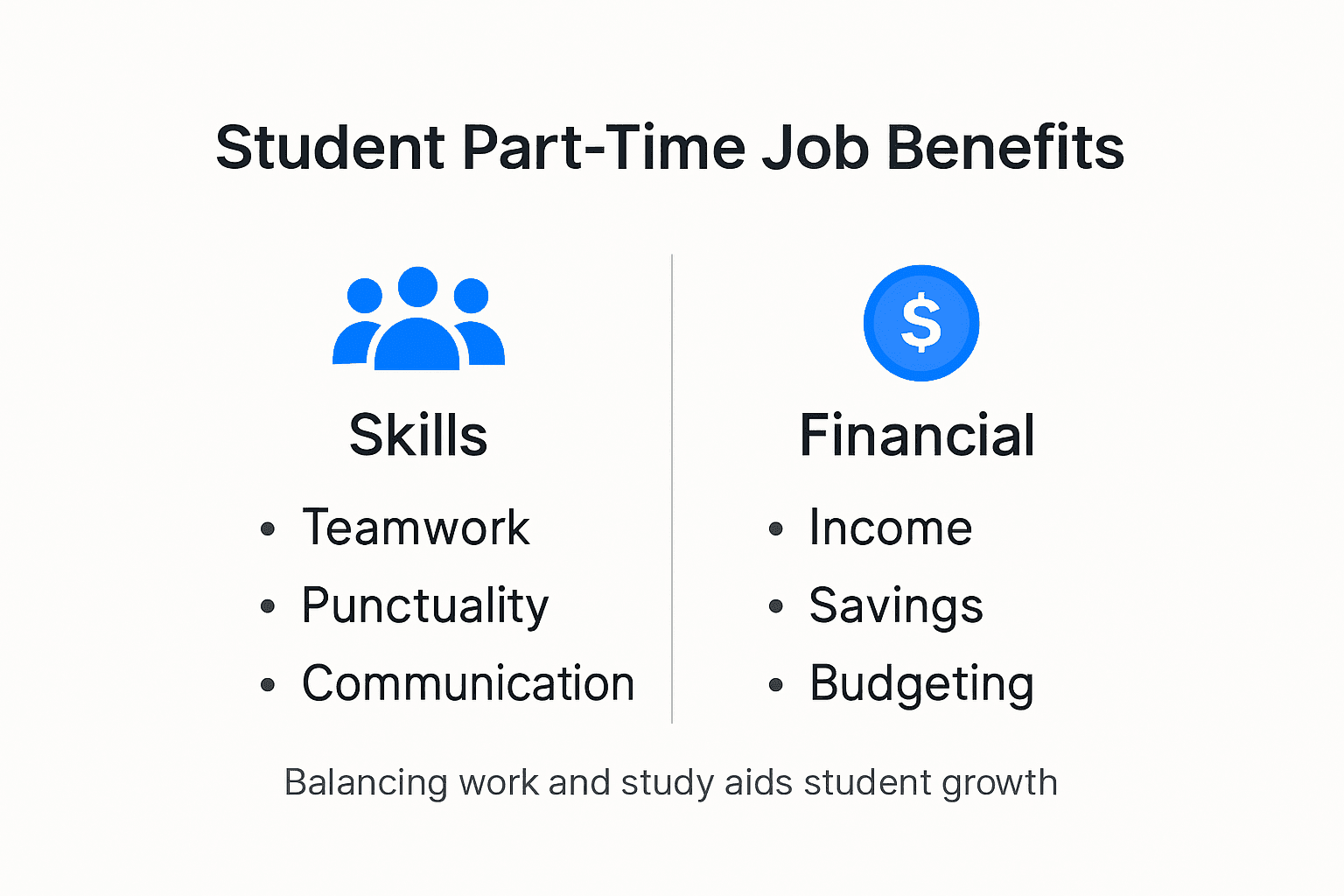
Part-time work offers students a critical pathway to developing essential professional skills that extend far beyond traditional classroom learning. These experiences provide real-world exposure, enabling students to cultivate practical competencies that employers actively seek in entry-level candidates.
Key skills developed through part-time employment include:
- Time Management: Balancing work and academic responsibilities
- Communication Skills: Interacting with colleagues and customers
- Teamwork: Collaborating in diverse work environments
- Problem-solving: Addressing workplace challenges independently
- Professional Etiquette: Understanding workplace norms and expectations
Research indicates that students engaged in quality part-time jobs demonstrate higher chances of academic success and improved future employment prospects. The supportive work environments not only provide financial benefits but also create opportunities for personal and professional growth. Students learn to navigate professional challenges, develop resilience, and build confidence through practical work experiences.

Moreover, part-time jobs serve as valuable networking platforms, allowing students to establish professional connections, understand industry dynamics, and potentially discover career pathways aligned with their academic interests. These experiences contribute significantly to personal development, helping students transition more smoothly from academic settings to professional environments.
Pro tip: Document your workplace achievements and skills learned in a professional portfolio to demonstrate your practical experience during future job applications.
Legal Regulations and Eligibility in Canada
Navigating part-time employment regulations in Canada requires understanding specific legal requirements for international and domestic students. Students interested in working while studying can explore comprehensive guidelines for obtaining the necessary work permits.
Key eligibility criteria for student part-time work in Canada include:
- Valid student visa or study permit
- Enrolled full-time at a designated learning institution
- Authorized to work on or off campus
- Maintaining satisfactory academic progress
International students are typically permitted to work up to 20 hours per week during academic sessions and full-time during scheduled breaks. Canadian permanent residents and citizens have more flexible work options without additional restrictions. Work permit regulations differ based on student status, educational institution, and specific visa conditions.
Students must carefully review their specific permit conditions, as work authorization can vary depending on their program of study, institution type, and immigration status. Understanding the intricacies of the Canadian study permit process is crucial for maintaining legal work eligibility.
Pro tip: Consult your university’s international student office and review your specific work permit conditions before accepting any part-time employment to ensure full legal compliance.
Financial Benefits and Tax Considerations
Part-time employment offers students significant financial advantages beyond immediate income generation. Understanding employment contract details becomes crucial for managing financial expectations and tax obligations.
Key financial considerations for student workers include:
- Supplementing educational expenses
- Building personal savings
- Reducing student loan dependency
- Gaining financial independence
- Developing budgeting skills
Tax implications for student workers involve specific nuances unique to Canadian regulations. Students must track their annual earnings, understand basic tax deduction principles, and recognize income thresholds that might impact their tax filing requirements. Most part-time student workers fall under lower tax brackets, which means minimal tax liability while providing an opportunity to learn financial management.
Canadian students should be aware that part-time earnings can affect other financial considerations such as student loan eligibility, scholarship requirements, and potential government benefit calculations. Maintaining accurate financial records and consulting with university financial advisors can help navigate these complex interactions between employment income and academic financial support.
This table summarizes the main financial and legal considerations for student workers in Canada:
| Aspect | Key Guidance | Impact on Students |
|---|---|---|
| Tax Filing | Track all income, file annually | Learn tax basics, avoid penalties |
| Work Permits | Follow study permit rules, check hour limits | Maintain legal work status |
| Scholarships | Check income effects on eligibility | Protect funding opportunities |
| Budgeting | Monitor expenses vs. income | Build financial responsibility |
Pro tip: Keep detailed records of all work-related income and consult a tax professional to understand potential deductions and optimize your financial strategy.
Common Pitfalls and How to Avoid Them
Students often encounter challenges when balancing part-time work with academic responsibilities that can potentially compromise their educational performance, making strategic planning essential for successful employment.
Common pitfalls students should be aware of include:
- Overcommitting work hours
- Selecting jobs unrelated to career goals
- Neglecting academic priorities
- Failing to establish clear work boundaries
- Underestimating financial and time management challenges
To mitigate these risks, students must proactively manage their work-study balance. This involves carefully selecting positions with flexible scheduling, maintaining open communication with employers about academic commitments, and consistently evaluating how part-time work impacts overall academic performance. Prioritizing roles that offer skill development, reasonable hours, and alignment with long-term career objectives can significantly reduce potential negative consequences.
Additionally, students should leverage university career services, seek mentorship from academic advisors, and regularly reassess their work-study balance. Creating a structured schedule, setting realistic expectations, and maintaining transparent communication with both employers and educational institutions can help prevent burnout and ensure academic success.
Pro tip: Create a detailed weekly schedule that allocates specific time blocks for work, study, and personal activities to maintain a healthy and sustainable balance.
Unlock Your Potential with the Right Part-Time Job
Balancing studies with meaningful part-time work can be a challenge for many students striving for both academic success and professional growth. This article highlights the importance of selecting flexible roles that foster skill development while managing your time effectively. With concerns like work permit rules, tax considerations, and the need to avoid academic burnout, finding the right opportunity is essential.
At Gohires, we understand these challenges and provide a dedicated platform tailored to help Canadian students discover part-time jobs that fit their schedules and career goals. Whether you seek positions across retail, hospitality, tutoring, or freelance fields, our comprehensive listings make the search simple and efficient.
Start exploring jobs today and take control of your future with confidence. Visit Gohires.com now to find flexible part-time roles, access expert career advice, and secure employment opportunities designed just for students. Don’t wait to build your skills and finances while excelling in your studies.
Frequently Asked Questions
What are the main benefits of part-time jobs for students?
Part-time jobs allow students to gain professional experience, develop essential skills, earn income to support education, and enhance time-management abilities while balancing academic commitments.
How many hours should students work in a part-time job?
Experts recommend that students maintain between 15 to 20 hours of work per week to preserve a healthy balance between work and academic responsibilities.
What skills can students develop through part-time jobs?
Students can develop time management, communication, teamwork, problem-solving, and professional etiquette skills through real-world work experiences.
How can students ensure they maintain a healthy work-study balance?
Students can maintain balance by selecting flexible job positions, setting clear work boundaries, prioritizing academic commitments, and regularly reassessing their workload and its impact on their studies.
Recommended
- Part-Time Job Opportunities for Students in Canada – GoHires
- How to Work While Studying in Canada: Rules and Opportunities – GoHires
- The Benefits of Studying in Canada for Your Career – GoHires
- A Day in the Life of an International Student in Canada – GoHires
- Why Effective Scheduling Saves Time: Complete Guide – WhenNOT Blog