


Most American and Canadian employers now view internships as a critical step to landing a rewarding career, with research showing that graduates who complete internships are up to 60 percent more likely to secure full-time positions. For Canadian university students, the right internship can set you apart in an increasingly crowded job market. This guide helps clear up lingering misconceptions and spells out what truly makes internships such powerful career-building opportunities.
Table of Contents
- Internships Defined And Common Misconceptions
- Types Of Internships Canadian Students Pursue
- How Internship Programs Typically Work
- Legal Eligibility And Work Permit Requirements
- Key Benefits For Students And Employers
- Common Pitfalls And How To Avoid Them
Key Takeaways
| Point | Details |
|---|---|
| Structured Learning Experience | Internships bridge academic knowledge with real-world skills, providing valuable professional development opportunities. |
| Diverse Internship Types | Canadian students have access to various internship types, including traditional industry placements, co-op programs, and research internships. |
| Legal Requirements for International Students | International students must adhere to specific legal eligibility and work permit criteria to participate in internships in Canada. |
| Mutual Benefits | Internship programs foster symbiotic relationships between students and employers, enhancing skill development and talent acquisition. |
Internships Defined and Common Misconceptions
An internship represents a structured professional learning experience designed to bridge academic knowledge with real-world workplace skills. According to the National Association of Colleges and Employers (NACE), an internship is more than just a temporary job assignment, serving as an intentional educational opportunity that integrates classroom learning with practical skill development.
Contrary to popular belief, internships are not simply about fetching coffee or completing mundane administrative tasks. Modern internship programs offer substantive professional experiences where students engage in meaningful project work, develop critical industry skills, and gain authentic workplace exposure. Prospects highlights that reputable internships increasingly involve complex, project-based learning across diverse industries, challenging the outdated notion that internships are low-value, menial experiences.
The Canadian job market recognizes internships as critical pathways for career development, particularly for university students seeking to establish professional networks and gain competitive credentials. These structured experiences typically range from 4 to 12 months and can be paid or unpaid, depending on the sector and specific program requirements. Key characteristics of high-quality internships include:
- Clear learning objectives
- Professional mentorship
- Hands-on skill development
- Potential for future employment
- Alignment with academic and career goals
Pro tip: Research internship opportunities early and connect with your university’s career services to maximize your chances of securing a meaningful placement that accelerates your professional development.
Types of Internships Canadian Students Pursue
Canadian universities and colleges offer diverse internship opportunities that cater to different academic disciplines and career aspirations. The Government of Canada outlines several structured work-integrated learning experiences that students can pursue, ranging from traditional short-term placements to comprehensive cooperative education programs.
The most prevalent types of internships in Canada include:
- Traditional Industry Internships: Typically 4-12 weeks, these placements allow students to gain hands-on experience within specific corporate sectors like technology, finance, healthcare, and marketing.
- Cooperative (Co-Op) Education Programs: These structured experiences alternate between academic terms and full-time work terms, often providing students with extended professional exposure and potential for future employment.
- Research-Based Internships: Predominantly found in scientific and academic fields, these opportunities enable students to contribute to specialized research projects while gaining advanced practical skills.
- Summer Internship Programs: Concentrated short-term experiences typically offered between academic years, allowing students to gain concentrated professional development during university breaks.
- Government and Non-Profit Internships: Specialized placements within public sector organizations and social impact institutions that provide unique learning environments.
Each internship type offers distinct advantages, with compensation and structure varying significantly across different industries and academic disciplines. Some programs provide paid opportunities, while others might offer academic credit or professional networking potential.
Here is a comparison of the main types of internships available to Canadian students:
| Internship Type | Duration | Typical Fields | Key Advantage |
|---|---|---|---|
| Traditional Industry | 4-12 weeks | Business, Technology | Fast-paced workplace experience |
| Cooperative Education (Co-op) | 4-12 months | Many academic disciplines | Integrated academic/work cycles |
| Research-Based | Variable, longer | STEM, Academia | Deep research skill building |
| Summer Programs | 8-16 weeks | Broad disciplines | Flexibility during school break |
| Government & Non-Profit | 2-6 months | Public, Social Sectors | Civic engagement opportunities |
Pro tip: Connect with your university’s career services department to identify internship opportunities specifically tailored to your academic program and career goals.
How Internship Programs Typically Work
The Government of Canada explains that internship programs are carefully structured learning experiences involving intricate coordination between academic institutions, students, and potential employers. These programs are designed to create meaningful professional development opportunities that integrate classroom learning with practical workplace skills.
The typical internship program follows a comprehensive process with several critical stages:
- Program Preparation
- Academic departments develop partnerships with potential employers
- Learning objectives are established
- Eligibility criteria are defined for student participation
- Student Selection
- Students apply and interview for specific internship positions
- Academic performance and professional potential are evaluated
- Matching process considers student skills and employer requirements
- Work Term Execution
- Intern works under professional supervision
- Regular performance evaluations are conducted
- Students complete assigned projects and contribute to organizational goals
- Assessment and Reporting
- Final performance evaluations are completed
- Academic credit may be awarded
- Feedback is gathered from both employer and student
International students must also navigate specific work permit requirements to participate in these programs, adding an additional layer of complexity to the internship process. Some programs may run during academic terms, while others are concentrated during semester breaks.

Pro tip: Develop a comprehensive portfolio documenting your internship experiences, including project outcomes and skills acquired, to enhance your future employment prospects.
Legal Eligibility and Work Permit Requirements
Canadian immigration authorities have established specific legal requirements for international students seeking internship work permits. These regulations ensure that work experiences are directly tied to academic programs and maintain the integrity of educational exchange opportunities.
To be legally eligible for an internship work permit, students must meet several critical criteria:
- Valid Study Permit: Students must possess a current study permit for a recognized Canadian educational institution
- Full-Time Enrollment: Participation requires continuous full-time enrollment in an eligible academic program
- Program Integration: The internship must be a mandatory component of the academic curriculum
- Work Duration Limitations: Internship work cannot exceed 50% of the total study program duration
- Institutional Verification: A formal letter from the academic institution confirming the work placement requirement is mandatory
International students from partner countries can access specialized International Co-op Internship permits through the International Experience Canada program. These permits require additional qualifications, including:
- Enrollment in higher education
- Signed agreements between institution and employer
- Proof of health and financial stability
- Comprehensive health insurance coverage
The application process involves multiple steps, including candidate pool registration, receiving an invitation, and completing detailed permit documentation. Strict compliance with these requirements is essential to maintain legal status and avoid potential immigration complications.
Pro tip: Begin your work permit application process at least three months before your intended internship start date to allow sufficient time for processing and potential follow-up documentation.
Key Benefits for Students and Employers
Internship programs create a powerful symbiotic relationship between academic institutions, students, and employers, delivering significant advantages for all stakeholders. Students can leverage these opportunities to gain critical professional experience that transforms theoretical knowledge into practical workplace skills.
Benefits for Students:
- Professional Skill Development: Hands-on experience in real-world work environments
- Industry Networking: Direct connections with potential future employers
- Resume Enhancement: Tangible work experience before graduation
- Career Exploration: Understanding workplace dynamics and professional expectations
- Potential Job Placement: Increased likelihood of post-graduation employment
Benefits for Employers:
- Talent Pipeline: Access to motivated, recently trained potential employees
- Fresh Perspectives: Young professionals bringing innovative ideas and current academic insights
- Cost-Effective Talent Acquisition: Lower-risk method of evaluating potential long-term employees
- Knowledge Transfer: Bridging academic research with industry practical applications
- Corporate Social Responsibility: Supporting educational and professional development
The mutual advantages create a win-win scenario where students gain invaluable professional exposure while employers cultivate potential future talent. This collaborative approach transforms traditional learning models by integrating academic knowledge with practical workplace experience.
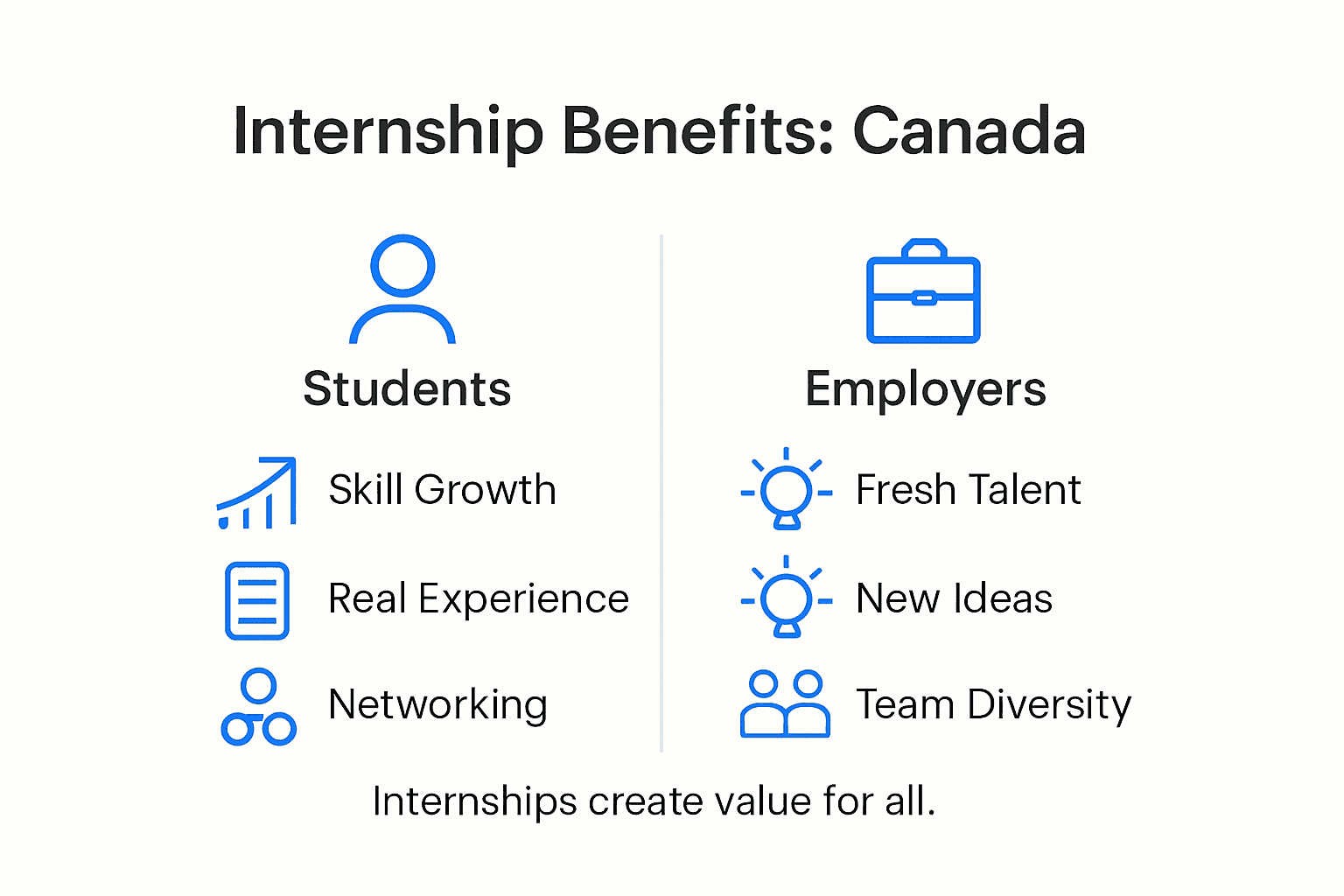
The table below highlights the key benefits of internship programs for both students and employers:
| Benefit Area | Students | Employers |
|---|---|---|
| Skill Enhancement | Real-world skill application | Talent development pipeline |
| Career Advancement | Improved post-grad prospects | Evaluate potential hires efficiently |
| Knowledge Transfer | Industry insight and mentoring | Access to new academic approaches |
| Network Expansion | Build professional connections | Strengthen university relationships |
Pro tip: Approach internships as learning opportunities, not just job placements, by maintaining a growth mindset and actively seeking feedback from workplace mentors.
Common Pitfalls and How to Avoid Them
Successful internship experiences require strategic navigation of potential workplace challenges, with students needing to understand and proactively address common professional obstacles. Recognizing these pitfalls early can transform an ordinary internship into an extraordinary career development opportunity.
Key Pitfalls to Anticipate:
- Passive Communication: Failing to ask questions or seek clarification
- Unprofessional Behavior: Inconsistent punctuality or inappropriate workplace interactions
- Limited Engagement: Minimal effort beyond assigned tasks
- Poor Time Management: Missing deadlines or inefficient workflow
- Networking Hesitation: Avoiding opportunities to build professional relationships
Strategies for Overcoming Challenges:
- Proactive Communication
- Ask thoughtful, relevant questions
- Request periodic feedback from supervisors
- Demonstrate genuine interest in learning
- Professional Development
- Maintain consistent, punctual attendance
- Dress appropriately for workplace culture
- Show initiative and willingness to learn
- Performance Optimization
- Develop strong organizational skills
- Create personal productivity systems
- Document and track project progress
Internships represent critical learning environments where professional growth occurs through active participation and strategic self-improvement. Understanding potential challenges allows students to approach these experiences with confidence and intentionality.
Pro tip: Maintain a professional journal documenting your internship experiences, challenges overcome, and skills acquired to create a comprehensive record of your professional development.
Accelerate Your Career Growth with Tailored Internship Opportunities
If you are ready to turn your academic knowledge into valuable professional skills through a meaningful internship in Canada, the key challenge lies in finding the right opportunity that aligns perfectly with your career goals and legal requirements. This article emphasizes the importance of internships offering clear learning objectives, professional mentorship, and real-world experience to boost your career fast. At Gohires.com, we understand that navigating the Canadian internship landscape can be complex whether you are an international student or a recent graduate seeking the ideal placement.
Start your journey now by exploring hundreds of verified internship listings tailored for Canadian students and graduates across diverse sectors. Our platform makes it easy to search by location, employment type, and industry to help you find internships that integrate education with practical experience. Don’t wait to build your professional network and enhance your resume with rewarding roles that can lead to permanent employment. Visit Gohires.com to find your next opportunity and unlock your career potential today.
Frequently Asked Questions
What is the purpose of an internship?
An internship is a structured professional learning experience that connects academic knowledge with real-world workplace skills, allowing students to gain practical experience and develop industry-relevant skills.
How long do internships typically last?
Internships can range from 4 to 12 months, depending on the specific program and the industry in which it operates. Short-term placements usually last between 4 to 12 weeks.
Can international students participate in internships?
Yes, international students can participate in internships, but they must meet specific legal requirements, including having a valid study permit and enrollment in an eligible academic program that requires an internship as part of the curriculum.
What are the benefits of internships for students?
Internships provide students with valuable professional skill development, industry networking opportunities, enhanced resumes, career exploration experiences, and the potential for future job placements.
Recommended
- How to Get a Co-Op or Internship Opportunity in Canada: A Guide to Building Canadian Work Experience – GoHires
- The Benefits of Studying in Canada for Your Career – GoHires
- The Role of Volunteering in Gaining Canadian Work Experience – GoHires
- Networking Tips for Immigrants: Building Professional Connections in Canada – GoHires
1 Comment
Pingback: Job Offer Meaning Canada – Entry Pathways for Students