


Most international students and recent graduates in Canada feel overwhelmed by unfamiliar job search steps, especially when compared to the American process. This guide walks through the full process of how to get employed in Canada, from your first document to your first interview.
If you already live in Canada and you are moving from one province to another, most of what follows still applies to you.
The paperwork looks a little different and licensing rules can shift at the provincial line, but the core job search steps stay the same whether you just landed at Pearson or you are relocating from Calgary to Halifax. If you are still in school or you just graduated, our essential job search tips for recent graduates are a good companion read alongside this guide.
Table of Contents
- Step 1: How to check if your profession is regulated
- Step 2: Identify Suitable Job Opportunities Online
- Step 3: Customize Your Resume And Cover Letter
- Step 4: Build Your Network and Access the Hidden Job Market
- Step 5: Verify Application Status And Follow Up
- Step 6: Prepare for the Interview
Quick Summary
| Key Insight | Explanation |
|---|---|
| 1. Obtain Your Social Insurance Number | Essential for legal employment and accessing benefits; get it from Service Canada immediately. |
| 2. Tailor Your Resume and Cover Letter | Highlight specific achievements and use Canadian standards; customize for each application to meet employer expectations. |
| 3. Use Multiple Job Search Platforms | Leverage government resources, specialized job boards, and company websites to maximize job opportunities. |
| 4. Follow Application Instructions Carefully | Adhere to specific submission requirements, including requested documents, to avoid disqualification from the hiring process. |
| 5. Track Applications and Follow Up | Maintain a record of submissions and follow up respectfully after one to two weeks to express continued interest. |
Step 1: How to check if your profession is regulated
A regulated profession in Canada is one where you need a license, certificate, or registration from a provincial or territorial body before you can legally work in it. Nursing, teaching, engineering, and skilled trades like electrician or plumber almost always fall into this category.
Here is a straightforward way to figure out where you stand:

- Search your occupation against Canada’s National Occupational Classification (NOC) system. This tells you the official job title and code Canadian employers and regulators use, which matters because “engineer” in your home country might map to a different regulated category here.
- Check with the provincial regulatory body for that occupation in the province where you plan to work. Licensing is handled provincially, not federally, so a nursing license approved in Ontario does not automatically transfer to British Columbia.
- Use a national credential assessment resource, such as the Canadian Information Center for International Credentials (CICIC), to find the right regulator for your field. CICIC does not issue licenses itself, but it points you toward the body that does, which saves a lot of guessing.
- Ask about bridging programs if your credentials fall short of full recognition. Many regulators and colleges run bridging courses that fill specific gaps, rather than requiring you to redo an entire degree.
Even if your job is not regulated, it is worth doing this check early.
Step 2: Identify suitable job opportunities online
Successfully finding a job in Canada requires strategic online research and utilizing multiple digital platforms to maximize your employment prospects. Your goal is to systematically explore job opportunities that match your professional background and skills.

Start by exploring comprehensive job search resources provided by the Government of Canada. These official platforms offer robust search tools connecting job seekers with potential employers across various industries. Beyond government websites, leverage specialized job boards like LinkedIn, Indeed, and sector specific professional networks relevant to your field. Many Canadian employers prefer candidates who demonstrate proactive job search strategies, so create comprehensive online profiles that highlight your international experience and qualifications.
Develop a systematic approach to online job searching by setting up email alerts, customizing search parameters, and tracking application submissions. Research company websites directly as many organizations post positions exclusively on their own platforms. Professional associations in your industry may also provide exclusive job boards or recruitment channels that are not widely advertised.
Pro tip: Create a dedicated spreadsheet to track job applications, including company name, position, application date, and follow up notes to maintain an organized and professional job search process.
Compare key online resources for finding jobs in Canada:
| Resource Type | Example Platforms | Main Advantage |
|---|---|---|
| Government sites | Job Bank, GC Jobs | Trusted, verified positions |
| General job boards | Indeed, Workopolis | Wide industry coverage |
| Professional sites | LinkedIn, industry sites | Networking and tailored jobs |
| Company websites | Corporate careers pages | Direct employer outreach |
Step 3: Customize your resume and cover letter
Successfully landing a job in Canada requires crafting documents that speak directly to employers expectations and showcase your unique professional value. Your resume and cover letter are your primary marketing tools for presenting your skills and experience in a way that resonates with Canadian hiring managers.
Start by understanding Canadian resume standards, which emphasize clarity, conciseness, and direct alignment with job requirements. Carefully analyze each job description and strategically incorporate keywords that match the position. Highlight specific achievements and quantifiable results rather than simply listing job duties. Your cover letter should complement your resume by providing context about your professional background and explaining why you are an exceptional candidate for the specific role.
Tailor each application package to the individual employer by researching their organization and demonstrating how your unique skills and international experience can contribute to their team. Use a clean professional format that is easy to read and avoid including personal details like age or marital status. Focus on creating a narrative that shows progression in your career and demonstrates your potential value to prospective Canadian employers.
Pro tip: Request feedback on your resume and cover letter from local professionals or immigrant support organizations to ensure your documents meet Canadian professional standards and effectively communicate your qualifications.
Step 4: Build Your Network and Access the Hidden Job Market
Networking matters in Canada because a large share of open roles never get posted publicly. Companies fill them through referrals, internal moves, and warm introductions before a job ad ever goes live.
- Use LinkedIn to build relationships, not just to browse listings. Search for people who work in your target role or company, send a short connection request that mentions something specific about their work, and ask for a 15-minute conversation, not a job.
- Go to industry events and meetups, even virtual ones. Every major Canadian city has meetup groups, industry conferences, and professional mixers tied to specific fields, from tech to healthcare to skilled trades.
- Join a professional association in your field. Many associations run their own job boards, mentorship programs, and newcomer-specific chapters.
- Ask for informational interviews, and treat them as a real skill, not small talk. An informational interview is a short, low-pressure conversation where you ask someone about their career path, their industry, and their company, without asking them for a job directly. Prepare four or five specific questions ahead of time, keep it to the time you asked for, and send a thank-you note after.
Pro tip: Set a weekly networking target, such as five new LinkedIn conversations or one informational interview, and track it the same way you track applications.
Networking works alongside your applications, not instead of them.
Step 5: Verify application status and follow up
Navigating the job application process requires strategic patience and professional communication. Your goal is to demonstrate continued interest while maintaining a respectful approach to potential employers.
Understanding appropriate follow up strategies is crucial for international job seekers in Canada. Create a systematic tracking method for all submitted applications, recording the date of submission, position applied for, and expected response timeframes. Wait approximately one to two weeks after applying before sending a polite follow up email inquiring about your application status. When reaching out, reference the specific job posting, briefly restate your key qualifications, and express continued enthusiasm for the role.
Develop a professional communication strategy that demonstrates respect for the employer’s time. Use a concise and courteous tone in all follow up correspondence, and be prepared for varied response times across different organizations. Some employers may respond quickly, while others might take several weeks to review applications. Maintain a positive attitude and continue applying to multiple positions simultaneously to maximize your opportunities.
Pro tip: Create a dedicated spreadsheet to track application dates, follow up communications, and employer responses to help you manage multiple job applications efficiently and professionally.
Step 6: Prepare for the Interview
A Canadian job interview usually has three parts: a review of your background, behavioral questions about how you have handled real situations, and a discussion of your fit with the team. Getting the interview stage right is where all the earlier steps pay off, so it deserves real preparation, not just a quick read-through of your resume the night before.
Behavioral questions are the norm, and the STAR format helps you answer them.
Canadian interviewers frequently ask questions that start with “Tell me about a time when…” rather than hypothetical questions. STAR stands for Situation, Task, Action, and Result, and it gives you a simple structure: describe the situation briefly, explain what you needed to do, walk through the specific action you took, and close with the measurable result. Prepare three or four stories from your own experience that you can adapt to different questions, rather than trying to memorize a separate answer for every possible question.
Virtual interviews come with their own etiquette.
Many first-round interviews in Canada happen over video, especially for candidates applying from outside the country. Test your camera and audio ahead of time, choose a quiet space with decent lighting, and treat it with the same seriousness as an in-person meeting, including dressing professionally from head to toe in case you need to stand up. Follow-up timing after an interview differs slightly from follow-up timing after an application.
A short thank-you email within 24 hours of the interview is expected and appreciated.
It is not the same as the one-to-two week follow-up window covered in Step 7 for applications sitting without a response; this one is quicker and more personal, referencing something specific from your conversation.
Pro tip: Practice your STAR stories out loud, not just in your head. Saying them once or twice before the actual interview is usually the difference between a story that flows naturally and one that sounds rehearsed or gets stuck partway through. This section covers the basics of getting interview-ready. For a full breakdown of common Canadian interview questions and deeper preparation strategies by industry, see our complete interview preparation guide.
Finding a Job in a Different Canadian Province
Looking for how to get a job in another province usually means one thing: you already live and work in Canada, and you are relocating for a new opportunity, a partner’s job, or a change of pace. You still need a tailored resume, you still use the same job search platforms, and you still benefit from networking and following up on applications.
Where things do shift is licensing. If you work in a regulated profession, your credentials do not automatically transfer across provincial lines. Revisit the regulated-profession check in Step 1 for your specific field and province before you commit to a move.
Cost of living is worth researching before you accept an offer, not after. Rent, groceries, and transportation costs vary significantly between provinces and even between cities within the same province. Beyond licensing and cost of living, treat the move like any other job search: use the platforms in Step 2, browse current job openings across Canada filtered by your target location, and lean on your existing Canadian network for introductions in your new city.
Boost Your Canadian Job Search with Gohires
Finding the right job in Canada can feel overwhelming especially when you face challenges like tailoring your resume, navigating application processes, or tracking your submissions. This guide highlights critical steps such as preparing essential documents, customizing your resume, and following up effectively. Overcome these hurdles confidently by using a platform designed to streamline each of these phases in your job search.
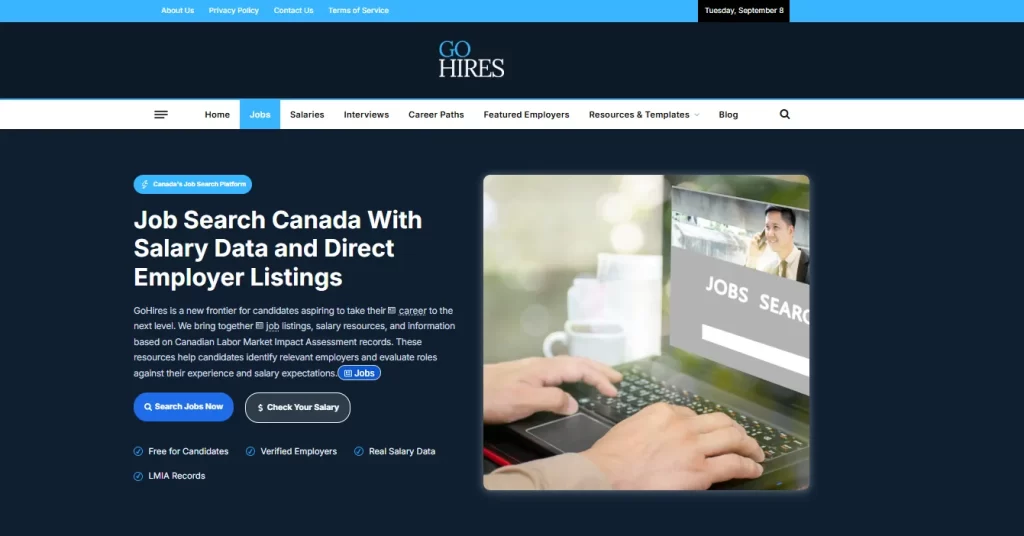
Visit Gohires today to access a comprehensive range of Canadian job listings searchable by location and employment type. Benefit from tools that help you organize your applications and expert advice on crafting resumes and cover letters tailored to Canadian employers. Don’t wait to turn your goals into offers – explore trusted job opportunities, optimize your application strategy, and take control of your career path now.
Frequently Asked Questions
What documents do I need to start my job search in Canada?
You will need a Social Insurance Number, a Canadian-style resume, and, if applicable, professional licenses or credential assessments. Prepare digital and physical copies of your essential documents, such as educational certificates and identification, to streamline your application process.
How do I customize my resume and cover letter for Canadian jobs?
Tailor your resume and cover letter by analyzing job descriptions and incorporating relevant keywords that match each position. Highlight measurable achievements rather than just duties, and ensure both documents follow Canadian professional standards to increase your chances of getting noticed.
What are some effective job search strategies for finding Canadian jobs?
Utilize a variety of online platforms, including government job boards and sector-specific websites, to expand your search. Set up job alerts and create a dedicated tracking system to monitor your applications and follow up accordingly to demonstrate your ongoing interest.
How can I follow up on my job applications in Canada?
Wait about one to two weeks after submitting your application to follow up with a polite email expressing your interest in the position. Reference the specific job title and briefly restate your qualifications, ensuring your communication remains respectful and professional.
What should I do if my profession requires licensing in Canada?
Research whether your profession needs specific licensing or credential assessments, and start this process early. Contact the relevant regulatory bodies to understand how to validate your international credentials and meet Canadian requirements, ensuring a smoother entry into your field.
How can I get a job in Canada if I’m applying from abroad?
You can apply from abroad by using the same platforms covered in this guide, including Job Bank and LinkedIn, while being upfront in your resume and cover letter about your location and any work permit status. Start your credential assessment and licensing research early if your profession is regulated, since this process often takes longer from outside the country and can otherwise stall an offer after you have already been selected.
How do I find a job in a different province within Canada?
Finding a job in a different province follows the same core steps as any Canadian job search: a tailored resume, active use of job platforms, and consistent networking. The main difference is licensing, since regulated professions require separate approval from each province’s regulatory body, so check this before you commit to relocating.
How long does it typically take to find a job in Canada?
Timelines vary widely depending on your industry, location, and whether your profession requires licensing, so there is no single accurate number that applies to everyone. A job search without licensing barriers, backed by consistent applications and active networking, tends to move faster than one where you are also waiting on a credential assessment or provincial license.
Is networking really necessary to find a job in Canada?
Networking is not strictly required, but it meaningfully improves your odds, since many roles in Canada are filled through referrals before they are ever posted publicly. Even a modest weekly effort, such as one informational interview or a handful of LinkedIn conversations, adds a channel that job boards alone cannot offer.
What’s the difference between a resume and a CV in Canada?
In Canada, a resume is a concise document, usually one to two pages, that summarizes your relevant skills and achievements for a specific job. A CV, or curriculum vitae, is longer and more comprehensive, and it is mainly used in academic, research, or medical fields where a full history of publications, grants, and credentials matters.
4 Comments
Pingback: Canadian Labor Market 2026: Trends, Sectors & Job Opportunities
Pingback: 12 Best Jobs for Newcomers in Canada (2026 Guide)
Pingback: Entry-Level Jobs in Canada: Where to Start (2026 Guide)
Pingback: International Student Jobs in Canada: Work Rules & Best Options (2026)