

Last updated: October 8, 2026. Canada-first career intelligence. Labour-market statistics have different reference years and definitions.
Quick answer
Canada’s aerospace and space sectors offer careers in aircraft design, manufacturing, systems integration, avionics, propulsion, testing, maintenance, satellites, mission software and ground operations. You do not always need an aerospace engineering degree. Trades, engineering technology, computer science, mechanical engineering and software testing are viable routes, depending on the occupation. The strongest approach is to choose the kind of product you want to work on, identify the relevant occupation, then build its specific technical and safety credentials.
According to an industry report published July 15, 2026, Canadian aerospace activity supported 218,700 jobs in 2025, counting wider economic impacts. The Canadian Space Agency separately recorded 14,622 direct space-sector jobs in 2024. These figures have different coverage and years and must not be added together. Job Bank’s Canadian national median wage is C$50.00/hour for aerospace engineers and C$34.00/hour for aircraft assemblers, based on 2023-2024 Labour Force Survey data, not guaranteed entry salaries.
The durable career question is not whether one rocket investment creates many jobs. It is which specializations transfer across companies and projects, where hiring clusters exist, which qualifications employers expect, and how applicants can build evidence of competence before vacancies open.
Aerospace versus space: know what industry you are entering
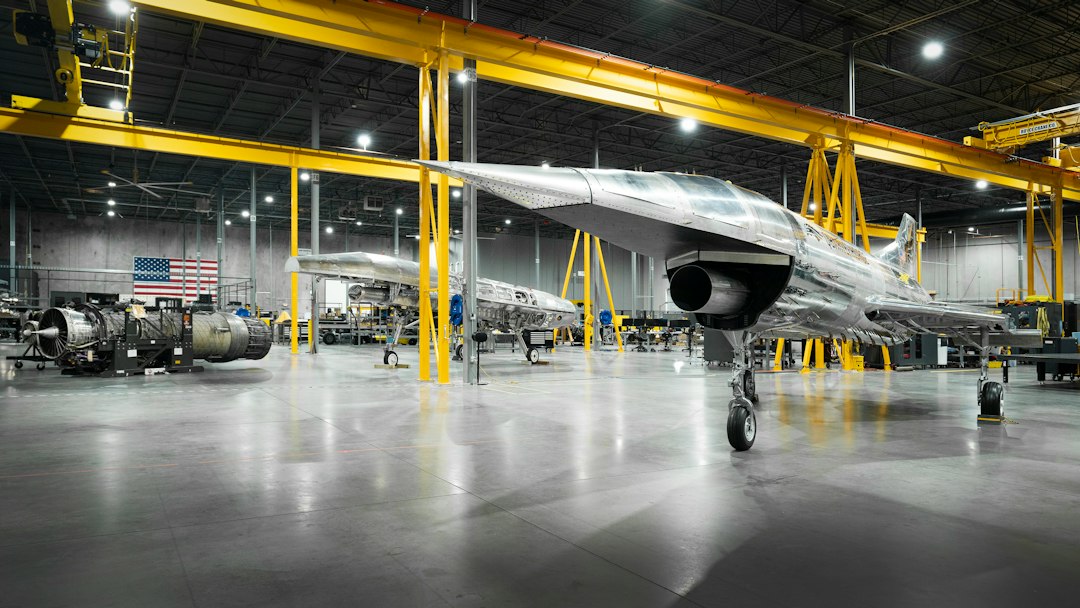
Aerospace includes civil and military aircraft, aircraft engines, structures, avionics, simulators, testing, maintenance and related manufacturing. Space covers satellites, robotics, spacecraft subsystems, launch-related technologies, ground systems, communications, earth observation and mission operations. Companies and occupations overlap. For example, a flight-control software engineer may work on an aircraft, a drone or a satellite using partly transferable safety and verification methods.
The 2026 aerospace industry report issued by AIAC and ISED attributes C$33.1 billion in GDP contribution, 218,700 jobs supported and more than C$1.8 billion in R&D expenditure to Canadian aerospace in 2025. This is a sector-wide economic-impact estimate. It is not a count of currently available aerospace job postings.
The Canadian Space Agency’s 2025 State of the Canadian Space Sector report, using 2024 data, reports 14,622 direct space jobs, with approximately 28,000 total jobs when indirect and induced effects are included. Engineers and scientists represent 41% of the directly measured space workforce. The space economy is smaller and more specialized than broad aerospace manufacturing; hiring may be lumpy and concentrated in specific teams and programs.
Data graphic 1: Canada space-sector workforce by occupation
Engineers and scientists – 41%
Administration – 17%
Students and interns – 14%
Technicians – 10%
Other and health professionals – 8%
Management – 7%
Marketing and sales – 3%
Source: Canadian Space Agency, State of the Canadian Space Sector 2025 report, occupation composition for 2024. Bar lengths are scaled to the largest category (41%). Percentages total 100%; they are composition shares, not future hiring forecasts.
Seven career families and who each fits
1. Aerospace engineering and systems integration
Aerospace engineers work on aerodynamics, structures, loads, propulsion, flight performance and integrated systems. Systems engineers work across requirements, trade-offs, design interfaces, testing and verification. A mechanical, electrical or software engineering degree may be relevant for many projects, even when the job title is not ‘aerospace engineer’. In Canada, regulated professional engineering practice can require provincial or territorial licensure. A degree alone does not confer a P.Eng. designation.
Good fit: applicants who enjoy physics, analysis, design reviews, technical writing and failure investigation. Portfolio proof: a traceable requirements-to-test example, simulation report, CAD design with assumptions, or a university design project with real verification results.
2. Aircraft manufacturing, structures and composites
Aircraft assembly and manufacturing include precision fitting, sheet metal and composite structures, machining, harness fabrication, joining, inspection and production quality. The route may be an apprenticeship, a college diploma, employer training or relevant manufacturing experience. Aircraft production work is not identical to aircraft maintenance, and applicants should not confuse a manufacturing qualification with a Transport Canada AME licence.
Good fit: hands-on applicants comfortable with technical drawings, precise measurements, repeatable processes and quality documentation. Portfolio proof: correctly documented sample parts, inspection records, manufacturing process improvements and applied safety training. See Advanced Manufacturing Careers in Canada for related automation and production pathways.
3. Avionics, electronics, control systems and test
Avionics professionals work with sensors, flight electronics, communications, navigation, control hardware and the interfaces between aircraft systems. Electronics engineering technology, electrical engineering, embedded computing and test engineering are common educational foundations. Strong candidates can read schematics, interpret test procedures, isolate faults, and document why a system meets a requirement.
Good fit: applicants interested in circuits, embedded devices, sensors and hardware-software integration. Build a safe bench project with test logs, version-controlled code and a clear test plan.
4. Software, autonomy and cyber-resilience
Aviation and space employers need embedded software, simulation, ground-control software, data pipelines, geospatial analytics and secure system design. Not every software role is safety-critical, but safety-critical systems demand unusually strong requirements, verification, configuration control and traceability. AI may support analysis and testing, yet certified systems need explicit engineering assurance rather than assumptions that an AI-generated answer is correct.
Good fit: computer science, software engineering, data engineering and cybersecurity applicants. Portfolio proof: a telemetry parser, fault-detection demonstrator, satellite-imagery pipeline or hardware-in-the-loop test setup with reproducible results.
5. Spacecraft, satellites and mission operations
Satellite careers include spacecraft structures, thermal management, RF communications, power systems, ground stations, robotics, navigation, command and telemetry, mission planning and remote sensing. Many roles use mechanical, electrical or computer science foundations rather than a dedicated ‘space’ degree. Ground operations and downstream geospatial services may have different employers and skill requirements from spacecraft manufacturing.
Good fit: applicants who can combine a discipline with mission context. Portfolio proof: simulate an orbital or communications constraint and show how it affects operations, or process open remote-sensing data into a documented analytical product.
6. Quality, reliability, safety and certification
Product assurance, non-destructive testing, metrology, supplier quality, software verification and airworthiness-related coordination are essential across aerospace. These jobs reward care, traceability and process discipline. Familiarity with a quality management framework can help, but hiring requirements differ by employer and task. Do not pay for an expensive credential before confirming that target postings recognize it.
Good fit: detail-oriented people moving from manufacturing, engineering technology or regulated operations. Portfolio proof: sample inspection plan, root-cause analysis, corrective-action report or requirements traceability matrix.
7. Aircraft maintenance, logistics and project delivery
Maintenance careers have their own regulated route, including the training, experience, examinations and evidence required for applicable Transport Canada Aircraft Maintenance Engineer licences. For that pathway, use the dedicated GoHires AME licence, pay and training guide. Aerospace projects also employ planners, schedulers, buyers, configuration specialists, project controllers, supply-chain professionals, technical writers and safety staff. Those roles can provide entry for people without a new engineering degree.
What can you earn in Canada?
Use occupation-specific official wages, not a generic ‘space salary’. The most defensible comparison is between the Job Bank aerospace engineer occupation and the Job Bank aircraft assembler occupation. Both benchmarks were updated November 19, 2025, drawing on 2023-2024 reference data. All figures below are Canadian dollars per hour.
| Occupation | Canada low | Canada median | Canada high | Typical route |
|---|---|---|---|---|
| Aerospace engineer (NOC 21390) | C$33.76 | C$50.00 | C$100.00 | Relevant engineering degree; regulated practice may require licence |
| Aircraft assembler (NOC 93200) | C$20.00 | C$34.00 | C$47.00 | Production skills, trade/college training or employer pathway |
These wage bands are broad national occupational figures, not starting offers or space-specific wages. Pay varies by province, union terms, contract type, experience, speciality, overtime and employer. Salaries for satellite operations, avionics, space software and project management should be researched separately under the actual occupation code instead of copied from aerospace engineering.
Data graphic 2: median hourly wage benchmarks
Aerospace engineer – C$50.00/hour
Aircraft assembler – C$34.00/hour
Source: Government of Canada Job Bank, November 19, 2025 wage updates, national 2023-2024 Labour Force Survey reference period. These are different occupational groups; chart values are hourly medians, not guaranteed entry pay.
Where in Canada should you look?
Quebec, especially Montréal and surrounding aerospace clusters: civil aircraft, engines, landing gear, simulation, manufacturing and suppliers offer multiple engineering, technical, production and business functions. Ontario: aircraft manufacturing and avionics suppliers, defence-related technologies, space robotics, satellites, engineering software and testing. Prairie provinces: space research, components, remote sensing, manufacturing and defence/aviation operations. Atlantic Canada: aerospace maintenance, defence, space-related services and emerging launch infrastructure. The actual hiring footprint varies by employer, project and contract.
The CSA’s 2024 direct space workforce was concentrated in Ontario (about 5,949 roles) and Quebec, but an applicant should not interpret provincial sector counts as current job postings. The CSA report is useful for understanding where current capability exists; employer career pages and active vacancies are needed to identify real opportunities.
Current investment-to-jobs signals: how to interpret them
The October 1, 2026 Invest Ontario announcement reported Canada Rocket Company’s planned C$30 million Jeremy Hansen Rocket Test Facility at London International Airport. The announcement anticipates at least 40 jobs over the following 18 months. It separately projects about 1,000 jobs and more than C$1 billion in additional investment associated with a broader vehicle-development program over a decade. These are forecasts, not confirmed vacancies, and the 1,000 figure is not additional to any separate recruitment statement unless established.
| Signal | What is verified | Potential occupation families | What it does not establish | Job-seeker action |
|---|---|---|---|---|
| London rocket test facility | Facility investment announcement dated Oct. 1, 2026; 40-job 18-month projection | Propulsion testing, structures, instrumentation, safety, controls, quality, test engineering | That 40 openings are live now or that 1,000 jobs already exist | Track the company’s official careers page and contractors; prepare a test/verification portfolio |
| Established aerospace manufacturing clusters | 2025 ISED/AIAC industry contribution and export data | Assembly, quality, manufacturing engineering, avionics, software, procurement | Sector-wide growth for every employer or every region | Build a province-targeted shortlist and match actual job titles |
| Space operations and satellite ecosystem | CSA 2024 workforce and occupation mix | RF, ground systems, robotics, software, data science, mission operations | Future vacancy counts or guaranteed placement after a degree | Choose one technical discipline and create a relevant mission-oriented project |
| Military aerospace and procurement | Existing Canadian defence industrial base and supplier programs | Simulation, secure communications, avionics, program management, quality | Confirmed job counts for a specific contractor | Verify eligibility/security requirements in actual job postings |
To track projects across industries and distinguish announced capital from active construction, see the Canada Investment & Jobs Tracker. For linked advanced manufacturing, automation and technical pathways, see Advanced Manufacturing Careers.
Decision tool: which aerospace path fits you?
| If you like… | Explore first | Next proof of skill |
|---|---|---|
| Physics, mathematical modelling | Structures, propulsion, controls, flight performance | Documented simulation and sensitivity analysis |
| Hands-on fabrication and precision | Assembly, composites, CNC, quality | Sample part, drawings and inspection record |
| Circuits and embedded electronics | Avionics, control, test instrumentation | Sensor prototype with fault test cases |
| Coding and problem solving | Flight/ground software, mission tools, satellite data | Reproducible repository and test evidence |
| Systems operations and procedures | Mission operations, maintenance, quality assurance | Operating checklist and anomaly response example |
| Planning and coordination | Configuration, project controls, supply chain | Project schedule, change-control and risk register |
Education, credentials and the real entry barriers
Engineering roles: relevant bachelor’s education is common; internship or co-op experience can make a large difference. Requirements for regulated professional engineering practice depend on the relevant province or territory. Technologist/technician roles: electrical, mechanical, manufacturing, instrumentation or computer engineering technology programs can be strong routes. Aircraft maintenance: Transport Canada’s AME requirements apply where licensing is needed; do not conflate them with general aerospace production qualifications. Manufacturing and quality: expect safety processes, drawings, measurement, traceability and on-the-job training. Software: demonstrate testing, configuration management and systems reasoning; a generic bootcamp alone rarely proves aerospace readiness.
Do not assume every aerospace job requires Canadian citizenship or a clearance. Some defence-related and export-controlled work has stricter eligibility and access requirements. Check each posting’s actual conditions. Conversely, do not assume a security clearance is automatically required for an ordinary civil-sector engineering role.
A practical 90-day entry plan
- Days 1-15: Choose a single target family and two geographic clusters. Collect 20 authentic job postings and extract recurring requirements. Avoid mixing AME licensing, aircraft production and spacecraft engineering into one generic career plan.
- Days 16-30: Identify your transferable skills and the top two gaps. Map coursework, apprenticeship, project work or short training to each gap. Confirm whether a regulated designation is actually required.
- Days 31-60: Build one relevant demonstrator: tested embedded device, satellite data workflow, CAD design, quality investigation or production process study. Keep a concise requirements-to-results write-up and honest limitations.
- Days 61-75: Assemble a shortlist of 15 employers and suppliers across your selected provinces. Follow career pages and procurement/project progress, not just viral investment headlines.
- Days 76-90: Apply to targeted roles, request informational conversations and update the portfolio based on interview feedback. Track applications by role family and skill requirement.
Common mistake: applying to every ‘space’ posting because a launch project made the news. Hiring managers often select for discipline-specific competence and verification evidence, not general enthusiasm for the sector.
AI, automation and career resilience
Automation can help with drafting, simulation setup, documentation review and data processing. That does not remove the need for engineering judgement, safety assurance, integration testing, physical manufacturing, system ownership or regulatory compliance. GoHires interprets roles involving verification, physical-world constraints and cross-disciplinary accountability as potentially more resilient than generic routine documentation. This is an editorial framework, not a measured prediction of job losses.
FAQ
Can I work in space without an aerospace degree?
Yes. Software, electrical engineering, computer science, mechanical engineering, physics, technician programs and project/operations skills can be relevant. Match the actual occupation instead of choosing a credential based on the word ‘space’.
Is an Aircraft Maintenance Engineer licence required for aerospace manufacturing?
Not universally. Maintenance and production are different functions. Transport Canada’s AME requirements apply to relevant licensed maintenance work, while many manufacturing and engineering jobs have different training and qualification routes.
Are 2026 rocket investment job estimates current vacancies?
No. An announced facility, 18-month hiring projection and decade-long industry forecast refer to different timelines. Check the employer’s job board and project stage to identify actual openings.
Sources and update method
- AIAC/ISED, State of Canada’s Aerospace Industry Report 2026 (2025 year-end data)
- Canadian Space Agency, State of the Canadian Space Sector Report 2025 (2024 data)
- Job Bank, Aerospace Engineer wages
- Job Bank, Aircraft Assembler wages
- Invest Ontario, Canada Rocket Company testing facility, October 1, 2026
- ISED, State of Canada’s Defence Industry 2026 (overlapping sector context)
Method: GoHires distinguishes direct employment, wider economic-impact jobs, wages by occupation, and project hiring estimates. We will update this resource when official labour-market data, licensing guidance or verified projects materially change. Figures from different studies are never summed unless their categories and reference periods are compatible.