

Quick answer
Advanced manufacturing careers in Canada are increasingly built around the combination of skilled trades, engineering, automation, robotics, digital systems and quality. The federal government says manufacturing contributed about C$208 billion to GDP and employed 1.85 million workers in 2024. Its Advanced Manufacturing Workforce Alliance is focused specifically on the skills needed as factories adopt robotics, automation and AI-enabled systems.
For job seekers, the strongest opportunities are not limited to “robotics jobs.” Industrial electricians, millwrights, machinists, manufacturing technologists, engineering technologists, controls specialists, quality professionals and maintenance teams all become more important when plants install more automated equipment. The best career choice depends on whether you want a trade, college-technologist, engineering or digital/automation pathway.
Last reviewed: October 2, 2026. This is a living GoHires career resource. We update it when Canadian manufacturing investment, wage data, training pathways or employer demand materially changes.
What advanced manufacturing means in Canada
Advanced manufacturing is not a single occupation. It describes manufacturing environments that use technologies such as robotics, industrial automation, sensors, digital production systems, additive manufacturing, computer-controlled machining and increasingly artificial intelligence.
The National Research Council’s active Advanced Manufacturing Initiative highlights areas including additive manufacturing, generative AI for design, collaborative robots and digital technologies that improve productivity and competitiveness. Canada’s Advanced Manufacturing Workforce Alliance says the workforce challenge is broader than technology adoption alone: manufacturers also face skills shortages, supply-chain pressure, demographic change and the need to retrain workers as production systems evolve.
FACT: the federal government reports that manufacturing employed 1.85 million people in Canada in 2024 and that 99.1% of manufacturing firms were micro, small or medium-sized businesses.
GOHIRES INTERPRETATION: that matters for career planning because advanced manufacturing jobs will not be concentrated only in a few giant factories. Smaller suppliers, integrators, maintenance companies, equipment builders and specialized manufacturers can also create technical career paths.
Best advanced manufacturing careers to watch
The table below uses national Job Bank wage data where comparable national figures are available. These are median hourly wages in Canadian dollars, not starting salaries or guaranteed pay. Most figures use Statistics Canada’s 2023-2024 Labour Force Survey reference period and were updated by Job Bank on November 19, 2025.
| Career | Canada median wage | Why it matters in advanced manufacturing | Typical route |
|---|---|---|---|
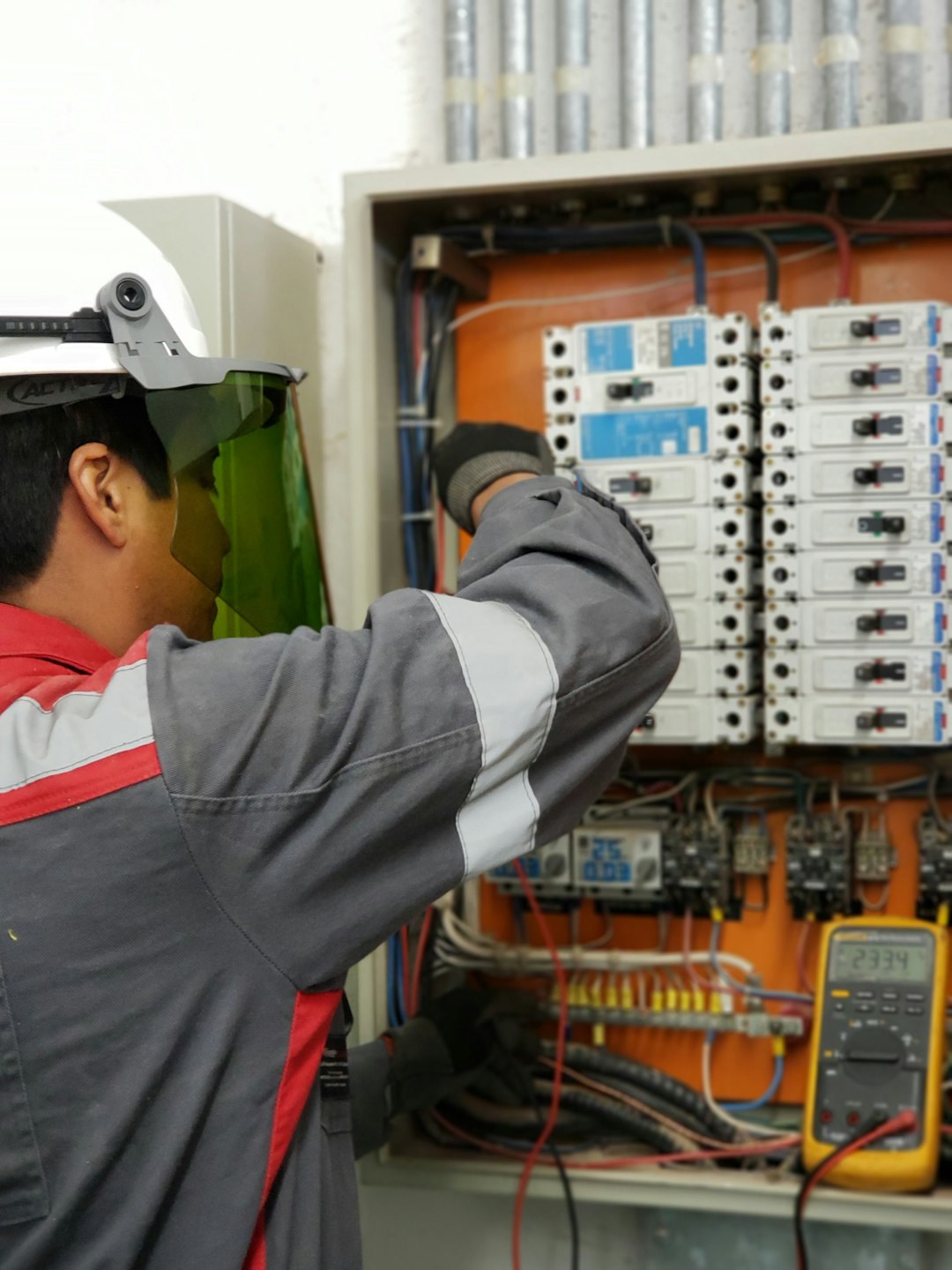
| Industrial electrician | C$42.00/hour | Installs, tests, troubleshoots and maintains industrial electrical equipment, motors and control systems. | Apprenticeship / trade certification |
| Industrial mechanic / millwright | C$37.00/hour | Works on conveyors, pumps, gearboxes, automated machinery, robotics and production equipment. | Apprenticeship / Red Seal pathway |
| Electrical and electronics engineering technologist / technician | C$35.58/hour | Supports electrical, electronic, testing, controls and equipment systems used in modern plants. | College technology program |
| Mechanical engineering technologist | C$35.00/hour | Supports mechanical design, testing, production systems, equipment improvement and manufacturing projects. | College technology program |
| Manufacturing / industrial engineering technologist | C$31.25/hour | Works on process improvement, production systems, work methods, quality and manufacturing efficiency. | College technology program |
| CNC machinist | C$30.00/hour | Sets up and operates conventional and CNC equipment to produce precision components. | Apprenticeship, trade training or employer pathway |
Salary limitation: national medians can hide large provincial and regional differences. For example, Job Bank reports a national C$37.00 median for industrial mechanics and millwrights, while Alberta and British Columbia both show C$42.00 medians in the same dataset. Use the national number as a benchmark, then check the province and city where you actually plan to work.
GoHires Automation Resilience Matrix
Automation does not affect every manufacturing career in the same way. The more a job combines troubleshooting, physical systems, safety responsibility, process knowledge and non-routine decision-making, the harder it is to reduce the role to one repetitive task.
| Career area | Routine task exposure | Human advantage | Skill to add |
|---|---|---|---|
| CNC / machining | Machine tending and repetitive setup can automate | Precision, setup judgment, troubleshooting, inspection | CNC programming, CAD/CAM, metrology |
| Industrial maintenance | Condition monitoring can become more automated | Diagnosis, repair, mechanical judgment, safety | Predictive maintenance, vibration analysis, robotics |
| Industrial electrical | Monitoring and routine testing can digitize | Electrical safety, field troubleshooting, controls | PLC, VFD, process control, industrial networking |
| Quality | Computer vision can automate inspection tasks | Root-cause analysis, standards, corrective action | Statistical quality, vision systems, data analysis |
| Engineering / technologist | Drafting and analysis can be AI-assisted | System integration, validation, safety, design trade-offs | Simulation, digital twins, automation and data skills |
EXPERT CAREER PRINCIPLE: do not try to compete with automation by staying narrowly focused on the repetitive part of a job. Move toward setup, programming, maintenance, integration, troubleshooting, quality, safety and optimization.
Four Canadian investment signals job seekers should understand
1. VIA Rail and Alstom: rail manufacturing across Quebec and Ontario
Alstom’s new VIA Rail contract covers 313 passenger rail cars. Design and engineering are planned for Saint-Bruno-de-Montarville, carbody manufacturing for La Pocatière and final assembly for Thunder Bay. The federal government describes about 4,850 person-years of employment, including roughly 615 full-time-equivalent jobs annually for four to eight years, plus about 55 annual jobs for 15 years in technical support, parts and maintenance.
The useful career signal is broader than “rail jobs.” This type of project can touch welding, machining, electrical systems, manufacturing engineering, automation, quality, procurement, supply chain and maintenance.
2. Xanadu: quantum technology moving toward manufacturing
In August 2026, the federal government announced a C$195 million investment in Xanadu Quantum Technologies’ C$893 million expansion project. The project is intended to establish manufacturing capabilities for photonic and semiconductor components and is expected to create 275 jobs.
This is a reminder that advanced manufacturing also includes emerging technology hardware, not only automotive plants. Packaging, testing, electronics, precision assembly and specialized process engineering can become manufacturing career areas as technologies move from research toward commercial production.
3. PowerCo St. Thomas: construction continues, but timing matters
Volkswagen’s PowerCo battery facility in St. Thomas remains a major advanced-manufacturing project. Ontario previously said the facility could employ up to 3,000 people directly when fully built. In September 2026, the production timeline shifted to 2029 while construction continues, showing why job seekers should track project stage instead of assuming an announced operating date is fixed.
GoHires interpretation: project delays do not necessarily mean “no jobs.” They can shift the mix and timing of work. Construction, engineering, procurement and project roles may continue while production hiring moves later.
4. Smart factories are becoming a workforce policy issue
Canada’s Advanced Manufacturing Workforce Alliance exists because employers and governments expect technology adoption to change skill requirements. The federal government reports that 89% of surveyed firms saw benefits from adopting smart technologies such as predictive analytics and the Industrial Internet of Things.
That statistic does not mean 89% of Canadian factories are fully automated. It means the policy focus is moving toward helping workers and employers build the capabilities needed to use these systems productively.
Career pathway graphic: choose the route that fits you
High school or pre-apprenticeship → apprenticeship → industrial electrician, millwright or machinist → controls, robotics, maintenance leadership
College diploma → co-op / plant experience → manufacturing, mechanical or electrical technologist → automation, process or project roles
Engineering degree → co-op / EIT pathway → design, manufacturing, controls or systems engineering → technical leadership
Technical diploma or degree → PLC, industrial networking, robotics, data or software skills → controls, integration, OT or digital manufacturing roles
Which skills are becoming more valuable?
A useful advanced-manufacturing skill stack combines a strong base occupation with technologies used around that occupation.
- PLC and controls: valuable for electricians, controls technicians and automation specialists.
- Robotics: useful for maintenance, integration, programming, safety and production support.
- Industrial networking: Ethernet-based plant networks, sensors and connected equipment increasingly link machines to digital systems.
- Predictive maintenance: condition monitoring, vibration analysis and data-supported maintenance help plants reduce downtime.
- CNC and CAD/CAM: important for precision manufacturing and increasingly connected to automated production workflows.
- Quality and metrology: automated inspection does not eliminate the need for standards, calibration, root-cause analysis and corrective action.
- Industrial data literacy: understanding production data, dashboards and process metrics can help workers move from operating equipment to improving systems.
- Safety and lockout knowledge: automation adds complexity, but physical plant work still requires strict safety procedures and jurisdiction-specific requirements.
Education and certification: what do you actually need?
Industrial electrician
Job Bank says industrial electricians typically need secondary school plus a four- or five-year apprenticeship, or an equivalent combination of substantial trade experience and technical training. Certification rules vary by province. Industrial Electrician is a Red Seal trade in several jurisdictions.
Industrial mechanic / millwright
Job Bank says the typical route is secondary school plus a three- to four-year apprenticeship or an equivalent combination of work experience and industry courses. Red Seal standards explicitly include work on automated equipment and robotics, which is why millwrighting remains highly relevant in increasingly automated plants.
Manufacturing and industrial engineering technologists
Job Bank says a two- or three-year college program is usually required for technologists, while technicians commonly enter through a one- or two-year related program. Some employers may value or require certification through provincial or territorial technologist associations.
Engineers
Engineering roles usually require an accredited or recognized engineering degree and may involve provincial professional-engineering requirements depending on the work and responsibility. Co-op experience can be particularly valuable because advanced manufacturing employers often want candidates who can connect theory to plant equipment, production constraints and project delivery.
Where in Canada are the strongest clusters?
Advanced manufacturing is national, but the mix differs by region.
- Ontario: automotive, batteries, aerospace, food processing, industrial equipment, defence, life sciences and technology hardware.
- Quebec: aerospace, rail manufacturing, electrical equipment, industrial technology, defence and specialized manufacturing.
- British Columbia: clean technology, aerospace, marine, industrial equipment and manufacturing linked to resource and infrastructure projects.
- Alberta: industrial equipment, energy technology, defence, automation and manufacturing tied to large infrastructure and resource sectors.
- Prairies and Atlantic Canada: agricultural equipment, food processing, aerospace, marine, defence, resource-processing and specialized manufacturing clusters.
Do not choose a province from a national headline alone. Compare the exact occupation, local employer base, provincial certification requirements, current openings and housing costs.
Who advanced manufacturing is best for
This field can be a strong fit if you like solving physical problems, working with machinery or production systems, improving processes, troubleshooting equipment, combining hands-on work with technology, or seeing a tangible product move from design to production.
It may be a poor fit if you strongly dislike industrial environments, shift work, safety procedures, plant-floor troubleshooting or ongoing technical learning. Some roles are office-heavy, but many manufacturing careers involve production schedules, equipment downtime and direct responsibility for operational problems.
Risks and what job seekers should not assume
Do not assume every investment becomes a permanent job. Construction, installation and commissioning can create temporary peaks that are much larger than the eventual operating workforce.
Do not assume automation automatically increases headcount. A plant may invest in robotics partly to increase output without increasing labour at the same rate.
Do not assume a delayed project is cancelled. PowerCo’s St. Thomas timeline shows that major projects can continue while production schedules change.
Do not assume manufacturing is one labour market. Steel, aerospace, rail, batteries, food processing, pharmaceuticals and precision technology can move differently. Trade exposure, export markets and commodity cycles matter.
Do not train for a tool instead of a career. A short robotics or AI certificate is most valuable when it builds on a durable occupation such as electrical, mechanical, machining, engineering, quality or industrial technology.
A 30-day action plan
- Pick one base occupation. Choose trade, technologist, engineering or digital/automation rather than “advanced manufacturing” as a vague goal.
- Check the NOC and wage data. Use Job Bank for the province where you want to work.
- Review 20 real postings. Record the equipment, software, certifications and experience that repeat across employers.
- Identify the skill gap. Decide whether your next move is apprenticeship, college, co-op, PLC training, CNC/CAD/CAM, robotics, quality or another targeted skill.
- Track projects, not headlines. Use the GoHires Canada Investment & Jobs Tracker to distinguish announced projects from projects that are actually hiring.
- Target adjacent employers. Major factories rely on suppliers, integrators, contractors, engineering firms and maintenance providers. Do not search only the project owner’s career page.
- Build proof of ability. Co-op, apprenticeship hours, plant projects, maintenance experience, programming examples or quality-improvement results are stronger than collecting unrelated certificates.
Related GoHires resources
- Skilled Trades Careers in Canada
- Canada Investment & Jobs Tracker
- Ontario In-Demand Careers
- Mining & Critical Minerals Careers in Canada
- Nuclear Careers in Canada
- AI Data Centre Careers in Canada
Frequently asked questions
What is the best advanced manufacturing career in Canada?
There is no single best career. Industrial electrician and millwright pathways can be attractive for people who want skilled-trade work, while manufacturing, mechanical and electrical technologist pathways suit people who prefer technical college routes. Engineering and controls roles can offer broader design and systems responsibilities but usually require more formal education.
Will robots replace manufacturing workers?
Robotics can reduce repetitive manual work, but automated factories still need people to install, program, maintain, troubleshoot, validate, inspect and improve production systems. The safer career strategy is to move toward those non-routine responsibilities instead of relying on a narrow repetitive task.
Do I need a university degree to work in advanced manufacturing?
No. Many important careers use apprenticeship or college pathways. Industrial electricians, millwrights, machinists and engineering technologists can all work in advanced manufacturing without a four-year university degree.
What skills should a manufacturing worker learn for AI and automation?
Start with skills that strengthen your existing occupation: PLC and controls for electrical workers, predictive maintenance and robotics for millwrights, CNC programming and CAD/CAM for machinists, data and process analysis for technologists, or simulation and system integration for engineers.
Is advanced manufacturing a good career field in Canada?
It can be, but the answer depends on the occupation and region. The sector is large and governments are actively supporting workforce development, but manufacturing remains exposed to trade, technology and investment cycles. Use occupation-level wage and outlook data rather than assuming the entire sector moves together.
Methodology and sources
GoHires prioritizes Government of Canada, National Research Council, Job Bank, Red Seal, primary employer/project sources and current official investment announcements. We separate project value from deployed investment, employment projections from current vacancies, and national wage medians from regional pay.
- Employment and Social Development Canada: Advanced Manufacturing Workforce Alliance
- Government of Canada: Workforce Alliances sector facts
- National Research Council Canada: Advanced Manufacturing Initiative
- Alstom: VIA Rail fleet manufacturing in Canada
- Innovation, Science and Economic Development Canada: Xanadu advanced quantum manufacturing investment
- Government of Canada Job Bank wage data
- Red Seal Program
Editorial note: GoHires does not treat government investment announcements as guaranteed employment. Projects can change, be delayed or hire fewer people than projected. Job seekers should verify current openings and training requirements before making a career or education decision.