

Last verified: November 16, 2026
Quick answer: Starting in January 2027, international pharmacy graduates with a completed and valid PEBC Document Evaluation can apply directly to Part I of the Pharmacist Qualifying Examination. The Evaluating Examination is no longer required. PEBC certification is only one stage. Provincial licensing, language, practical training and other requirements still apply.
The 2027 change can remove one national exam from the pathway, but it does not make pharmacist licensing automatic or identical across Canada. Your sequence depends on your PEBC history, document validity, province, exam results and whether a regulator grants an exemption or requires bridging education.
This GoHires guide separates national certification from provincial licensing, shows the published 2027 exam schedule, calculates a verified national fee floor and gives you a decision worksheet before you pay for an exam, course or relocation.
Immediate deadline: PEBC lists Thursday, November 19, 2026 at 12:00 p.m. Eastern Time as the application deadline for the February 2027 Pharmacist Qualifying Examination. Only existing eligible candidates whose application is available in the Candidate Portal can act on that deadline. Check your own portal and PEBC record.
What changed for international pharmacy graduates in 2027?
FACT: The Pharmacy Examining Board of Canada says the October 2026 Pharmacist Evaluating Examination was the final administration. Effective January 2027, an international pharmacy graduate with a completed and valid Pharmacist Document Evaluation can apply directly to Part I, the multiple-choice component of the Pharmacist Qualifying Examination.
PEBC also says:
- Document Evaluation is valid for five years from successful completion for candidates using the new pathway.
- A candidate must pass Part I before becoming eligible for Part II, the OSCE, unless an exception described by PEBC applies.
- The maximum remains four attempts for Part I and four attempts for Part II.
- More Pharmacist Qualifying Examination sittings are scheduled in 2027.
- A valid Document Evaluation can also support direct application to the pharmacy technician Qualifying Examination beginning in 2027, but that is a different occupation and licensing path.
ANALYSIS: Removing the Evaluating Examination can reduce one fee, one preparation cycle and one scheduling risk. It does not remove the need to prove entry-to-practice competence through the Qualifying Examination or meet a provincial regulator’s requirements.
LIMITATION: A provincial regulator may still use website language or workflows written before the PEBC change. Where pages conflict, confirm the current sequence directly with PEBC and the regulator before paying.
The national pathway and the provincial licensing gate
Obtain a national ID through Pharmacists’ Gateway Canada when required.
PEBC evaluates the pharmacy education and required documents.
Pass the computer-based knowledge examination.
Pass the performance-based examination when eligible.
Complete language, jurisprudence, practical training, insurance and other local requirements.
Receive the provincial certificate or licence before practising independently.
GoHires interpretation of PEBC, NAPRA and provincial-regulator processes. Exact order and exemptions vary by jurisdiction and candidate history.
FACT: Pharmacists’ Gateway Canada is administered by the National Association of Pharmacy Regulatory Authorities. NAPRA describes Gateway as the central place for international pharmacy graduates to review province-specific licensing requirements and maintain a national document repository. Candidates can begin from outside Canada.
For many candidates, the practical distinction is:
| Stage | Authority | What completion means | What it does not mean |
|---|---|---|---|
| Gateway enrolment | NAPRA | You obtain a national ID and access licensing information. | You are not PEBC certified or provincially licensed. |
| Document Evaluation | PEBC | Your education and documents meet the evaluation requirement. | You have not passed entry-to-practice examinations. |
| Qualifying Examination | PEBC | You satisfy PEBC’s national examination requirement after passing both parts. | You do not automatically hold a provincial licence. |
| Provincial registration | Provincial pharmacy regulator | You meet that jurisdiction’s registration requirements. | Requirements do not automatically transfer to every province. |
| Work authorization | Immigration authorities where applicable | You have the immigration status or authorization required to work. | It does not replace professional licensing. |

Use the GoHires pathway selector before applying
Choose the first statement that describes your current position. Then verify it against your Candidate Portal and official correspondence.
| Your current position | Likely next gate | What to verify now |
|---|---|---|
| You have not enrolled in Gateway | Gateway enrolment and national ID | Whether your jurisdiction and graduate category require Gateway enrolment. |
| You have a valid Document Evaluation but never passed the Evaluating Examination | Part I MCQ under the January 2027 pathway | Document expiry date and whether the exam application appears in your portal. |
| Your Document Evaluation is expired or will expire before the exam | Document re-evaluation | Completion timing. PEBC warns that re-evaluation cannot be completed in two business days. |
| You passed the Evaluating Examination by October 2026 | Part I, Part II or both, depending on PEBC eligibility | Your portal options and the rules that apply to your exam history. |
| You previously failed Part I | Part I retake | Remaining attempts, feedback report, current blueprint and exam readiness. |
| You passed Part I but not Part II | Part II OSCE | Eligibility, remaining attempts, centre availability and provincial sequencing. |
| You passed both parts | Provincial registration requirements | Language, practical training, jurisprudence, insurance, background checks and currency rules. |
GOHIRES INTERPRETATION: Do not pay for the earliest available sitting merely because the pathway is shorter. Use the exam blueprint, official practice materials and your prior feedback to decide whether you are ready. A failed attempt can cost more than waiting for the next sitting.
What are the verified 2027 PEBC exam dates?
PEBC published four pharmacist Qualifying Examination windows for 2027. Dates and centres can change, so use this table as a planning aid and verify the live PEBC page before booking travel.
| Session | Part I MCQ | Part II OSCE | Published application deadline |
|---|---|---|---|
| February 2027 | February 10-12, 16-20 and 22-25 | February 21 | November 19, 2026 at noon ET |
| May 2027 | May 12-14, 17-21, 25-29 and 31 | May 30 | February 18, 2027 at noon ET |
| July 2027 | July 12-16 and 19-23 | Not offered in this session | May 13, 2027 at noon ET |
| November 2027 | November 1-5, 7-10 and 12 | November 6 | August 5, 2027 at noon ET |
FACT: PEBC identifies Part I as a computer-based MCQ examination. Part II is the OSCE, a performance-based examination using practice scenarios. The current pharmacist blueprint was implemented for the May 2026 sitting and is the correct starting point for preparation unless PEBC publishes a newer version.
How much does the national pathway cost?
The national fee floor below uses official fees displayed on November 16, 2026. It assumes one attempt at each examination and excludes all provincial, travel, tax, preparation and living costs.
$390
Plus applicable taxes
$715
PEBC fee
$870
2027 PEBC fee
$1,950
2027 PEBC fee
Calculation: $390 + $715 + $870 + $1,950. Excludes applicable taxes, repeat attempts, provincial fees, bridging education, language testing, exam preparation, travel, insurance and living costs.
Build a realistic personal budget
| Cost category | Enter your amount | Verification source |
|---|---|---|
| Gateway and PEBC national fees | $3,925 minimum before applicable taxes | Gateway and PEBC fee pages |
| Language test | ________ | Your province’s accepted tests and validity rules |
| Provincial application and registration | ________ | Provincial regulator fee schedule |
| Bridging or assessment program | ________ | Regulator and approved education provider |
| Practice experience or internship costs | ________ | Provincial regulator and employer |
| Travel and accommodation | ________ | Exam centre and personal travel plan |
| Preparation materials | ________ | Official free resources first, then optional providers |
| Insurance, background checks and documents | ________ | Provincial regulator |
| Lost income or reduced work hours | ________ | Your own scenario |
FACT: The Ontario College of Pharmacists currently estimates $430 in College fees plus the annual fee for its international-graduate route. Its page also estimates $19,411 in third-party fees plus annual liability insurance. The Ontario page checked on November 16 still references the older Evaluating Examination sequence in parts of its workflow.
LIMITATION: Do not assume the January 2027 PEBC change automatically reduces Ontario’s full estimate by a specific amount. Ontario bridging, assessment and other requirements can remain. Wait for updated provincial guidance or obtain written confirmation.
Why province choice can change the timeline
PEBC certification is national, while authority to practise is provincial. Provincial regulators may require different combinations of:
- Language proficiency evidence.
- Jurisprudence, ethics or legislation examinations.
- Structured practical training or internship.
- Bridging education or competence assessment.
- Professional liability insurance.
- Police or background checks.
- Recent education or practice evidence.
- Application, registration and annual permit fees.
Ontario provides a useful example of why first-attempt exam results can matter. The Ontario College states that international graduates who pass both PEBC Qualifying Examination parts on their first attempt may follow a different route. Other applicants may need the approved International Pharmacy Graduate Program and PACE assessment.
ANALYSIS: Province selection should not be based on salary alone. Compare the licensing sequence, total cost, language requirements, exam availability, practical training access, job outlook and where you can legally work.
For a wider credential-planning framework, use the Foreign Credentials in Canada navigator. If you need to identify missing evidence or training, use the GoHires skills-gap worksheet.
What can pharmacists earn in Canada?
FACT: Job Bank’s pharmacist wage report displayed a Canada-wide low wage of $40.00 per hour, median wage of $55.49 and high wage of $67.00 when checked on November 16, 2026. The page says those values were updated November 19, 2025 and use a 2023-2024 Labour Force Survey reference period.
FACT: The Government of Canada says the fall 2026 Job Bank wage update takes place on November 18, 2026. GoHires will treat the current figures as pre-refresh evidence until the new values appear.
Job Bank rates do not predict your personal offer. Pay can vary by province, community, hospital versus retail setting, union coverage, hours, experience and responsibilities. Job Bank wages also exclude benefits and are not adjusted for years of experience.
Job Bank rates the Ontario pharmacist outlook as Good for 2025-2027, citing employment growth, retirements and a small number of unemployed workers with recent experience. That is an occupation-level provincial outlook, not evidence that an unlicensed applicant can obtain pharmacist work immediately.
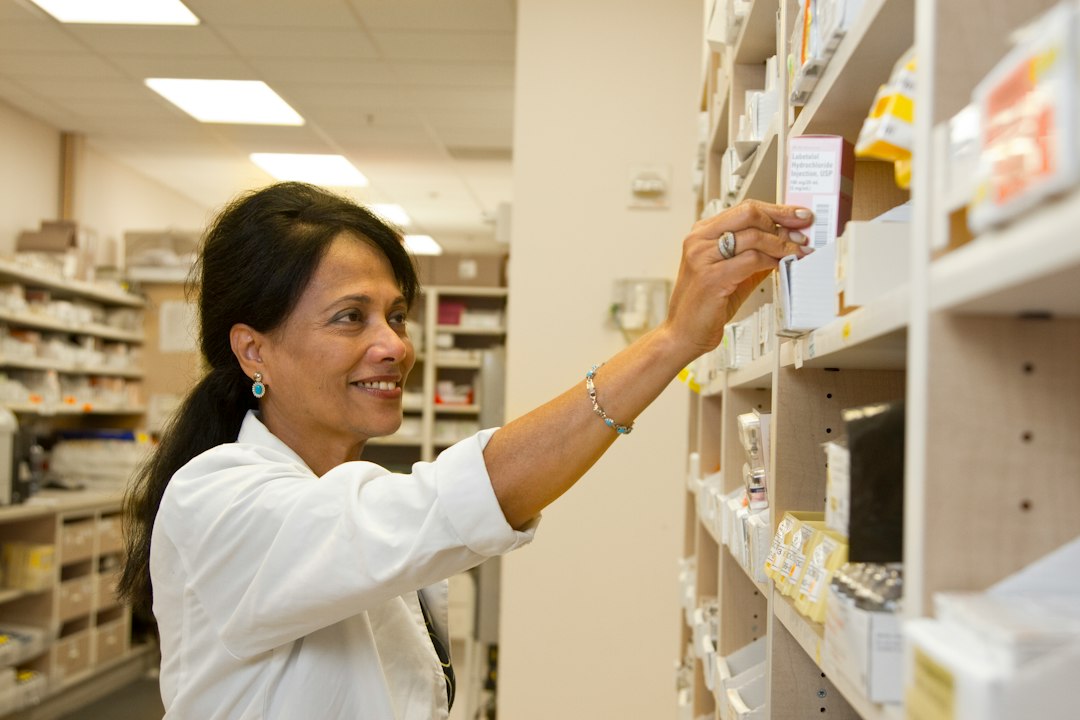
When comparing an offer, use the GoHires total-compensation calculator. When the offer stage arrives, the Canadian salary-negotiation worksheet helps you document geography, duties and evidence without treating a national median as a guaranteed rate.
A practical 12 to 24 month planning model
This is a planning scenario, not a promised completion time.
| Phase | Possible work | Main delay risks | Decision gate |
|---|---|---|---|
| Months 0-3 | Gateway, document collection, Document Evaluation application and province comparison | University records, translations, licensing records and document expiry | Is your target province still realistic after full-cost research? |
| Months 3-9 | Part I preparation, official practice resources and MCQ sitting | Missed deadline, insufficient preparation, unsuccessful attempt | Do your practice results support using an attempt? |
| Months 6-15 | Part II preparation and OSCE sitting after eligibility | Centre availability, travel, repeat attempt, communication gaps | Can you demonstrate entry-to-practice performance, not only recall facts? |
| Months 9-24 | Provincial jurisprudence, bridging, practical training, assessment and final registration | Province-specific sequencing, placement capacity, validity windows | Are all documents and results current for final application? |
GOHIRES INTERPRETATION: Build your plan backward from exam and regulator deadlines. Keep a single evidence sheet with the requirement, source URL, fee, expiry date, submission date, result and next action.
Five costly mistakes to avoid
- Confusing PEBC certification with a provincial licence. You cannot assume passing the national exams gives immediate authority to practise.
- Using an expired Document Evaluation. Check the first day of the intended exam window, not only the application date.
- Relying on an unofficial checklist. Requirements change. Save the official regulator page and verification date.
- Ignoring the full provincial cost. National exam fees can be a small part of the total if bridging, assessment or relocation is required.
- Attempting an exam before you are ready. Fees, travel, waiting time and limited attempts make readiness evidence important.
Your verification checklist
- Confirm whether Gateway enrolment is required for your graduate category and target province.
- Record your National ID and PEBC ID separately.
- Download or record the date of successful Document Evaluation.
- Confirm the Document Evaluation remains valid through the intended exam date.
- Check which exam applications are visible in your PEBC Candidate Portal.
- Review the current PEBC blueprint and official sample resources.
- Check your remaining attempts for each exam part.
- Read the provincial regulator’s current international-graduate route.
- List every provincial requirement, fee and expiry date.
- Confirm immigration or work authorization separately from licensing.
- Build a cost range that includes repeat-attempt and travel scenarios.
- Set a written go, delay or stop decision before paying.
If you are already applying for adjacent healthcare or pharmacy-support work, track results with the Job Search Funnel Diagnostic. If licensing delays create a resume gap, use the Employment Gap Toolkit rather than hiding dates or overstating your registration status.
Frequently asked questions
Is the PEBC Evaluating Examination required in 2027?
No for the new IPG pathway described by PEBC. Candidates with a completed and valid Document Evaluation can proceed to Part I of the Pharmacist Qualifying Examination. Your exam history and candidate category can change the exact next step.
Does passing PEBC make me a licensed pharmacist in Canada?
No. PEBC certification is a national certification stage. A provincial pharmacy regulator grants the authority to practise in its jurisdiction after you meet its registration requirements.
Can I start the licensing process outside Canada?
NAPRA says candidates can enrol in Pharmacists’ Gateway Canada from anywhere in the world. Some later practical, examination or provincial requirements may require physical presence or travel.
How much are the core national fees?
The verified one-attempt subtotal is $3,925 CAD before applicable taxes. It includes Gateway enrolment, PEBC Document Evaluation, Part I and Part II. It excludes provincial requirements and personal costs.
How long does Document Evaluation remain valid?
PEBC says it is valid for five years from successful completion for candidates using the new pathway. Confirm the date in your own PEBC record.
Can I take Part II before passing Part I?
Under the new pathway, candidates generally must pass Part I before becoming eligible for Part II. PEBC describes different eligibility for candidates who successfully completed the Evaluating Examination by October 2026.
What if I miss the November 19, 2026 deadline?
The deadline applies to the February 2027 session. PEBC lists later 2027 sessions, including May, July for Part I only, and November. Eligibility and portal availability still need verification.
Are pharmacist wages being updated?
Yes. The Government of Canada says the fall 2026 Job Bank wage update is scheduled for November 18, 2026. Recheck wage evidence after that date.
Primary sources
- PEBC: New Certification Pathway for International Pharmacy Graduates. Last updated August 10, 2026; checked November 16, 2026.
- PEBC: Examination Dates and Fees. Checked November 16, 2026.
- NAPRA: International Pharmacy Graduates and Pharmacists’ Gateway Canada. Checked November 16, 2026.
- Ontario College of Pharmacists: International Pharmacy Graduate pathway. Checked November 16, 2026.
- Job Bank: Pharmacist wages and pharmacist outlooks. Checked November 16, 2026.
- Government of Canada: Job Bank fall 2026 wage update notice. Checked November 16, 2026.