


Canadian tech companies are discovering that remote recruitment opens hiring to both local and american talent, yet persistent myths often hold teams back. With over 60 percent of hiring managers citing remote recruitment as their fastest way to boost team expertise, understanding fact from fiction is critical. This article equips HR professionals with clear definitions, practical comparisons, and up-to-date insights so your recruitment process becomes more agile and successful.
Table of Contents
- Defining Remote Recruitment And Common Myths
- Types Of Remote Recruitment Tools And Methods
- Steps In The Remote Hiring Process Explained
- Key Benefits For Tech Companies In Canada
- Challenges, Legalities, And Compliance Issues
- Mistakes To Avoid In Remote Talent Acquisition
Key Takeaways
| Point | Details |
|---|---|
| Remote Recruitment Enhances Talent Access | This approach allows companies to tap into a global talent pool, breaking traditional geographical barriers. |
| Combatting Myths Improves Acceptance | Addressing misconceptions about remote workers’ productivity and communication can facilitate wider organizational buy-in. |
| Strategic Use of Technology is Critical | Leveraging advanced recruitment tools effectively streamlines the hiring process and enhances candidate evaluation. |
| Legal Compliance is Vital | Navigating the complexities of labor laws and data privacy is essential for successful remote recruitment outcomes. |
Defining Remote Recruitment and Common Myths
Remote recruitment represents a strategic approach to hiring talent who work outside traditional office environments. This method leverages digital technologies to connect employers with skilled professionals across geographic boundaries, transforming how tech firms build their workforce. Remote work technologies have dramatically reshaped recruitment strategies, enabling companies to access talent pools previously unavailable.
At its core, remote recruitment involves identifying, screening, interviewing, and onboarding employees who will perform their job responsibilities from locations outside the company’s physical office. Unlike traditional hiring models, this approach prioritizes digital communication tools, virtual collaboration platforms, and comprehensive online assessment techniques. The process requires sophisticated technological infrastructure and a fundamentally different management philosophy that focuses on outcomes rather than physical presence.
Several persistent myths continue to surround remote recruitment, often preventing organizations from fully embracing this transformative approach. Common misconceptions include beliefs that remote workers are less productive, harder to manage, and less committed to organizational goals. However, research consistently challenges these assumptions. Studies on remote work productivity reveal that well-managed remote teams can demonstrate equal or higher performance levels compared to traditional in-office teams, particularly in technology-driven sectors.
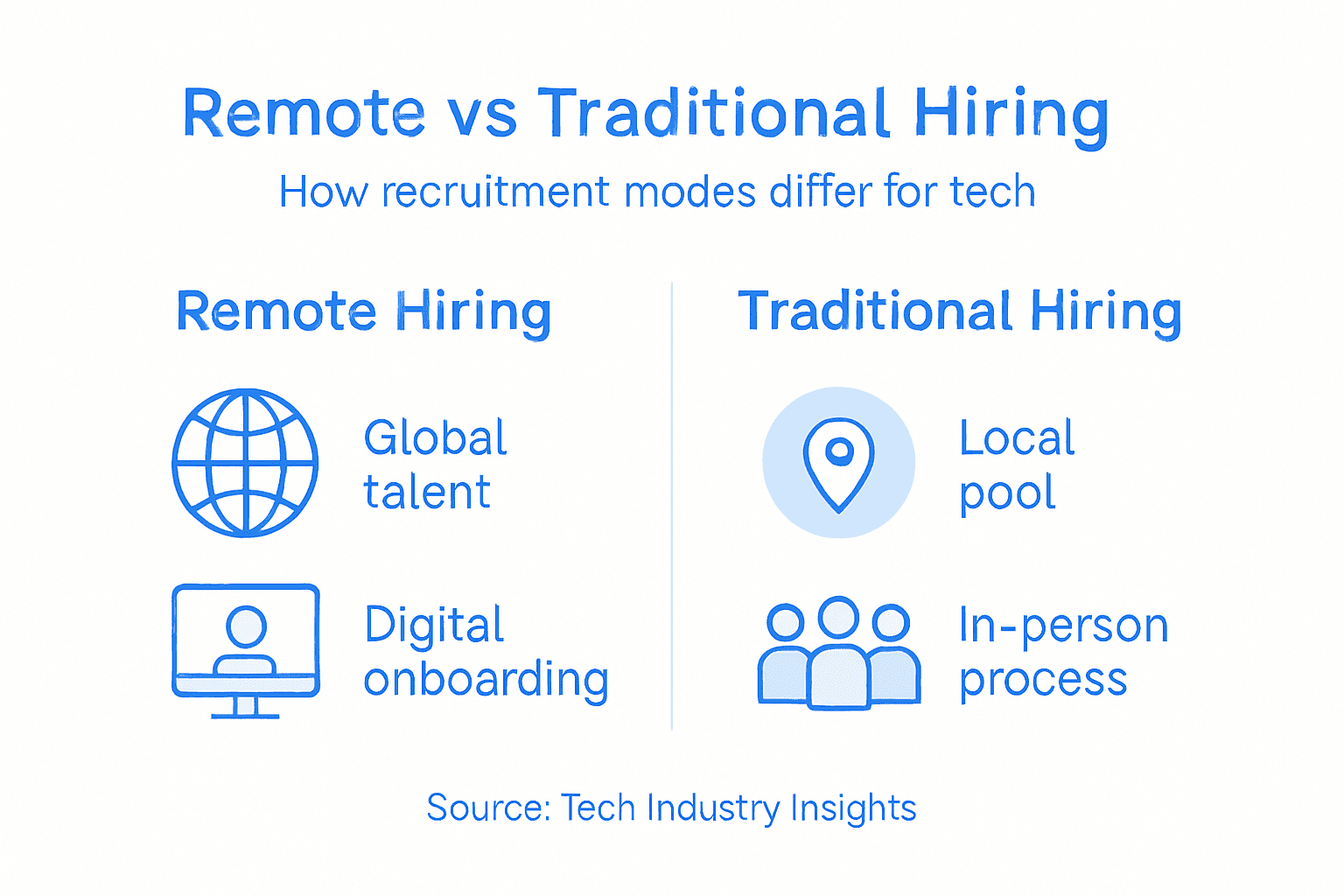
To further clarify how remote recruitment compares with traditional hiring, consider this overview:
| Aspect | Remote Recruitment | Traditional Hiring |
|---|---|---|
| Candidate Reach | Global pool, wider options | Local or regional talent |
| Interview Setting | Virtual, flexible | In-person, location-bound |
| Onboarding Process | Digital platforms, online training | On-site, physical introductions |
| Cost Factors | Lower overhead, tech investment | Higher overhead, physical resources |
Comparative Analysis of Remote Recruitment Myths vs Reality
| Myth | Reality |
|---|---|
| Remote workers are less productive | Productivity varies by individual and management approach |
| Communication is challenging | Advanced digital tools enable seamless collaboration |
| Team cohesion suffers | Strategic virtual engagement can build strong connections |
| Monitoring performance is difficult | Outcome-based metrics provide clear performance indicators |
Pro tip: Develop clear digital communication protocols and invest in robust project management tools to maximize remote team effectiveness and maintain high performance standards.
Types of Remote Recruitment Tools and Methods
Remote recruitment relies on an sophisticated ecosystem of digital tools and technologies designed to streamline the hiring process across geographic boundaries. Advanced recruitment technologies enable organizations to identify, evaluate, and onboard top talent without traditional in-person interactions. These tools span multiple categories, each serving a critical function in the remote hiring workflow.
The primary categories of remote recruitment tools include applicant tracking systems (ATS), video interviewing platforms, online assessment tools, and digital communication channels. Applicant Tracking Systems automate job postings, resume screening, and candidate management, allowing recruiters to efficiently process large volumes of applications. Video Interviewing Platforms provide high-quality, interactive interview experiences that simulate face-to-face conversations, complete with features like screen sharing, real-time collaboration, and candidate evaluation tools.
Moreover, tech firms increasingly leverage specialized remote recruitment methods that go beyond traditional hiring approaches. Remote work recruitment protocols now incorporate advanced assessment techniques such as online coding challenges, virtual skills demonstrations, and comprehensive digital portfolios. These methods enable employers to objectively evaluate technical competencies and cultural fit without physical proximity.
Remote Recruitment Tools Comparison
| Tool Category | Key Features | Best For |
|---|---|---|
| ATS | Automated screening, resume parsing | High-volume recruiting |
| Video Interview Platforms | Real-time interviews, recording | Global talent acquisition |
| Online Assessment Tools | Technical skill tests, coding challenges | Tech and specialized roles |
| Virtual Job Fairs | Simultaneous multi-candidate interactions | Broad talent pool engagement |
| Social Media Recruiting | Passive candidate sourcing | Networking and referrals |
Pro tip: Integrate multiple remote recruitment tools and create a comprehensive digital assessment strategy that evaluates both technical skills and soft skills to build a holistic candidate evaluation process.
Steps in the Remote Hiring Process Explained
The remote hiring process represents a strategic workflow designed to identify, evaluate, and onboard top talent through digital channels. Comprehensive hiring process analysis reveals a structured approach that transforms traditional recruitment methodologies. This process requires meticulous planning, advanced technological integration, and a systematic approach to candidate assessment.

Remote hiring typically unfolds through several critical stages. The initial phase involves Job Requisition and Planning, where hiring managers collaborate to define precise role requirements, skill sets, and organizational needs. Next comes Job Posting and Sourcing, utilizing online platforms, professional networks, and targeted digital recruitment channels to attract qualified candidates. The screening stage leverages applicant tracking systems to efficiently parse resumes, evaluate candidate profiles, and shortlist potential matches based on predefined criteria.
Digital hiring protocols emphasize virtual interview techniques that go beyond traditional assessment methods. Technical interviews often include live coding challenges, screen sharing demonstrations, and collaborative problem-solving sessions that allow recruiters to evaluate candidate skills in real-time. Background checks, skills assessments, and digital reference verifications complete the evaluation process, ensuring comprehensive candidate validation without physical interactions.
Remote Hiring Process Stages
| Stage | Key Activities | Tools Utilized |
|---|---|---|
| Planning | Role definition, skills mapping | HR collaboration platforms |
| Sourcing | Job posting, candidate search | Professional networks, ATS |
| Screening | Resume parsing, initial evaluation | AI-powered screening tools |
| Interviewing | Virtual technical assessments | Video conferencing, coding platforms |
| Verification | Background checks, reference validation | Digital verification services |
Pro tip: Develop a standardized digital evaluation rubric that objectively measures both technical competencies and cultural alignment to streamline remote hiring decisions.
Key Benefits for Tech Companies in Canada
Remote recruitment strategies represent a transformative approach for Canadian tech firms seeking competitive advantages in talent acquisition. By expanding beyond traditional geographic limitations, organizations can access a diverse pool of skilled professionals, fundamentally reshaping their workforce development strategies. This innovative recruitment model offers multiple strategic benefits that address critical challenges in the technology sector.
The primary advantages of remote recruitment include substantial cost reductions and enhanced talent accessibility. Talent Pool Expansion enables tech companies to recruit exceptional professionals regardless of their physical location, breaking down traditional barriers that previously limited hiring options. Canadian technology firms can now tap into national and international talent markets, selecting candidates based on skill compatibility rather than proximity. This approach allows organizations to build more diverse, specialized teams with unique capabilities that drive innovation and competitive performance.
Innovative hiring approaches provide Canadian tech companies with unprecedented flexibility in workforce management. Remote recruitment supports organizational agility by reducing overhead costs associated with physical office infrastructure, enabling companies to invest more resources in technological development and employee skill enhancement. Additionally, these strategies contribute to improved employee satisfaction, with professionals appreciating flexible work arrangements that promote better work-life balance and increased job autonomy.
Benefits Comparison for Canadian Tech Companies
| Benefit Category | Direct Impact | Long-term Advantage |
|---|---|---|
| Talent Acquisition | Broader candidate pool | Access to specialized skills |
| Cost Management | Reduced infrastructure expenses | Enhanced financial flexibility |
| Workforce Diversity | Increased geographic representation | Improved innovation potential |
| Employee Satisfaction | Flexible work arrangements | Higher retention rates |
| Operational Efficiency | Streamlined hiring processes | Faster team scaling |
Pro tip: Develop a comprehensive remote recruitment strategy that balances technological tools, cultural assessment, and skills verification to create a robust talent acquisition framework.
Challenges, Legalities, and Compliance Issues
Remote recruitment compliance landscape presents complex legal challenges that demand strategic navigation by Canadian tech firms. The evolving digital hiring ecosystem requires organizations to develop sophisticated approaches addressing multifaceted legal considerations spanning employment regulations, data privacy, and cross-jurisdictional workforce management. Understanding these intricate dynamics becomes crucial for maintaining legal integrity and minimizing potential organizational risks.
Legal complexities emerge primarily through variations in labor regulations across different provinces and international boundaries. Employment Classification becomes particularly nuanced in remote recruitment scenarios, where traditional workplace definitions blur. Tech companies must carefully distinguish between contractor and employee status, considering factors like work control, payment structures, and job integration. Tax implications, worker benefits, and social security contributions vary significantly, requiring meticulous documentation and potential engagement with Employer of Record services to ensure comprehensive compliance.
Workplace accommodation regulations introduce additional layers of legal complexity for remote recruitment practices. Organizations must proactively design inclusive hiring processes that provide reasonable accommodations for employees with disabilities, ensuring digital platforms and assessment methods remain accessible. Cybersecurity and data protection represent another critical compliance dimension, demanding robust protocols for candidate information management, secure communication channels, and adherence to Canadian privacy legislation.
Here’s a summary of key risks and benefits unique to remote recruitment for tech companies:
| Dimension | Main Risk | Main Benefit |
|---|---|---|
| Compliance | Navigating multi-jurisdiction laws | Greater hiring flexibility |
| Security | Data breaches, privacy concerns | Improved digital process control |
| Team Culture | Possible isolation, disengagement | Access to diverse perspectives |
Remote Recruitment Compliance Risk Matrix
| Compliance Domain | Primary Risks | Mitigation Strategies |
|---|---|---|
| Labor Regulations | Misclassification | Detailed employment agreements |
| Tax Compliance | Cross-border complexities | Specialized tax advisory services |
| Data Privacy | Information security | Encrypted communication platforms |
| Accessibility | Discriminatory practices | Inclusive digital assessment tools |
| Workplace Safety | Remote work liability | Comprehensive remote work policies |
Pro tip: Consult specialized legal professionals experienced in remote workforce regulations to develop a comprehensive compliance framework tailored to your organization’s specific recruitment needs.
Mistakes to Avoid in Remote Talent Acquisition
Talent acquisition strategies reveal numerous critical pitfalls that tech firms must carefully navigate during remote recruitment. The digital hiring landscape demands exceptional precision, with even minor missteps potentially derailing entire recruitment efforts. Understanding these potential mistakes becomes crucial for organizations seeking to build high-performing remote teams in an increasingly competitive talent market.
One of the most significant errors involves Automated Screening Limitations, where companies rely exclusively on algorithmic tools without human oversight. Automated systems frequently miss nuanced candidate qualities like adaptability, creative problem-solving, and collaborative potential. Tech firms must balance technological efficiency with human judgment, implementing multi-stage assessment processes that combine automated screening with personalized evaluation techniques. This approach ensures comprehensive candidate assessment beyond basic resume keyword matching.
Remote interviewing best practices highlight additional critical mistakes that can undermine recruitment success. Many organizations fail to train hiring managers in virtual interview techniques, leading to inconsistent candidate experiences and potential bias introduction. Communication Gaps emerge as another significant challenge, with unclear job descriptions, inadequate virtual communication protocols, and insufficient candidate engagement strategies potentially driving away top talent. Successful remote recruitment requires intentional, structured communication approaches that simulate the interactive elements of in-person hiring.
Remote Talent Acquisition Mistake Analysis
| Common Mistake | Potential Consequence | Mitigation Strategy |
|---|---|---|
| Over-Reliance on Automation | Missing Qualified Candidates | Hybrid Human-AI Screening |
| Poor Virtual Communication | Candidate Disengagement | Structured Digital Interaction Protocols |
| Insufficient Skills Assessment | Skill-Role Misalignment | Comprehensive Technical Evaluations |
| Neglecting Cultural Fit | High Turnover Rates | Virtual Team Compatibility Testing |
| Inconsistent Interviewing | Biased Candidate Selection | Standardized Virtual Interview Framework |
Pro tip: Develop a comprehensive remote recruitment playbook that standardizes evaluation processes, trains hiring managers in virtual interviewing techniques, and creates consistent candidate engagement strategies.
Unlock Seamless Remote Recruitment with Gohires.com
Navigating the challenges of remote recruitment like managing global talent pools and ensuring effective digital communication can feel overwhelming. If you want to overcome common pitfalls such as limited candidate reach and screening inefficiencies while embracing modern hiring tools, Gohires.com is your solution. Our platform focuses on connecting Canadian tech firms with top candidates who seek flexible and remote opportunities, amplifying your access beyond traditional boundaries.
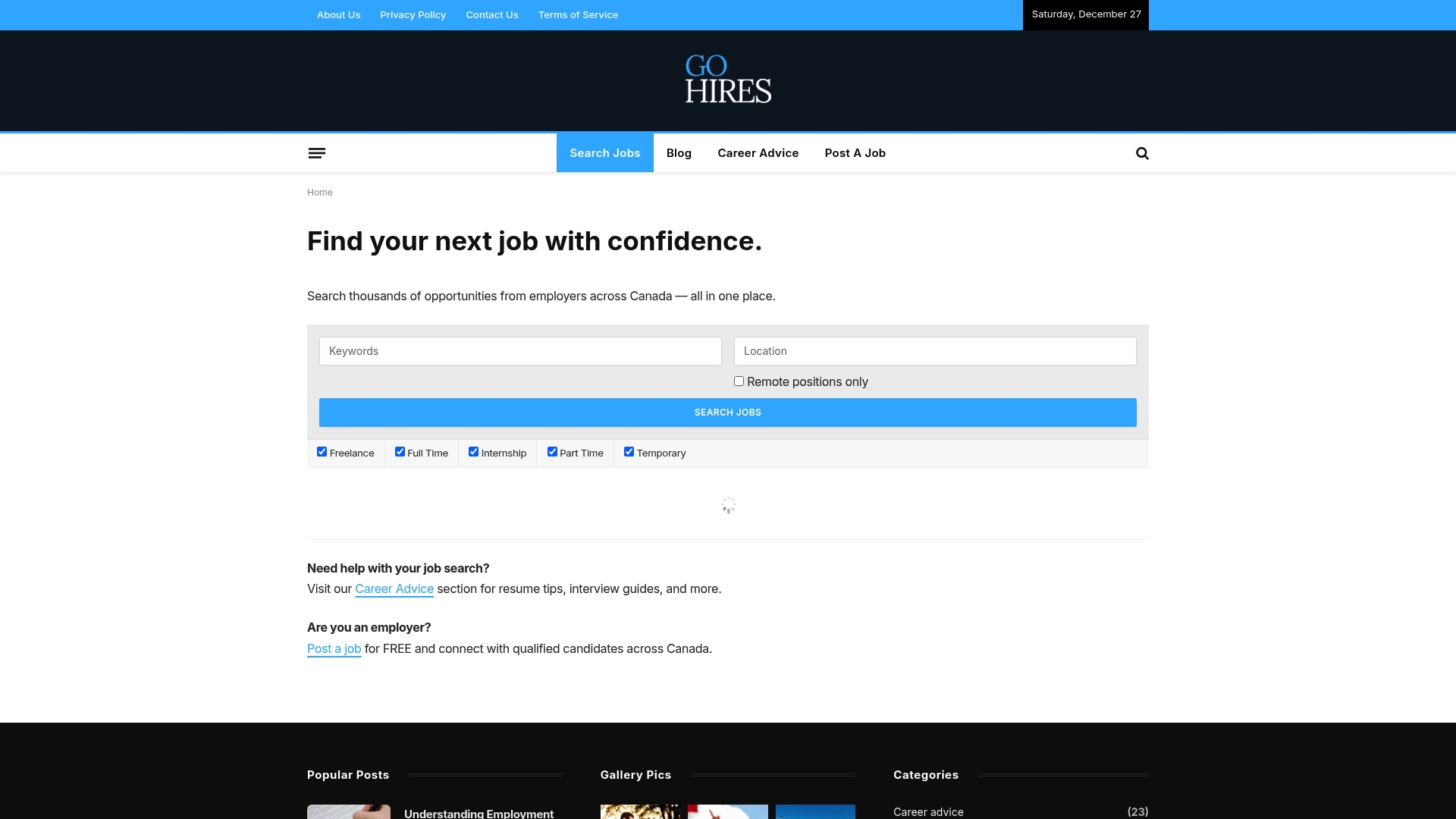
Take control of your remote hiring process today and gain access to a centralized job listing platform designed to simplify talent acquisition across Canada. Embrace effective digital recruitment strategies by posting jobs for free and exploring valuable resources including resume tips and interview guidance on Gohires.com. Visit Start Your Hiring Journey now and transform how your organization attracts, evaluates, and secures the right candidates remotely.
Frequently Asked Questions
What is remote recruitment?
Remote recruitment is a strategic approach to hiring talent who work outside of traditional office environments, utilizing digital technologies to connect with skilled professionals globally.
What are the benefits of remote recruitment for tech companies?
Remote recruitment offers numerous advantages, including access to a larger talent pool, cost reduction, diverse workforce representation, and increased employee satisfaction due to flexible work arrangements.
How does the remote hiring process differ from traditional hiring?
The remote hiring process emphasizes digital communication tools and online assessment techniques, replacing in-person interviews with virtual interactions and onboarding through digital platforms.
What tools are commonly used in remote recruitment?
Common remote recruitment tools include applicant tracking systems (ATS), video interviewing platforms, online assessment tools, and digital communication channels that facilitate candidate evaluations without physical interactions.
