


Over **85 percent of American, Canadian, and European technology recruiters view competition for skilled talent as their biggest hiring challenge. For recruiters in Canada’s tech sector, this pressure means every job posting must stand out to attract software engineers, AI specialists, and cybersecurity experts. With fast-changing skills demand and platforms like Gohires.com shaping modern recruiting, you need targeted strategies and proven insights to secure top candidates before rivals do.
Table of Contents
- Recruiters In Canada’s Tech Sector Defined
- Types Of Recruiting: In-House Vs. Agency
- How Recruitment Processes Work In Canada
- Legal And Regulatory Framework For Recruiters
- Key Responsibilities And Obligations
- Risks, Common Mistakes, And Best Practices
Key Takeaways
| Point | Details |
|---|---|
| Role of Tech Recruiters | Tech recruiters in Canada are essential for connecting innovative companies with top technical talent, ensuring the growth of the digital ecosystem. |
| Recruitment Specialization | Different tech recruitment specializations, such as Data Science and Cybersecurity, contribute significantly to business outcomes through targeted talent acquisition. |
| In-House vs. Agency Recruiting | Choosing between in-house and agency recruiting models depends on organizational needs, with each having advantages in candidate knowledge and recruitment speed. |
| Legal Compliance | Recruiters must adhere to complex federal and provincial regulations, ensuring ethical hiring practices and protecting candidate rights throughout the recruitment process. |
Recruiters in Canada’s Tech Sector Defined
Tech recruiters in Canada represent specialized talent acquisition professionals who bridge the gap between innovative technology companies and skilled professionals. These professionals play a critical role in powering Canada’s rapidly evolving digital ecosystem by identifying, attracting, and placing top-tier technical talent across multiple sectors. Government talent initiatives underscore the strategic importance of these recruitment specialists in maintaining national technological competitiveness.
Specifically, Canadian tech recruiters focus on sourcing professionals across diverse technology domains including software development, artificial intelligence, cybersecurity, cloud computing, and emerging digital technologies. Their expertise goes beyond traditional hiring practices, requiring deep understanding of technical skills, industry trends, and the nuanced requirements of tech companies. By leveraging professional networks, advanced screening techniques, and comprehensive candidate assessments, these recruiters help organizations build high-performance technical teams.
Mitacs research collaborations demonstrate how tech recruiters increasingly work with academic institutions and industry partners to develop talent pipelines. This collaborative approach ensures a steady stream of skilled professionals who can drive technological innovation. Modern Canadian tech recruiters must possess not just recruitment skills, but also technical literacy, an understanding of global talent markets, and the ability to evaluate complex technical competencies.
Tech Recruitment Specialization Areas:
Here’s an overview of how different tech recruitment specialization areas impact business outcomes:
| Specialization Area | Business Value | Typical Candidate Profile |
|---|---|---|
| Software Engineering | Accelerates product development | Experienced coders, strong problem-solvers |
| Data Science | Drives analytics and decision-making | Quantitative analysts, machine learning experts |
| Cloud Infrastructure | Enhances scalability and security | Cloud architects, DevOps professionals |
| Cybersecurity | Reduces risk exposure | Security analysts, threat detection experts |
| AI/ML | Fosters innovation and automation | Algorithm developers, researchers |
| Product Management | Aligns tech with business goals | Strategic thinkers, cross-functional leaders |
| DevOps/SRE | Improves deployment efficiency | Automation and reliability engineers |
- Software Engineering
- Data Science
- Cloud Infrastructure
- Cybersecurity
- Artificial Intelligence and Machine Learning
- Product Management
- DevOps and Site Reliability Engineering
Pro tip: Successful tech recruiters in Canada continuously update their technical knowledge and build strong relationships with both academic institutions and technology companies to stay ahead of emerging talent trends.
Types of Recruiting: In-House vs. Agency
Recruitment in Canada’s tech sector primarily occurs through two distinct models: in-house recruiting and agency recruiting. In-house recruiters are direct employees of a technology company, embedded within the organization’s human resources department, while agency recruiters work for specialized talent acquisition firms that serve multiple client organizations.
In-house recruiters offer deep organizational understanding, allowing them to align candidate selection precisely with company culture and specific technical requirements. They maintain continuous relationships with hiring managers, develop intimate knowledge of internal team dynamics, and can provide more personalized candidate experiences. These professionals typically manage the entire recruitment lifecycle internally, from job description creation to final candidate selection, ensuring seamless talent acquisition strategies tailored to their specific organizational needs.
Recruitment agency professionals bring broader market perspectives and extensive candidate networks that can be particularly valuable for organizations seeking specialized or hard-to-find technical talent. These agencies often specialize in specific technology domains, maintaining extensive databases of pre-screened professionals and providing flexible recruitment solutions that can scale quickly with organizational growth.
Key Differences Between In-House and Agency Recruiting:
| Characteristic | In-House Recruiting | Agency Recruiting |
|---|---|---|
| Cost | Fixed salary expenses | Per-placement fees |
| Candidate Knowledge | Deep organizational understanding | Broad market perspective |
| Recruitment Speed | Potentially slower | Often faster |
| Network Reach | Limited to internal connections | Extensive professional networks |
| Specialization | Company-specific | Industry or technology focused |
Pro tip: Tech companies should consider a hybrid recruitment approach, leveraging both in-house expertise and agency networks to optimize talent acquisition strategies.
How Recruitment Processes Work in Canada
Canadian recruitment processes in the technology sector are comprehensive and structured, designed to identify and attract top-tier talent through methodical evaluation strategies. Government recruitment guidelines emphasize fairness, transparency, and rigorous candidate assessment, creating a standardized approach that spans both public and private sector technology organizations.

The typical recruitment workflow involves multiple interconnected stages that ensure thorough candidate evaluation. Initially, job descriptions are meticulously crafted to outline specific technical requirements, desired skills, and organizational cultural fit. Recruiters then leverage multiple sourcing channels, including professional networks, job boards, university partnerships, and specialized technology talent platforms to identify potential candidates. Screening processes typically involve initial resume reviews, followed by technical skills assessments, behavioral interviews, and comprehensive background checks to validate candidate credentials and professional capabilities.
Provincial recruitment frameworks, particularly in technology-focused regions like British Columbia, provide additional nuanced guidelines for talent acquisition. These processes incorporate sophisticated assessment methodologies that go beyond traditional hiring practices, including technical competency evaluations, coding challenges, project portfolio reviews, and comprehensive cultural fit interviews. Modern Canadian tech recruiters increasingly utilize advanced applicant tracking systems and AI-powered screening tools to streamline candidate selection and reduce potential bias in recruitment processes.
Key Stages in Canadian Tech Recruitment:
- Job Description Development
- Candidate Sourcing
- Initial Screening
- Technical Skills Assessment
- Behavioral Interviews
- Reference Verification
- Final Selection and Offer
Recruitment Process Complexity Factors:
| Factor | Impact on Recruitment |
|---|---|
| Technical Skill Depth | Determines assessment complexity |
| Industry Specialization | Influences candidate pool |
| Organizational Culture | Shapes interview approach |
| Technological Domain | Defines specific evaluation criteria |
Pro tip: Technology professionals should maintain updated digital portfolios and actively network to improve visibility within Canadian recruitment ecosystems.
Legal and Regulatory Framework for Recruiters
The Canadian legal landscape for tech recruiters encompasses a complex network of federal and provincial regulations designed to ensure ethical, transparent, and fair employment practices. Canada Labour Standards Regulations establish fundamental guidelines that govern recruitment processes, protecting both employers and job seekers in technology sectors across the nation.
Federal and provincial legislation mandate specific requirements for recruiters, focusing on key areas such as non-discriminatory hiring practices, worker protection, and transparent recruitment methodologies. These regulations prohibit unethical recruitment fees, require comprehensive record-keeping, and establish clear guidelines for wage structures, workplace standards, and candidate rights. Technology sector recruiters must navigate these complex legal frameworks, ensuring compliance with human rights legislation, employment standards, and industry-specific recruitment protocols.
Provincial regulations add additional layers of complexity to the recruitment ecosystem. Each province maintains unique requirements for recruitment agencies, including mandatory licensing, registration processes, and specific operational standards. These localized regulations aim to protect job seekers, prevent exploitation, and maintain high professional standards within the recruitment industry. Technology recruiters must demonstrate extensive knowledge of both federal and provincial legal requirements, adapting their recruitment strategies to meet these comprehensive regulatory frameworks.
Key Legal Compliance Areas for Recruiters:
- Non-discriminatory hiring practices
- Transparent fee structures
- Comprehensive record-keeping
- Worker protection mechanisms
- Privacy and data protection
- Ethical recruitment standards
Regulatory Compliance Dimensions:
| Regulatory Dimension | Key Considerations |
|---|---|
| Federal Regulations | Overarching employment standards |
| Provincial Laws | Localized recruitment requirements |
| Human Rights Legislation | Anti-discrimination protocols |
| Data Protection | Candidate information management |
| Ethical Standards | Recruitment process transparency |
Pro tip: Technology recruiters should invest in continuous legal education and maintain robust compliance documentation to navigate the complex regulatory landscape effectively.
Key Responsibilities and Obligations
Tech recruiters in Canada bear extensive responsibilities that extend far beyond simple candidate matching. Employer hiring obligations encompass comprehensive legal and ethical requirements that demand meticulous attention to detail and profound understanding of employment regulations, candidate rights, and organizational needs.
Recruiters must navigate complex legal frameworks by ensuring accurate job descriptions, maintaining rigorous candidate screening processes, and protecting both employer and candidate interests. This involves verifying candidate credentials, conducting thorough background checks, ensuring compliance with human rights legislation, and preventing discriminatory hiring practices. Technology sector recruiters specifically must demonstrate deep technical understanding to effectively assess candidate capabilities, evaluate professional competencies, and match talent with appropriate organizational roles and technological requirements.
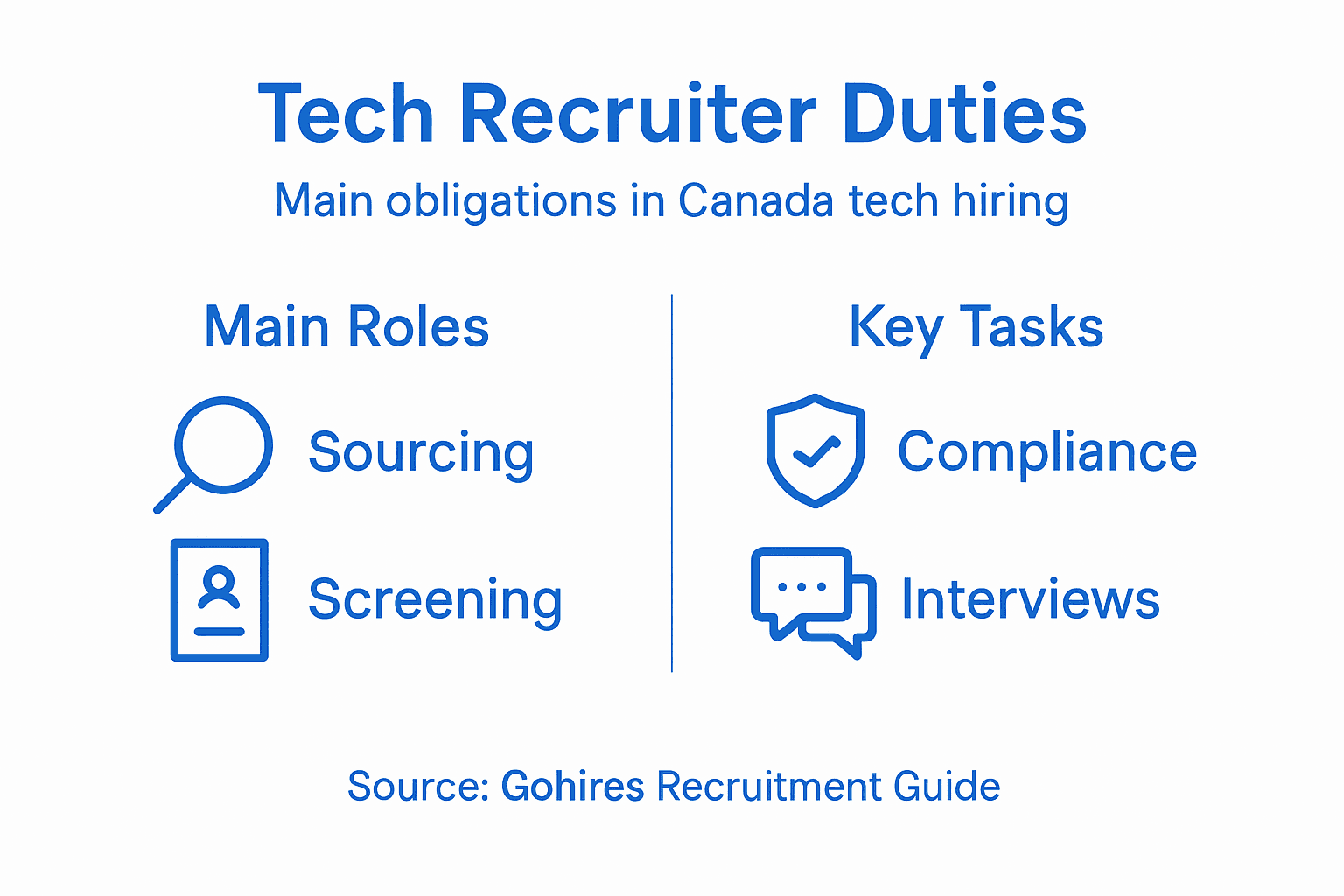
Beyond candidate selection, recruiters serve critical roles in managing employment documentation, facilitating transparent communication between employers and potential employees, and maintaining comprehensive records that meet federal and provincial regulatory standards. These professionals must also stay current with evolving labor laws, technological trends, and industry-specific hiring protocols, continuously adapting their recruitment strategies to address changing workforce dynamics and technological innovations.
Core Recruiter Responsibilities:
- Candidate sourcing and screening
- Technical skills assessment
- Legal compliance verification
- Documentation management
- Candidate experience optimization
- Employer representation
Responsibility Domains for Tech Recruiters:
| Domain | Key Obligations |
|---|---|
| Legal Compliance | Adherence to labor regulations |
| Candidate Assessment | Technical and cultural fit evaluation |
| Communication | Transparent engagement |
| Ethical Standards | Non-discriminatory practices |
| Documentation | Accurate record maintenance |
Pro tip: Technology recruiters should develop robust professional networks and continuously enhance their technical knowledge to remain effective and competitive in the dynamic Canadian job market.
Risks, Common Mistakes, and Best Practices
Technology recruitment in Canada involves navigating complex challenges that can significantly impact hiring outcomes. Recruitment strategy mistakes represent critical areas where recruiters must exercise exceptional diligence to maintain professional effectiveness and organizational success.
Common risks in tech recruitment include overlooking candidate cultural fit, relying excessively on technical assessments without holistic evaluation, and failing to understand emerging technological skill requirements. Recruiters frequently make mistakes such as using outdated job descriptions, neglecting candidate experience, inadequately screening technical competencies, and not maintaining robust communication channels with potential candidates. These errors can result in prolonged hiring cycles, increased recruitment costs, and potentially misaligned talent placement that undermines organizational technological capabilities.
This table summarizes key ongoing challenges and solutions for technology recruiters in Canada:
| Recruitment Challenge | Root Cause | Effective Solution |
|---|---|---|
| Finding niche talent | Skills shortages in emerging fields | Partner with universities and use niche platforms |
| Reducing bias | Unconscious recruiter assumptions | Implement structured interviews and AI tools |
| Shortening hiring cycles | Multi-stage evaluation delays | Streamline steps with ATS and clear criteria |
| Improving retention | Poor cultural match | Prioritize team fit assessments early on |
Best practices for mitigating recruitment risks involve developing comprehensive, dynamic recruitment strategies that balance technical assessment with comprehensive candidate evaluation. Successful tech recruiters implement sophisticated screening methodologies, leverage advanced technological assessment tools, maintain extensive professional networks, and continuously update their understanding of technological trends. This approach requires ongoing professional development, strategic networking, and a commitment to understanding both technological evolution and human capital dynamics in the rapidly changing Canadian tech ecosystem.
Critical Recruitment Risk Areas:
- Incomplete candidate screening
- Outdated job descriptions
- Limited talent pool diversity
- Ineffective technical assessments
- Poor candidate communication
- Neglecting cultural fit evaluation
Recruitment Risk Management Matrix:
| Risk Category | Potential Impact | Mitigation Strategy |
|---|---|---|
| Technical Mismatch | Project Failure | Comprehensive Skills Assessment |
| Cultural Misalignment | Team Dysfunction | Behavioral Interviewing |
| Diversity Limitations | Innovation Barriers | Inclusive Recruitment Practices |
| Communication Gaps | Candidate Dropout | Transparent Engagement |
Pro tip: Technology recruiters should develop a continuous learning mindset and invest in advanced assessment technologies to stay ahead of evolving recruitment challenges.
Transform Your Tech Hiring Experience with Gohires
Finding the right tech talent in Canada can be challenging given the competitive market and complex recruitment processes highlighted in the article. Whether you are a recruiter struggling with sourcing niche professionals or an employer aiming to streamline in-house hiring, understanding these pain points like technical skills assessment, cultural fit, and regulatory compliance is key to success.
Gohires.com is designed to be your all-in-one solution connecting Canadian tech recruiters and employers with skilled candidates quickly and efficiently. Our easy-to-use platform offers free job posting options and targeted candidate search tools that empower you to bridge the talent gap. From managing transparent recruitment workflows to enhancing candidate visibility and engagement, Gohires supports your goals to power your tech hiring with confidence.
Take control of your recruitment strategy today. Visit Gohires.com to post your tech job openings and gain access to an expansive network of qualified professionals. Explore expert career advice and discover how smart tools can reduce hiring risks while improving cultural and technical matches. Dont wait—start building your high-performance tech teams now at Gohires.com.
Learn more about effective recruiting practices at Gohires and empower your hiring with expert resources and a centralized job platform.
Frequently Asked Questions
What is the role of tech recruiters in Canada?
Tech recruiters in Canada specialize in sourcing, attracting, and placing qualified professionals in the technology sector, helping companies build effective technical teams to drive innovation and competitiveness.
How do in-house and agency recruiting differ in the tech sector?
In-house recruiters are employed directly by a company and have a deep understanding of the organization, while agency recruiters work for various firms and bring a broader market perspective and extensive candidate networks.
What are the key responsibilities of tech recruiters in Canada?
Tech recruiters are responsible for candidate sourcing and screening, conducting technical skills assessments, ensuring legal compliance, optimizing the candidate experience, and maintaining accurate documentation.
How can technology companies optimize their recruitment strategies?
Companies can optimize their recruitment strategies by adopting a hybrid approach that combines in-house expertise with agency networks, leveraging advanced applicant tracking systems, and maintaining strong relationships with universities and tech communities.
Recommended
- The Definitive Guide to Understanding Applicant Tracking Systems – GoHires
- 7 Essential Job Search Tips Canada Graduates Need Now
- Why Post Jobs Online: Boosting Canadian Recruitment
- The Role of Recruitment Agencies in Finding Jobs for Immigrants: How to Leverage Them to Land Your First Job – GoHires
- 7 Key Advantages of Virtual Staffing for Tech Teams | NineArchs
1 Comment
Pingback: Remote Recruitment: Transforming Hiring for Tech Firms