


Landing your first job in Canada as an international student can feel overwhelming, especially when the process is unfamiliar and competitive. With different employer expectations and a unique hiring culture, finding your place in the Canadian workforce often seems confusing and out of reach. Add in the uncertainty of where to focus your efforts, and it’s easy to see why so many students struggle to get started.
The good news is that international students are now recognized as a valuable part of Canada’s workforce, with policy changes and community support making it easier to gain real work experience. Knowing exactly what steps to take will put you ahead of others who rely solely on online job postings or send out generic applications.
Get ready to unlock actionable strategies that make you stand out. These practical tips will guide you step by step, helping you connect with the right employers, build relevant experience, and increase your chances of finding a quality job in Canada.
Table of Contents
- Research The Canadian Job Market
- Tailor Your Resume And Cover Letter
- Create A Strong Online Presence
- Network With Employers And Peers
- Apply Strategically Through Job Platforms
- Prepare For Canadian-Style Interviews
- Follow Up And Stay Persistent
Quick Summary
| Key Insight | Explanation |
|---|---|
| 1. Research the job market | Understand industry demand and growth regions to target your job applications effectively. |
| 2. Customize your applications | Tailor your resume and cover letter to align with each job posting’s specific requirements. |
| 3. Build a strong online presence | Maintain an updated LinkedIn profile and online portfolio to enhance visibility to employers. |
| 4. Engage in networking | Attend events and connect with professionals to create opportunities outside of job boards. |
| 5. Follow up and be persistent | After applying or interviewing, follow up and stay active to demonstrate genuine interest. |
1. Research the Canadian Job Market
Before you start applying to jobs, you need to understand the actual landscape you’re entering. The Canadian job market isn’t uniform across provinces or industries, and what’s booming in Toronto might be stagnant in rural areas. International students often make the mistake of applying broadly without understanding where the real opportunities are, which wastes time and leads to frustration.
The first step is accessing reliable data about employment trends. Statistics Canada provides current detailed labor market data across provinces and industries, including employment levels, unemployment rates, and monthly changes. This isn’t just abstract information. You can actually see which sectors are hiring, where jobs are being created, and which regions have the strongest growth. For example, if you’re studying engineering, you might discover that Alberta has significantly higher demand than Quebec right now, or that technology roles in Vancouver are expanding faster than in Montreal.
Why does this matter for you as an international student? The Canadian government actively recognizes that international students help address labor shortages in the economy. Recent policy changes have even temporarily lifted work hour restrictions for eligible international students, acknowledging that your contribution to the Canadian workforce is valued. This means employers are increasingly receptive to hiring international talent, but they’re especially hungry for skills in specific sectors and regions. Understanding these demand patterns helps you position yourself where you’re most valuable.
Start by identifying three key pieces of information about your target market. First, pinpoint the industries experiencing growth in your field. Are tech companies expanding? Are healthcare facilities hiring? Are construction projects ramping up? Second, research which provinces or cities have the strongest job markets for your background. Some international graduates find better opportunities in smaller cities than in major centers. Third, look at the specific job titles and roles that employers are actually posting. You might be qualified for positions you haven’t considered yet.
When you dig into this data, you’ll notice patterns. Some sectors consistently show stronger wage growth and more abundant opportunities. Other regions have talent shortages in your field, which means less competition and better negotiating power for salary and benefits. This research phase takes perhaps 5 to 8 hours of focused work, but it can literally double your job search efficiency by helping you target the right opportunities.
Pro tip: Create a simple spreadsheet tracking job openings, average salaries, and employer names across your top 3 target sectors or regions. Update it weekly as you monitor job boards. This gives you concrete evidence of market movement and helps you spot emerging opportunities before they become competitive.
2. Tailor Your Resume and Cover Letter
Your resume and cover letter are your first impression with Canadian employers, and they need to reflect the specific job you are applying for, not just your general background. International students often submit generic documents that get filtered out before anyone even reads them. Customization is not optional if you want to compete effectively.
Canadian employers expect resumes that are directly relevant to the position. This means you should not just copy your resume to every application. Instead, review the job posting carefully and identify the keywords and skills the employer emphasizes. If they mention “project management,” make sure your resume highlights project management experience. If they stress “bilingual communication,” show your language abilities prominently. The goal is to make the hiring manager see immediately that you understand what they need.
Your cover letter serves a specific purpose that your resume cannot. It explains why you are interested in this particular role and company, and it addresses why you, specifically as an international student, are a valuable hire. Many international students skip the cover letter or treat it as optional, but Canadian employers often read them. A strong cover letter can address potential concerns an employer might have, such as sponsorship requirements or your commitment to staying in Canada.
Here is how to approach tailoring effectively. First, extract 3 to 5 key requirements from the job posting. Second, map your skills and experience directly to each requirement. If you studied in a Canadian institution, mention it. If you have Canadian work experience, highlight it prominently. Third, reference the company by name and show that you understand what they do. Generic phrases like “I am interested in your company” do not impress anyone. Instead, say something like “Your expansion into the Toronto market aligns with my experience developing client relationships in competitive urban markets.”
For international students, your cover letter should acknowledge the elephant in the room if relevant. If the role requires sponsorship, you can address this proactively by expressing your commitment to obtaining a work permit or noting if you are already eligible to work in Canada. Some international students have already secured post-graduation work permits, which makes them immediately valuable to employers. Use your cover letter to clarify your work authorization status if it strengthens your candidacy.
When tailoring your resume, reorganize sections to emphasize what matters most for the specific job. If you are applying for a customer service role, your customer service experience should be at the top, not buried after your leadership experience. Adjust your professional summary or objective to directly address the job posting. Use the same terminology the employer uses in the job description. This practice also helps your resume pass through applicant tracking systems that many large Canadian employers use.
A resume that reads as though it was written for you specifically is exponentially more powerful than a generic resume sent to 50 companies. The extra 15 minutes spent customizing pays off in dramatically better response rates.
Consider how your international background adds value. International students bring diverse perspectives, multilingual capabilities, and often unique problem solving approaches. These are advantages if positioned correctly. Your education or work experience in another country is not a liability. Frame it as bringing international best practices and cross cultural collaboration skills to the Canadian team.
When you write your cover letter, address it to a specific person whenever possible. If the job posting does not name the hiring manager, spend 5 minutes on LinkedIn or the company website to find this information. Personalizing your opening from “To Whom It May Concern” to “Dear [Hiring Manager Name]” immediately shows effort and attention to detail.
Examine how to write cover letters specifically for Canadian employers to understand the particular formatting and tone expectations in the Canadian job market. Canadian hiring managers value directness, professionalism, and genuine interest in the role. They are less interested in flowery language and more interested in concrete examples of your accomplishments.
Pro tip: Save your base resume as a template and create a new version for every application, adjusting bullet points and section order to emphasize skills matching the job posting, rather than sending the same document repeatedly.
3. Create a Strong Online Presence
Canadian employers increasingly research candidates online before deciding whether to interview them. Your LinkedIn profile, personal website, or GitHub portfolio can either strengthen your application or undermine it if not managed properly. Building a strong online presence takes deliberate effort, but it works in your favor when done correctly.
Start with LinkedIn, which is the professional network Canadian employers check first. Your profile should reflect the same professionalism as your resume but with more depth and personality. Many international students create LinkedIn accounts but leave them incomplete or outdated. This sends the wrong signal. A complete LinkedIn profile includes a professional headshot, a compelling headline that goes beyond just your job title, and a summary that tells your professional story.
Your headline on LinkedIn should be specific and relevant to the Canadian job market. Instead of writing “Student at University of Toronto,” write something like “International Graduate Seeking Marketing Analyst Role in Toronto.” This immediately tells recruiters what you are looking for and makes you discoverable in their searches. Your headline appears in search results, so make it count.
The summary section is where you tell your story as an international student. Explain why you came to Canada to study, what you learned, and what kind of work you are seeking. Mention any Canadian work experience, internships, or volunteer roles. If you have specific skills that are in demand in Canada, highlight them here. Many Canadian employers value international perspectives, so frame your background as bringing diverse skills and viewpoints to their team.
Beyond LinkedIn, consider creating a portfolio that showcases your actual work. If you are in design, marketing, data analysis, or software development, a portfolio website is almost essential. You do not need an expensive website. Free platforms like GitHub Pages, Wix, or Canva allow you to create professional looking portfolios quickly. Include real projects you have completed, whether from your studies, internships, or freelance work. Employers want to see concrete evidence of what you can do.
For technical roles, GitHub is equally important as LinkedIn. If you are studying computer science, data science, or any programming field, maintain an active GitHub account with projects that demonstrate your coding ability. Write clear README files for your projects, include comments in your code, and show that you understand version control and collaboration. Canadian tech companies frequently check GitHub profiles before interviewing candidates.
Your online presence should tell a consistent story across all platforms. Someone researching you on LinkedIn, visiting your portfolio, and checking your GitHub should get the same impression of your professional skills and character.
Keep your online presence updated regularly. Do not create a LinkedIn profile, add a few details, and then ignore it for six months. Update your profile as you take on new responsibilities, complete projects, or develop new skills. This shows that you are actively engaged in your professional development. When you apply for a job, Canadian recruiters sometimes check your activity. An active, regularly updated profile suggests you are serious about your career.
Manage what you post and share carefully. Your social media presence matters, even if you think it does not. Avoid posting controversial opinions, inappropriate photos, or complaints about previous employers or educational institutions. Canadian workplace culture values professionalism, and employers will form opinions based on what they see. Keep your personal social media accounts private if possible, and maintain a separate, professional account where you share industry relevant content, articles, and professional insights.
Connect meaningfully with people in your target industry. Do not just mass request connections. Instead, send personalized messages when connecting with professionals. Join Canadian industry groups on LinkedIn related to your field. Participate in discussions thoughtfully. Comment on posts from Canadian companies you are interested in. These actions increase your visibility and help you build genuine professional relationships.
Creating a strong online presence also means being discoverable through keywords that matter in your field. Use industry terminology naturally throughout your profiles. If you are seeking a role in supply chain management in Canada, make sure your profiles mention “supply chain,” “inventory management,” “logistics,” and related terms. This helps you appear in recruiter searches and makes it easier for hiring managers to understand your expertise.
Consider starting a blog or Medium publication if writing is part of your field. Share insights about industry trends, lessons you have learned, or skills you have developed. This positions you as someone who thinks deeply about your work and stays current with your field. You do not need to publish constantly. One thoughtful post per month demonstrates engagement.
Your online presence should also demonstrate your Canadian knowledge and commitment. Follow Canadian industry publications, Canadian companies, and Canadian professional organizations on your social media. Share articles about Canadian market trends. This shows that you are actively invested in understanding the Canadian business environment, not just looking for any job anywhere.
Pro tip: Conduct a Google search of your own name and review the first page of results to see what employers will find, then strategically build or update your online presence to ensure your professional profiles rank higher than any outdated or undesirable content.
4. Network with Employers and Peers
You cannot land a job by applying online alone. Most professional positions in Canada are filled through personal connections before they ever reach a job board. Networking is not optional for international students seeking work. Building genuine relationships with employers and peers opens doors that applications cannot.
Networking feels uncomfortable for many international students, especially those from cultures where direct professional networking is less common. But Canadian workplace culture actually values direct, genuine connections. You do not need to be outgoing or naturally social to network effectively. You need to show genuine interest in people and industries, ask thoughtful questions, and follow up consistently.
Start by attending industry events, career fairs, and professional conferences in your field. These events are specifically designed for people like you to make connections. Unlike random networking, attending events relevant to your career path gives you built in conversation starters. You can say, “I noticed your company is hiring for marketing roles. I am interested in learning more about your internship program.” This is infinitely easier than cold calling someone.
Canadian universities and colleges host numerous networking events throughout the year. Your school’s career center likely organizes industry mixers where employers actively recruit students. These events are low pressure because everyone there expects to be networking. Attend three to four per semester. Your goal is not to get a job offer at the event. Your goal is to have five meaningful conversations and collect five business cards.
When you network at events, have a clear but brief introduction prepared. You should be able to explain who you are, what you study, and what kind of work you are interested in within 30 seconds. Practice this introduction until it feels natural. Then ask questions about the other person’s work. Most people love talking about themselves and their company. Ask what they do, how they got into their field, and what they look for in candidates. Listen more than you talk.
Follow up is where most international students fail at networking. You meet someone at an event, exchange business cards, and then do nothing. This wastes the entire interaction. Within 48 hours of meeting someone, send them a brief message on LinkedIn or via email. Say something specific about your conversation. “I enjoyed learning about your company’s expansion into the Toronto market. The challenges you described with supply chain optimization align perfectly with my interests.” Then suggest a coffee chat or brief call to continue the conversation.
Coffee chats are your secret weapon for breaking into the Canadian job market. A coffee chat is an informal 20 to 30 minute conversation with someone working in your target industry. You are not asking for a job. You are asking for advice about the field, the company, or the Canadian job market. This takes pressure off both of you. Many Canadian professionals are happy to grab coffee with someone genuinely interested in their work. These conversations often lead to job opportunities because you are building real relationships, not just submitting applications.
Research shows that community networks and partnerships significantly support international students in building professional connections while overcoming cultural barriers that might otherwise impede their labor market integration. This means that seeking out structured networking opportunities, whether through your institution, professional associations, or immigrant support organizations, provides concrete pathways to employment.
Connect with other international students in your program. Your classmates understand your experience and may become future colleagues. Some of your strongest professional relationships will come from study groups, group projects, and student clubs. Attend alumni events after graduation. Your school’s alumni network is incredibly valuable. Many hiring managers are alumni themselves and prefer to hire from their own schools.
Leveraging networking strategies specifically designed for building professional connections in Canada can help you overcome any cultural or language barriers and accelerate your entry into the Canadian workforce. Look for professional associations related to your field. Many have student memberships at reduced rates. Join these groups, attend their events, and volunteer for committees. This shows dedication and creates consistent contact with industry professionals.
Use LinkedIn strategically for networking, not just profile building. When you meet someone in person, connect with them on LinkedIn immediately. Engage with their posts by liking and commenting thoughtfully. Share industry articles and write brief comments about your takeaways. This keeps you visible in your network’s feeds and positions you as someone engaged with your field.
The most valuable networking happens when you are genuinely interested in learning from others, not when you are desperately seeking a job. People can sense desperation. They respond to authentic curiosity and respect for their expertise.
Do not underestimate informational interviews. Reach out to people at companies you admire and ask if they have 20 minutes for a coffee or call. Explain that you are researching the Canadian job market and would like to learn about their experience. Many people say yes because the ask is small and the intent is clear. During informational interviews, ask about their career path, what skills they value, what entry level roles look like, and what advice they have for someone new to Canada.
Volunteer work and internships are excellent networking opportunities. When you work somewhere, even temporarily or without pay, you build relationships with people who can refer you to paying positions later. Your supervisor, coworkers, and clients all become part of your network. Treat every volunteer role or internship as a networking opportunity, not just a resume line item.
Attend industry specific workshops and certifications. If you are in data science, take a machine learning workshop. If you are in marketing, attend a digital marketing conference. These events attract professionals focused on that specific skill area, making your networking much more targeted. You will have conversations with people specifically interested in the topics you care about.
Pro tip: Set a concrete networking goal such as attending one event per month and completing two coffee chats per month, then track these activities in a spreadsheet along with the names, companies, and key details about each person you meet so you can nurture relationships systematically over time.
5. Apply Strategically Through Job Platforms
Not all job platforms are equal, and applying randomly to dozens of postings wastes your energy. Strategic application means choosing the right platforms, targeting positions that match your qualifications, and customizing each application. International students who understand this approach land interviews. Those who blast out generic applications rarely do.
Canada has several major job platforms, and you should have accounts on at least three of them. LinkedIn Jobs is where most Canadian employers post positions, especially professional roles. Indeed Canada aggregates postings from thousands of employers. Job Bank, a government resource, provides unbiased labor market information and real job postings. GoHires connects job seekers with Canadian employers across multiple sectors. Each platform serves a different purpose and attracts different employers.
Before you create accounts and start applying, understand what type of roles you want. Are you seeking full time positions or internships? Are you open to all regions or focused on specific cities? Do you want corporate roles, startups, nonprofits, or government positions? Your answers shape which platforms you prioritize and how you search. Someone seeking a data science role in Toronto will have a completely different search strategy than someone seeking entry level administrative work across Canada.
When searching on job platforms, use specific keywords rather than broad ones. Instead of searching “marketing,” search “marketing coordinator Canada” or “digital marketing analyst Toronto.” Specific searches return fewer results, but the matches are much more relevant. You will spend less time scrolling through irrelevant positions and more time on actual opportunities.
Read job postings carefully before applying. Many international students see a posting and immediately submit their resume without actually reviewing the requirements. Spend 10 minutes reading each posting thoroughly. Identify the top 5 to 8 must have qualifications. If you lack critical qualifications, apply anyway if you are close, but do not waste time applying to positions where you are completely unqualified. Quality applications matter far more than quantity.
Set up job alerts on your primary platforms. Most platforms allow you to create saved searches that send you new postings matching your criteria daily or weekly. This means you do not have to manually search every day. You can instead focus on applying to relevant new postings as they appear. Set up three to five targeted alerts based on your specific goals.
When you find a position worth applying to, customize your application. Update your resume to highlight skills matching the job posting. Rewrite your cover letter to reference the specific company and role. Change your LinkedIn headline or summary if needed to better align with the position. This customization takes 20 to 30 minutes per application, but it dramatically increases your chances of getting an interview.
Track your applications meticulously. Create a spreadsheet with columns for company name, position title, date applied, job platform, application status, and follow up date. Update this spreadsheet as you receive responses. Many international students forget which companies they applied to and when, making follow ups impossible. Your tracking sheet keeps you organized and ensures you actually follow up when appropriate.
Understanding job search workflow and best practices for entry level success in Canada helps you structure your applications strategically rather than applying haphazardly. A strategic approach means batching your applications, following consistent processes, and tracking results so you can refine your approach.
Follow up on applications after one to two weeks if you have not heard back. Most positions receive dozens of applications. A polite follow up email can get your application noticed again. Send a brief message reminding the employer of your interest and asking about the timeline for next steps. Keep it professional and brief. Do not be pushy or desperate sounding.
Consider applying through company websites directly, not just through job platforms. Many companies post roles on their own careers pages before or alongside platforms like LinkedIn. Check the websites of companies you want to work for and look for job listings. Applying directly through a company’s site sometimes gives your application priority. Plus, you often learn more about the company culture and values from their own website.
Strategic application is not about applying to more positions. It is about applying to the right positions with customized, thoughtful applications that show you actually want the job and understand what the company needs.
Be cautious of job postings that seem too good to be true or ask for money upfront. Legitimate Canadian employers do not charge fees for applying or interviewing. If a posting asks you to pay for a background check before an interview, it is likely a scam. Report suspicious postings to the platform and move on.
International students sometimes struggle with Canadian job boards because they do not recognize Canadian company names or understand which roles are entry level versus experienced. Take time to research companies before applying. Use Glassdoor to read employee reviews. Check the company website to understand their business and culture. This research helps you determine if a position is worth your time and gives you talking points for interviews.
Do not limit yourself to postings that explicitly say “international students welcome.” Many employers are open to hiring international students but do not state this in every posting. If you meet the qualifications, apply. Your application will indicate whether you require sponsorship or have work authorization. Many postings are open to candidates with work permits already.
Time your applications strategically. Apply early in the posting lifecycle, ideally within the first two to three days. Hiring managers often screen applications in batches, and early applications get more attention. Avoid applying late at night when you are tired. Mistakes in applications happen when you rush or are exhausted.
Pro tip: Create a weekly application routine where you spend two to three hours on one designated day searching, customizing applications, and submitting them, rather than randomly applying throughout the week, which leads to inconsistency and lower quality applications.
6. Prepare for Canadian-Style Interviews
Canadian job interviews have distinct characteristics that differ from what you may have experienced in your home country. If you prepare using your previous interview style, you risk missing cultural cues and interview expectations that Canadian employers value. Understanding these differences and preparing specifically for them can mean the difference between landing a job and getting rejected after a promising application.
Canadian interviews prioritize directness and authenticity over formality. Hiring managers want to know who you are as a person and professional, not just your credentials. They value candidates who are genuinely interested in the role and company, not those who deliver overly rehearsed answers. This means you should prepare thoughtfully but speak naturally, as if you are having a real conversation with a colleague, not reciting scripted responses.
The behavioral interview format is extremely common in Canada. Instead of asking hypothetical questions like “What would you do if,” Canadian interviewers ask “Tell me about a time when.” They want real examples from your actual experience. They are listening for your STAR method responses, which stands for Situation, Task, Action, Result. When asked “Tell me about a time you dealt with a difficult client,” you should describe a specific situation, explain what you needed to accomplish, outline the actions you took, and finish with the measurable result. Practice this format extensively before your interview.
Prepare your own questions to ask the interviewer. Canadian interviewers expect candidates to ask thoughtful questions about the role, team, and company culture. This shows genuine interest and engagement. Avoid asking questions you could easily answer by reading the company website. Instead, ask things like “What does success look like in the first 90 days?” or “Can you describe the team dynamics and how this role fits in?” or “What are the biggest challenges this department is facing right now?” These questions demonstrate critical thinking and genuine curiosity.
Research the company thoroughly before your interview. Read their website, check their social media, and look up recent news about them. Understand their business model, products or services, and recent developments. During your interview, reference this research. For instance, you might say, “I noticed your company recently expanded into the healthcare sector. I am particularly interested in how you are approaching that market since my background includes healthcare experience.” This level of preparation impresses Canadian employers.
Practice preparing for Canadian style interviews with specific tips and strategies so you understand the tone, expectations, and common formats used in this job market. Canadian interviews typically last 30 to 45 minutes for first rounds and can extend to 60 to 90 minutes for later rounds. Prepare accordingly and pace your answers to fill time appropriately without rambling.
Dress professionally but appropriately for the industry. Canadian workplace culture is generally less formal than many other countries. In finance, law, or consulting, wear a business suit. In tech startups or creative industries, smart casual is acceptable. When in doubt, err slightly more formal. You can always remove a blazer if the environment feels too casual, but you cannot dress less formally if you arrived overdressed.
Arrive early but not too early. Aim to arrive 10 to 15 minutes before your interview start time. Arriving 30 minutes early suggests you have nothing else to do and have poor time management. Arriving right at start time or 5 minutes late suggests disrespect. The 10 to 15 minute window is optimal. Use that time to go to the restroom, check your appearance, and center yourself mentally.
Your confidence during the interview comes not from being perfect, but from being thoroughly prepared. When you know your examples, have researched the company, and understand what they are looking for, confidence naturally follows.
Make genuine eye contact and offer a firm but not crushing handshake. Canadian business culture values these nonverbal cues. If you meet multiple people, remember their names and use them in conversation. A simple “Thank you for your time, [Name]” when saying goodbye makes a good impression.
Be honest about your international student status and work authorization. If you have a Canadian work permit, mention it. If you require sponsorship, be upfront about it early in the conversation if it comes up. Most Canadian employers understand work permit requirements and many are willing to sponsor candidates if you are the right fit. Hiding this information or being evasive damages your credibility.
Discuss your Canadian experience and commitment. If you have studied in Canada, mention it. If you have Canadian work experience or volunteer roles, highlight them. Show that you understand Canadian workplace culture and are committed to building your career here. International students who seem genuinely interested in staying and building roots in Canada are more attractive to employers than those who seem to view Canadian employment as a temporary stopping point.
Prepare thoughtful answers about your strengths and weaknesses. For strengths, choose 2 to 3 that directly relate to the job posting and back them up with specific examples. For weaknesses, choose something real but not critical to the role, and explain how you are actively working to improve. Avoid canned answers like “I am a perfectionist” or “I work too hard.” These responses are so common they signal you have not given genuine thought to the question.
When asked about salary expectations, do your research first. Check Canadian salary surveys for your role and experience level in your target city. Have a range in mind rather than a single number. If asked, you might say, “Based on my research and experience, I am looking for compensation in the range of 45,000 to 55,000 dollars annually.” Know what minimum salary you would accept, but do not mention it first unless specifically pressed.
Follow up with a thank you email within 24 hours of your interview. Keep it brief and genuine. Mention something specific from your conversation that resonated with you. Thank the interviewer for their time and reiterate your interest in the role. This simple gesture keeps you top of mind and demonstrates professionalism.
Pro tip: Record yourself answering common interview questions and watch the playback to identify verbal tics, filler words like “um” and “like”, and monotone speaking patterns, then practice those specific answers until you sound natural and engaging.
7. Follow Up and Stay Persistent
The job search does not end when you submit your application or finish an interview. Follow up and persistence separate candidates who land jobs from those who give up too easily. Many international students submit applications and then disappear, waiting passively for responses. This approach rarely works. You need to stay engaged, follow up strategically, and maintain momentum throughout your job search.
Follow up on applications after 10 to 14 days if you have not heard back. Send a brief email to the hiring manager or recruiter expressing continued interest in the position. Keep it short and professional. Something like, “I submitted my application for the Marketing Coordinator role on March 15th and remain very interested in this opportunity. I would appreciate any updates on the timeline for next steps.” This simple message reminds them you exist and shows genuine interest.
If you receive an interview rejection, do not disappear. Send a thank you email acknowledging their decision and expressing interest in future opportunities. Something like, “Thank you for considering my application for the Sales Associate position. While I am disappointed, I appreciated learning more about your team. I remain interested in your company and would welcome the opportunity to apply for future roles that align with my background.” This keeps the door open. Companies remember candidates who handle rejection gracefully, and they often circle back to strong candidates for different positions.
After an interview, send a thank you email within 24 hours as previously mentioned. But do not stop there. If you do not hear back within the stated timeline, follow up again. If the hiring manager said they would make a decision by March 30th and you have not heard by April 2nd, send a polite follow up. “I wanted to check in regarding the timeline for the position we discussed. I remain very interested and am happy to provide any additional information you might need.” Do not become annoying, but do stay visible.
Persistence means maintaining regular job search activity even when you are discouraged. If you receive five rejections in one week, do not stop applying. If you interview for three positions and do not get any offers, do not give up. Job searching is a numbers game, especially for international students entering a new market. You need to apply to enough positions that even with a normal rejection rate, you still generate interviews and offers.
Set realistic expectations about timeline. Entry level positions and roles for new graduates typically have longer hiring timelines than you might expect. From application to job offer can easily take four to eight weeks. Some positions take three to four months from posting to hire. Understanding this prevents you from panicking after two weeks of silence. That said, you should still follow up and stay engaged throughout this period.
Maintain a job search schedule and stick to it. Dedicate specific days and times to job searching, applying, and following up. Many international students do intense job searching for a few weeks, then slack off, then restart frantically. This inconsistent approach is exhausting and ineffective. Instead, maintain steady effort. Set a goal of three to five quality applications per week, one networking event or coffee chat per week, and one follow up contact per week. This consistent effort compounds over time.
Use your network for follow ups and introductions. If you applied to a company and have a connection who works there, ask them to refer you or provide an introduction. A referral from an internal employee carries far more weight than a cold application. Many Canadian jobs are filled through internal referrals before they reach the broader job market. Your network is your secret weapon for getting noticed.
Persistence is not pestering or being annoying. It is maintaining professional engagement, following up thoughtfully, and continuing to apply and network even when facing rejection. Most people quit right before their breakthrough.
When you land interviews, ask about timeline and next steps explicitly. Ask “What is your timeline for making a decision?” and “What happens after this interview?” Write down their answers and mark follow up dates on your calendar. This removes ambiguity and ensures you follow up at the right moment.
If you receive a rejection after an interview, ask for feedback. Send an email saying, “Thank you for considering me for this role. I would greatly appreciate any feedback on my interview performance so I can continue improving as a candidate.” Some hiring managers will provide valuable insights that help you improve for future interviews.
Expand your search geographically if you are not finding success in your target city. Canada is large and opportunities vary significantly by region. If Toronto is competitive for your field, consider Calgary, Vancouver, or Ottawa. Smaller cities often have less competition and lower cost of living. Remote positions also expand your options beyond geography. Do not limit yourself unnecessarily.
Stay flexible about position types and levels. If you are seeking a marketing manager role but entry level marketing coordinator positions keep appearing, apply for those too. Entry level roles often lead to promotions and better positions within the same company. Many international students land jobs one or two levels below their target, then quickly move up as they gain Canadian experience.
Track your progress and adjust your strategy based on results. After two months of job searching, review your application tracking spreadsheet. How many applications have you submitted? What is your interview rate? What types of positions get more responses? Use this data to refine your approach. If certain types of roles or companies never result in interviews, stop applying to those. If certain platforms generate better responses, focus more effort there.
Connect with other international students going through the same process. The job search can feel isolating, but you are not alone. Other international students in your program are facing identical challenges. Share leads, practice interviews with each other, and support each other through rejections. This community becomes invaluable for motivation and practical advice.
Remember that getting hired is only partially about qualifications. It is about timing, fit, and luck. You could be perfectly qualified but the hiring manager already has an internal candidate. You could interview well but another candidate interviewed better. You could apply to a position that gets cancelled due to budget cuts. These factors are beyond your control. What you can control is the number and quality of applications, how well you prepare for interviews, and your persistence in following up.
Pro tip: Set calendar reminders for follow up dates the moment you apply to a position or complete an interview, treating follow ups as non negotiable commitments rather than optional tasks that get forgotten among other responsibilities.
Below is a comprehensive table summarizing strategies and recommendations for successfully entering the Canadian job market as outlined in the article.
| Aspect | Details and Actions | Benefits and Outcomes |
|---|---|---|
| Market Research | Understand provincial and industry trends using credible resources. | Improved targeting and job search efficiency. |
| Customized Applications | Tailor resumes and cover letters to specific job postings. | Increased chance of interview calls. |
| Online Presence | Maintain professional profiles on platforms such as LinkedIn and GitHub. | Enhanced visibility to employers. |
| Networking | Attend events and engage with industry peers. | Creation of meaningful connections for job opportunities. |
| Strategic Applications | Use recommended job platforms and research companies before applying. | Better match of applications to job openings. |
| Interview Preparation | Understand and rehearse for Canadian-style interviews using examples. | Confident and effective communication with potential employers. |
| Persistence and Follow-ups | Maintain consistent efforts and send timely reminders. | Demonstration of dedication and professionalism. |
Take Control of Your Canadian Job Search Today
Finding a job in Canada as an international student comes with unique challenges such as navigating regional demand, tailoring resumes for Canadian employers, and strategically applying to the right opportunities. This article highlights critical steps like researching the job market, customizing your applications, and mastering interviews all of which require a focused and informed approach to stand out.
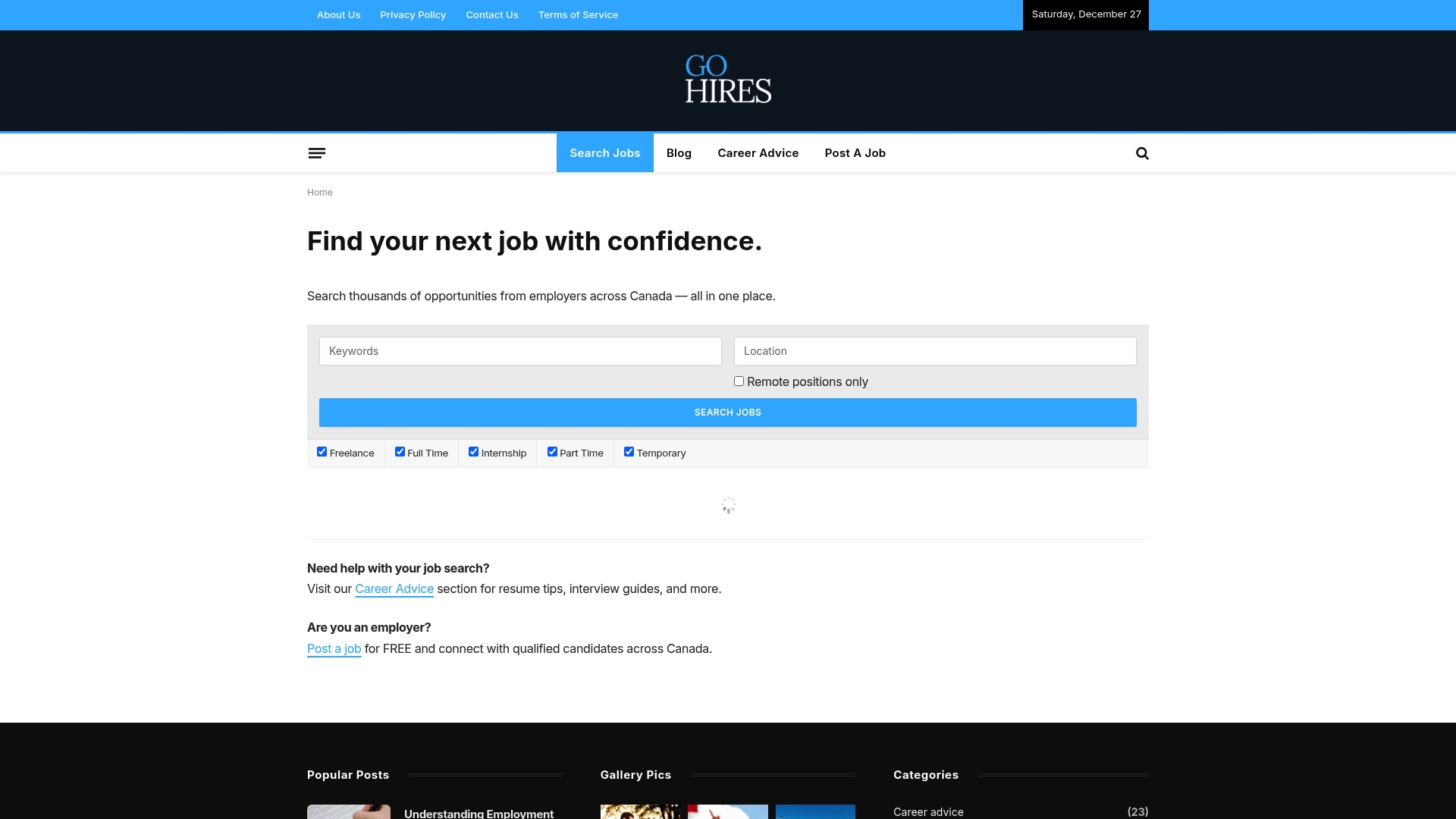
Ready to transform your job search into tangible results The solution lies at your fingertips with Gohires.com where you can access comprehensive job listings tailored to your field and preferred locations across Canada. Streamline your applications, stay organized with custom alerts, and leverage expert advice on resume writing and interview preparation all designed to help you land your ideal position faster. Start now to connect with employers actively seeking international talent and turn your Canadian career ambitions into reality by visiting Gohires.com. Don’t wait your opportunity to succeed in the Canadian job market is just one click away.
Frequently Asked Questions
How can I research the Canadian job market as an international student?
Before applying for jobs, start by gathering data on employment trends across Canada. Access reliable sources to identify which sectors are hiring and where the strongest job markets are located, focusing on your field of study.
What should I include in my resume and cover letter to stand out in Canada?
Tailor your resume and cover letter for each job application by highlighting your relevant skills and experiences. Use keywords from the job posting and directly address how your international background adds value.
How do I build an effective online presence for job searching in Canada?
Create a complete LinkedIn profile that reflects your professional story, including a professional headshot and relevant keywords. Regularly update your profile and consider building a portfolio or GitHub account to showcase your work.
What networking strategies should I use as an international student?
Attend industry events, career fairs, and leverage your university’s career center to meet potential employers. Focus on making genuine connections and following up with contacts after your initial interactions.
How can I apply strategically for jobs in Canada?
Use at least three major job platforms to apply for relevant positions, tailoring each application to meet the specific requirements. Set up job alerts and apply early within the posting lifecycle to improve your chances of being noticed.
What should I do after an interview to increase my chances of getting hired?
Send a thank you email within 24 hours to express your appreciation and reiterate your interest in the position. Follow up politely after one week if you haven’t received any updates to remain engaged and demonstrate your continued interest.