


Landing your first job in Canada can feel overwhelming with so many factors shaping the search. The Canadian labour market is in constant motion, influenced by economic change, regional differences, and demographic trends. For recent graduates and international students, understanding where the real opportunities and challenges lie means looking beyond surface-level job postings. This guide helps you make sense of current hiring patterns, key sectors, and how to stand out in a competitive market.
Table of Contents
- Defining The Canadian Labour Market Today
- Major Employment Sectors And Job Types
- Recent Trends And Demographic Shifts
- Legal Protections, Rights, And Worker Types
- Skills, Qualifications, And Hiring Practices
- Common Pitfalls And Navigating The Job Search
Key Takeaways
| Point | Details |
|---|---|
| Labour Market Complexity | Understanding regional variations and current hiring trends is essential for job seekers in Canada. Tailor your job search strategies to match local demand and sector growth. |
| Skills Demand | Employers prioritize specific soft and technical skills, particularly in healthcare, technology, and trades. Focus on developing and showcasing these abilities to improve your hiring prospects. |
| Networking Importance | Relying solely on online job applications can limit opportunities. Invest in networking and personal connections to uncover more job openings and increase your competitiveness. |
| Legal Rights Awareness | Familiarize yourself with workplace rights and protections under Canadian law to ensure fair treatment and safe working conditions as you enter the job market. |
Defining the Canadian Labour Market Today
Canada’s labour market functions as a complex ecosystem shaped by economic conditions, demographic shifts, and regional variations. The 2023-24 fiscal year demonstrated this complexity well. While the Canadian economy maintained modest growth despite global challenges like geopolitical tensions and inflation, labour market conditions tightened significantly. This tightening created both opportunities and challenges for job seekers entering the workforce.
Understanding labour market information helps explain what’s actually happening across provinces and industries. The Labour Market Information Council (LMIC) provides accessible data on job trends, skill requirements, and labour market dynamics that shape decisions for employers, workers, and job seekers. These insights reveal supply and demand mismatches that directly affect your job search strategy.
Regional variations form a critical piece of the puzzle. Employment growth, unemployment rates, and demographic trends differ substantially across provinces. Toronto’s tech sector booms while rural Alberta faces agricultural labour shifts. A recent graduate in Vancouver encounters completely different opportunities than someone searching in Halifax. Understanding where growth is happening matters more than general statistics.
Demographic influences are reshaping Canadian hiring patterns right now. An aging workforce means companies actively recruit younger workers to fill skill gaps. International students and recent immigrants represent a growing portion of entry-level candidates. This demographic reality creates more pathways into Canadian employment than existed five years ago, particularly for those willing to work in regions experiencing labour shortages.
The current market rewards specificity over generalism. Employers face real labour shortages in particular sectors while other industries see excess supply. Healthcare, skilled trades, and technology positions remain highly competitive for employers, while administrative roles see more applicants per opening. Your strategy should focus on understanding which sectors actively hire entry-level workers rather than chasing generic job postings.
Pro tip: Check Statistics Canada and the Labour Market Information Council’s latest reports before applying to jobs. Understanding whether your target industry is growing or contracting helps you position yourself effectively and identify which regions offer genuine opportunities.
Major Employment Sectors and Job Types
Canada’s economy spans diverse sectors, each with its own hiring patterns and entry-level opportunities. Services, healthcare, technology, retail, education, construction, and manufacturing form the backbone of employment across the country. Understanding which sectors are actively hiring helps you focus your job search on realistic opportunities rather than saturated markets.
Healthcare represents one of Canada’s fastest-growing sectors right now. Nursing assistants, care aides, and hospital support staff are in constant demand across provinces. This sector actively recruits entry-level workers because of Canada’s aging population and existing workforce shortages. If you’re willing to work shifts and earn certifications, healthcare offers stable employment paths that often lead to advancement.
Technology and finance sectors concentrate in major urban centers like Toronto, Vancouver, and Montreal. These industries hire recent graduates for software development, data analysis, and business roles, though competition runs fierce. Top industries hiring immigrants in Canada reveal that tech companies actively seek international talent and recent graduates with relevant skills or internship experience.

Trades and construction remain consistently strong across Canada. Electricians, plumbers, carpenters, and equipment operators earn competitive wages while facing genuine labour shortages. Apprenticeships in these fields provide pathways to six-figure incomes within five to ten years. Unlike many entry-level roles, trades offer real job security backed by demographic need.
Retail, hospitality, and customer service roles offer immediate employment for recent graduates seeking quick entry into the workforce. These positions rarely require experience and hire year-round, especially during seasonal peaks. Many people use these roles as stepping stones while developing skills or pursuing education in their field of choice.
Regional strengths matter significantly. Alberta’s energy sector dominates employment there, while British Columbia’s tourism and natural resources shape opportunities. Understanding Canadian employment sectors and job market analysis by region helps you target locations where your skills match actual demand.
Here’s a summary of how major Canadian employment sectors compare for entry-level candidates:
| Sector | Typical Entry Roles | Competition Level | Advancement Potential |
|---|---|---|---|
| Healthcare | Nursing assistants, care aides | Moderate | High (with training) |
| Technology | Software developer, analyst | Very high | High (with experience) |
| Trades | Electrician, plumber | Low | High (apprenticeships) |
| Retail | Sales, cashier | Low | Moderate (management) |
| Hospitality | Server, hotel staff | Low | Moderate |
| Finance | Analyst, associate | High | High |
| Construction | Laborer, operator | Low | High (certification) |
Pro tip: Target sectors with genuine labour shortages rather than competitive fields. Check provincial labour market reports to identify which industries actively recruit entry-level workers in your desired location, then tailor your applications to those specific sectors.
Recent Trends and Demographic Shifts
Canada’s labour market in 2024 faced a significant challenge: job creation failed to keep pace with population growth. This gap widened unemployment rates and increased competition for available positions. The modest economic growth Canada experienced couldn’t absorb the influx of new workers entering the job market, creating headwinds for recent graduates and international students seeking employment.
Baby boomer retirements are reshaping Canada’s workforce in real time. Thousands of experienced workers are leaving careers each year, creating openings across sectors. However, demographic shifts and labour force challenges reveal that replacements aren’t keeping pace naturally. This creates unique opportunities for younger workers willing to fill gaps left by retiring professionals, particularly in management and specialized roles.
Immigration has become essential to Canada’s labour force survival. Without immigration contributing significantly to labour force expansion, Canada would face severe worker shortages across industries. Your status as an international student or recent immigrant positions you within this critical flow of talent. Companies actively recruit from immigrant populations because the domestic workforce alone cannot meet demand.
Regional disparities continue shaping job availability across provinces. Some regions face acute labour shortages while others see higher unemployment. Labour market challenges and policy solutions highlight sector-specific shortages in healthcare, trades, and technology. Geography matters enormously for your job search strategy, and willingness to relocate significantly improves employment prospects.
Underemployment presents another serious trend affecting the job market. Many graduates work positions below their qualification level because entry barriers to professional roles remain high. Building relevant experience through internships, volunteering, or contract work helps bridge this gap and positions you for advancement.
Pro tip: Target regions experiencing labour shortages rather than major cities where competition is fierce. Check provincial labour market reports identifying specific sectors with worker shortages, then prioritize applications in those areas and industries.
Legal Protections, Rights, and Worker Types
Canada’s legal framework protects workers across all employment types through comprehensive legislation. Whether you work full-time, part-time, or on contract, you have rights guaranteed by law. Understanding these protections matters especially for recent graduates and international students who may be unfamiliar with Canadian workplace standards.
Canadian workplace rights are established under the Canadian Human Rights Act, Employment Equity Act, and the Canada Labour Code. These laws prohibit discrimination based on race, gender, disability, national origin, and other protected grounds. Employers cannot discriminate during hiring, compensation, promotion, or termination regardless of your background or immigration status.
The Canada Labour Code governs federally regulated industries including banking, telecommunications, interprovincial transportation, and the airline sector. This legislation establishes employer and employee rights, workplace safety standards, and employment equity requirements. If you work in a provincially regulated industry, provincial labour laws apply instead, though protections remain similarly comprehensive.
Temporary foreign workers and international students have specific rights protecting them from exploitation. Federal labour legislation guarantees fair wages, safe working conditions, and protection from wage theft. Employers cannot deduct costs like housing or uniforms from your pay without explicit written consent, and they cannot retain your identification documents.
Collective bargaining rights exist under the Charter of Rights and Freedoms, allowing employees to organize and negotiate collectively with employers. Many Canadian workplaces have union representation, particularly in public sector, healthcare, and manufacturing roles. Understanding whether your workplace is unionized helps clarify your rights and available grievance procedures.
All workers deserve minimum wage, overtime pay, maximum work hours, and paid leave. Part-time workers receive the same hourly protections as full-time employees. Contract workers maintain identical anti-discrimination rights even without traditional employment relationships. These protections apply universally regardless of citizenship status or visa type.
Pro tip: Keep detailed records of your pay stubs, work hours, and communication with employers. If you experience wage theft, discrimination, or unsafe conditions, contact your provincial labour board or the Canadian Labour Standards hotline immediately before seeking legal counsel.
Skills, Qualifications, and Hiring Practices
Canadian employers face a persistent problem: they cannot find candidates with the skills they need. Over half of Canadian businesses report significant skill gaps among their workforce, particularly in technical, practical, and problem-solving competencies. This gap creates opportunity for recent graduates willing to develop in-demand abilities.
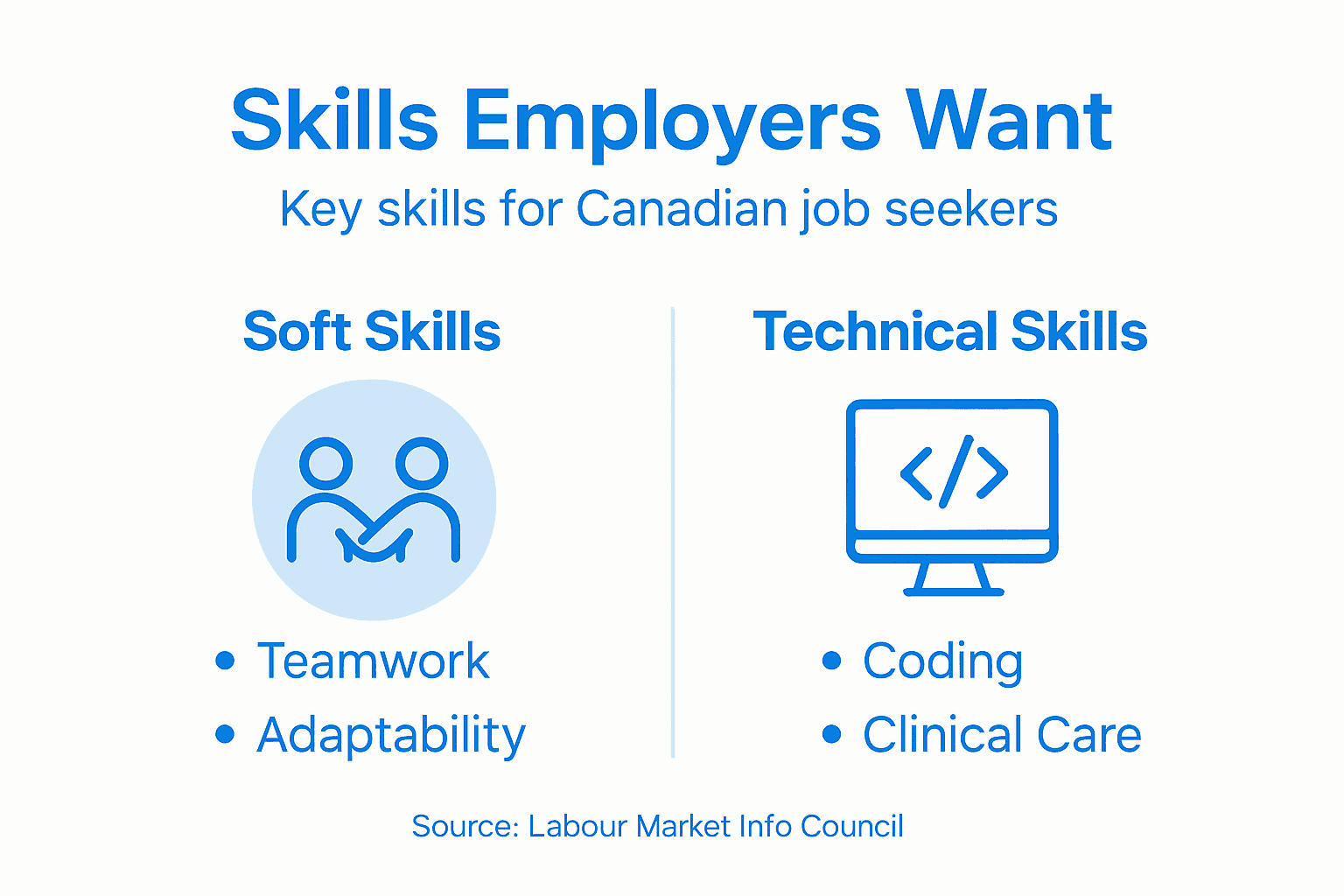
Soft skills matter as much as technical qualifications in today’s hiring landscape. Employers increasingly seek collaboration, communication, adaptability, and critical thinking alongside formal credentials. A degree alone won’t get you hired. Demonstrating these interpersonal abilities through concrete examples and experiences separates successful candidates from rejected applications.
Technical skills vary dramatically by sector. Healthcare employers prioritize certification and hands-on clinical experience. Tech companies seek coding proficiency and portfolio projects. Construction trades demand safety certifications and practical aptitude. Employment skills demands across Canadian industries reveal that misalignment between your skills and employer needs creates the biggest hiring obstacle. Target sectors where your existing abilities match actual job requirements rather than competing in oversaturated fields.
Hiring practices now emphasize demonstrated ability over credentials alone. Many employers use skills assessments, portfolio reviews, and practical tests before traditional interviews. Your resume structure and presentation significantly influences whether you advance past automated screening systems. Tailor each application to specific job descriptions, highlighting relevant skills explicitly.
Construction and hospitality sectors face the most acute skill shortages, creating entry points for candidates without extensive experience. These industries invest in on-the-job training because demand outpaces qualified applicants. Healthcare similarly welcomes candidates willing to pursue certifications while working.
Internships and volunteer work close skill gaps that employers identify. Gaining practical experience before applying for full-time positions dramatically improves hiring prospects. Many recent graduates underestimate how valuable hands-on experience becomes when competing against other applicants holding similar degrees.
Pro tip: Identify which soft and technical skills your target industry desperately needs, then deliberately build evidence of those abilities through projects, certifications, or volunteer work before applying for positions.
The following table outlines key skills employers seek and effective ways to demonstrate them:
| Skill Type | Why Employers Value It | How to Demonstrate |
|---|---|---|
| Communication | Enables teamwork and clarity | Through group projects |
| Technical | Solves job-specific problems | Portfolio, certifications |
| Adaptability | Handles change and stress | Examples of challenge response |
| Collaboration | Improves workplace outcomes | Volunteer, team roles |
| Problem-Solving | Delivers creative solutions | Case studies, results |
Common Pitfalls and Navigating the Job Search
Recent graduates and international students often repeat the same costly mistakes when searching for Canadian jobs. These errors cost time, confidence, and missed opportunities. Understanding common pitfalls helps you avoid them and compete more effectively.
Relying exclusively on online job boards is your first mistake. Many Canadian positions fill through personal networks, referrals, and direct employer contact before appearing online. Attending industry events, joining professional associations, and connecting with people working in your field matters more than you think. Your network becomes your competitive advantage when you invest in building it.
Submitting generic resumes across dozens of applications wastes effort and reduces your chances. Employers quickly identify mass applications because they do not address specific job requirements. Spend time tailoring each resume to specific positions, highlighting relevant skills and achievements that match what the employer actually needs.
Common job search mistakes for newcomers reveal that misunderstanding Canadian workplace culture creates significant barriers. Interview expectations differ substantially from other countries. Canadians value directness, punctuality, and informal communication in ways that may feel unusual. Research company culture and interview norms before your first conversation with an employer.
Ignoring the value of volunteer work and internships keeps you trapped in entry-level competition. Building real experience through unpaid or low-paid work dramatically improves your hiring prospects. Employers prefer candidates with demonstrated ability over credentials alone. A three-month internship on your resume often outweighs an additional degree.
Underestimating the importance of soft skills in your application materials costs you interviews. Technical abilities matter, but employers hire people who communicate clearly, work collaboratively, and adapt to change. Show these qualities explicitly in your cover letters and through specific examples from past experiences.
Pro tip: Spend 20 percent of your job search time on online applications and 80 percent building networks, volunteering, and attending industry events where you meet decision makers face to face.
Discover Real Canadian Job Opportunities Tailored to You
Navigating the complex Canadian labour market can feel overwhelming when faced with tight competition and regional differences. This article highlights the challenge of matching your skills to sectors actively hiring entry-level candidates and warns against generic job searches that waste time. If you want to avoid common pitfalls and target industries with real demand like healthcare, trades, or technology, you need a focused approach backed by reliable resources.
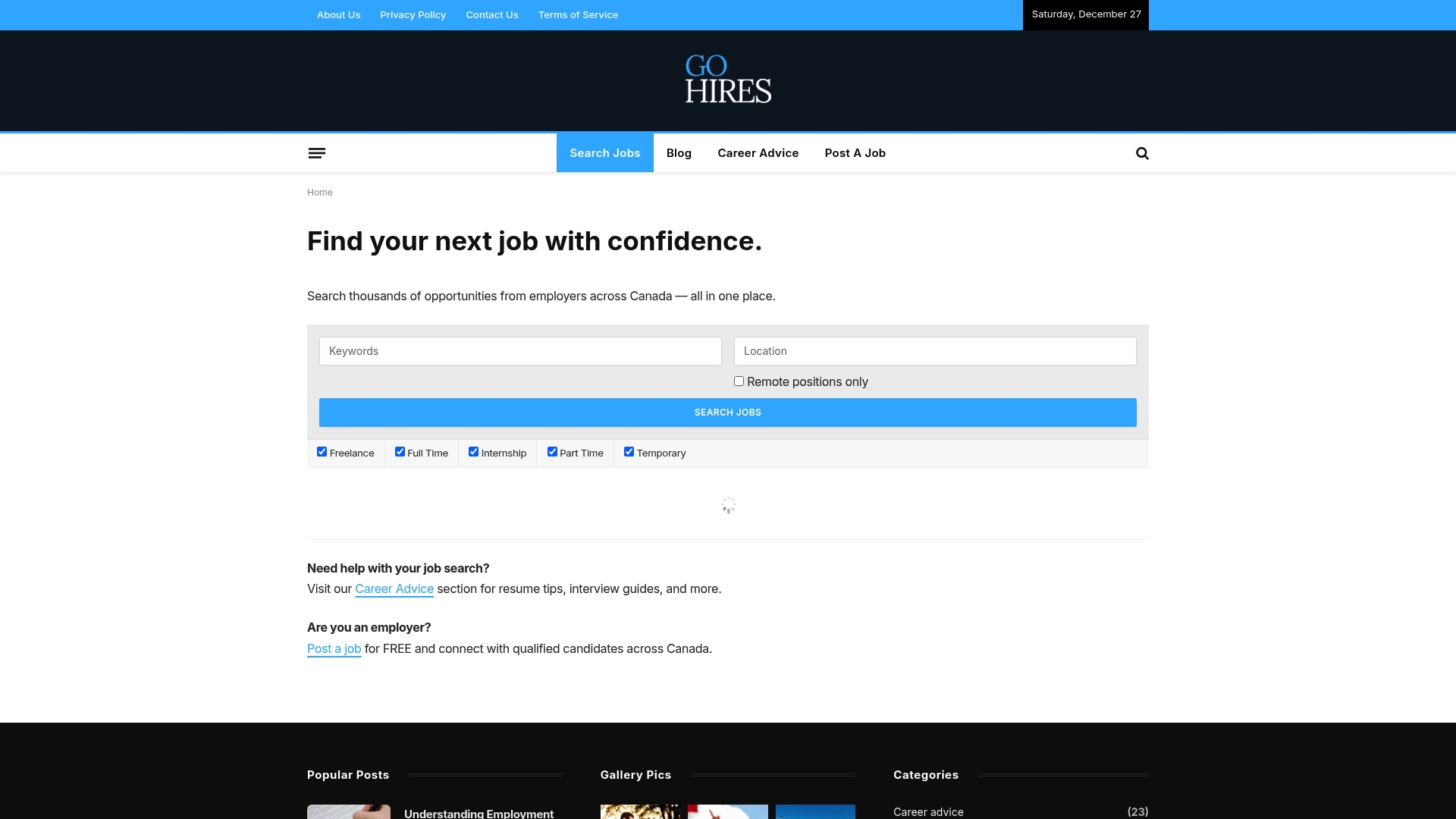
Take control of your career journey today by exploring Gohires.com where you can find up-to-date job listings filtered by location and employment types including internships and part-time roles. Use our platform to connect with employers aware of Canada’s current labour shortages. Don’t let regional disparities or skill mismatches hold you back when opportunities await. Visit Gohires.com now and start applying smarter with tools and advice designed for newcomers and recent graduates aiming to succeed in the Canadian market.
Frequently Asked Questions
What factors are shaping the Canadian labour market in 2024?
Canada’s labour market is influenced by economic growth, demographic shifts such as an aging population, and regional variations in employment opportunities. These factors create both challenges and opportunities for job seekers.
Which sectors are currently experiencing labour shortages in Canada?
Sectors experiencing labour shortages include healthcare, skilled trades, and technology. These industries are actively seeking entry-level workers as well as experienced professionals to fill the gaps left by retiring workers.
How can recent graduates improve their chances of getting hired in the current job market?
Recent graduates can enhance their employability by building relevant soft skills, gaining practical experience through internships or volunteering, and networking to access unadvertised job openings. Tailoring applications to specific positions also increases their chances of success.
What legal protections do workers in Canada have during their employment?
Workers in Canada are protected by laws that prohibit discrimination, ensure safe working conditions, and establish rights such as minimum wage and overtime pay. These protections apply universally to full-time, part-time, and contract workers, regardless of their immigration status.