


Searching for your first job in Canada can feel overwhelming, especially when every application seems to need a different set of documents, strategies, and professional profiles. Making sense of Canadian employer expectations and local hiring standards can leave you questioning if your international experience is truly valued. The reality is, with the right techniques, you can present your skills in a way that impresses Canadian hiring managers and stands out from the crowd. In the steps ahead, you’ll discover actionable methods for optimizing your resume, building a strong LinkedIn profile, researching target companies, and more. Get ready to unlock the specific strategies that can turn your Canadian job search into real opportunities.
Table of Contents
- Update And Tailor Your Resume For Canadian Employers
- Build A Strong And Professional LinkedIn Profile
- Research Companies And Identify Target Employers
- Write Customized Cover Letters For Each Application
- Prepare References And Contact Information
- Organize And Track Job Applications Effectively
- Practice For Interviews With Common Canadian Questions
Quick Summary
| Takeaway | Explanation |
|---|---|
| 1. Customize Your Resume for Canada | Tailor your resume format and content to meet Canadian employers’ expectations for clarity and relevance. |
| 2. Optimize Your LinkedIn Profile | Present a professional image with a strong summary and relevant skills to attract potential employers. |
| 3. Conduct Comprehensive Company Research | Understand targeted employers to refine your applications and demonstrate genuine interest during interviews. |
| 4. Personalize Cover Letters for Each Job | Address specific job requirements and company values to showcase your unique qualifications effectively. |
| 5. Prepare Thoughtful References | Select references who can authentically endorse your skills, and keep them informed about your job applications. |
1. Update and Tailor Your Resume for Canadian Employers
Employers in Canada look for specific details and formatting that differ from resumes in other countries. Creating a Canadian style resume requires strategic modifications that highlight your professional potential and align with local expectations.
Resume customization goes beyond simply translating your existing document. Canadian employers prioritize concise, clear presentations that quickly demonstrate your professional value. This means restructuring your resume to match North American professional standards, which often differ significantly from international formats.
Key modifications include:
Professional Format
- Use a clean, standard font like Arial or Calibri
- Maintain consistent 10-12 point font size
- Include minimal design elements
- Limit resume to 1-2 pages maximum
Content Optimization
- Emphasize quantifiable achievements
- Use strong action verbs
- Translate international credentials into Canadian equivalents
- Highlight skills directly relevant to Canadian job market
When tailoring your resume, focus on Canadian resume writing techniques that showcase your adaptability and professional potential. Canadian employers appreciate candidates who demonstrate clear communication and understanding of local professional norms.
Pro tip: Consider having a Canadian professional or recruiter review your resume to ensure it meets local standards and expectations.
2. Build a Strong and Professional LinkedIn Profile
LinkedIn has become a critical platform for professional networking in Canada, serving as a virtual resume and connection hub for job seekers. Your profile is essentially your online professional representation and can significantly impact your employment opportunities.
Creating a compelling LinkedIn profile requires strategic attention to detail and professional presentation. Canadian employers frequently review online professional profiles as part of their candidate assessment process, making a well crafted profile crucial for job search success.
Key Profile Optimization Strategies
Professional Headshot
- Use a clear high resolution photo
- Dress in professional business attire
- Select a neutral background
- Ensure good lighting and facial clarity
Profile Summary
- Write a concise professional narrative
- Highlight key skills and career objectives
- Use industry specific keywords
- Demonstrate your unique professional value
Work Experience Section
- Include detailed job descriptions
- Quantify professional achievements
- Use action oriented language
- Align descriptions with Canadian job market expectations
Professional networking requires more than just creating a profile. LinkedIn networking techniques can help you maximize your online professional presence and connect with potential employers.
Pro tip: Update your LinkedIn profile weekly and engage with professional content to increase your visibility and demonstrate active career management.
3. Research Companies and Identify Target Employers
Successful job searches in Canada require strategic and targeted employer research. Understanding the landscape of potential employers helps you craft more precise applications and demonstrate genuine interest during interviews.
Research goes beyond simply browsing job postings. It involves developing a comprehensive understanding of organizations that align with your professional goals and skills. This targeted approach increases your chances of finding meaningful employment opportunities.
Research Strategies
Online Research Techniques
- Review company websites thoroughly
- Check LinkedIn company pages
- Read recent press releases
- Analyze company financial reports
- Explore industry news and trends
Employer Insight Sources
- Glassdoor reviews
- Professional networking forums
- Industry association websites
- Alumni network connections
- Company social media profiles
Canadian job markets often reward candidates who demonstrate comprehensive employer research techniques. Understanding an organization’s mission, culture, and strategic objectives can help you customize your application effectively.
Additional Research Considerations
- Identify company size and growth trajectory
- Understand organizational values
- Research potential career advancement opportunities
- Explore company technological infrastructure
- Analyze competitive positioning within industry
Pro tip: Create a spreadsheet tracking target employers, including contact information, recent news, and potential networking connections to streamline your job search process.
4. Write Customized Cover Letters for Each Application
A generic cover letter signals minimal effort and reduces your chances of standing out in the competitive Canadian job market. Customized cover letters demonstrate your genuine interest and specific value proposition to potential employers.
Every job application requires a tailored approach that highlights your unique qualifications and directly addresses the employer’s specific needs. This means going beyond template language and creating a document that speaks directly to the job description and organizational context.
Cover Letter Customization Strategies
Content Personalization
- Research the specific company
- Address the hiring manager by name
- Reference specific job requirements
- Highlight relevant skills and experiences
- Align your background with company values
Structural Elements
- Use professional business letter format
- Keep length to one page
- Include clear paragraphs
- Maintain consistent font and formatting
- Proofread meticulously
Canadian employers appreciate candidates who demonstrate professional cover letter techniques that showcase attention to detail and genuine engagement.
Key Customization Techniques
- Analyze job description keywords
- Match skills directly to requirements
- Provide specific professional examples
- Explain your motivation for applying
- Show understanding of company mission
Pro tip: Create a master cover letter template with modular sections that can be quickly adapted for different job applications, saving time while maintaining customization.
5. Prepare References and Contact Information
Strategic reference preparation can significantly impact your job application success in the Canadian employment market. Your professional references serve as critical validators of your skills and work performance.
References are more than a formality. They represent your professional network and potential endorsements that employers use to assess your reliability and potential fit within their organization.
Reference Selection Strategies
Choosing Quality References
- Select professional contacts who know your work
- Prioritize recent supervisors
- Include colleagues who can speak to your skills
- Avoid family members or personal friends
- Maintain diverse professional relationships
Contact Preparation Techniques
- Request permission before listing someone
- Provide reference context about potential job
- Share updated job description
- Confirm current contact information
- Offer brief background on application
Canadian employers value candidates who demonstrate professional reference management through thoughtful and strategic reference selection.
Reference Documentation
- Create professional reference list
- Include full name
- List current job title
- Add professional contact details
- Note professional relationship
Pro tip: Create a digital reference tracking spreadsheet with contact details, last communication date, and notes about each reference to manage your professional network effectively.
6. Organize and Track Job Applications Effectively
Successful job searching requires more than submitting applications. It demands strategic tracking and management to maximize your opportunities and demonstrate professional discipline.
Maintaining a systematic approach helps you monitor progress, follow up appropriately, and stay motivated throughout your job search journey. Disorganization can lead to missed opportunities and reduced chances of employment.
Application Tracking Methods
Digital Organization Techniques
- Create a dedicated job search spreadsheet
- Record application dates
- Note company contact information
- Track application status
- Document follow up communications
- Set reminder dates for next steps
Recommended Tracking Elements
- Company name
- Position title
- Application date
- Application method
- Contact person
- Current status
- Next action required
- Follow up date
Canadian job seekers can improve their search efficiency by understanding applicant tracking system strategies that enhance job application management.
Tracking Best Practices
- Use consistent tracking format
- Update records weekly
- Maintain professional communication logs
- Set realistic follow up timelines
- Remain adaptable and patient
Pro tip: Use color coding in your tracking spreadsheet to visually distinguish between different application stages and prioritize your job search activities.
7. Practice for Interviews with Common Canadian Questions
Interviews in the Canadian job market require strategic preparation and understanding of cultural communication nuances. Your ability to articulate your skills and experiences effectively can significantly impact your employment opportunities.
Canadian interviews often emphasize behavioral and situational questions that assess not just technical skills but also cultural fit and professional adaptability. Employers want to understand how you approach challenges and collaborate within team environments.
Interview Preparation Strategies
Common Question Categories
- Behavioral experiences
- Professional challenges
- Team collaboration scenarios
- Career motivation
- Personal work philosophy
STAR Method Practice
- Situation: Describe context
- Task: Explain your specific responsibility
- Action: Detail steps you took
- Result: Share positive outcomes
Language and Communication Skills
- Use clear professional language
- Demonstrate active listening
- Provide concise responses
- Show cultural awareness
- Maintain positive body language
Canadian employers appreciate candidates who demonstrate strategic interview preparation techniques that highlight professional competence and interpersonal skills.
Practice Techniques
- Record mock interview responses
- Practice with trusted professionals
- Research company background
- Anticipate potential questions
- Develop confident delivery
Pro tip: Create a personal story bank with 5 to 7 professional experiences that can be adapted to different interview questions, allowing flexible and authentic responses.
Below is a comprehensive table summarizing the strategies and steps discussed in the article for adapting and improving job searching materials and approaches for the Canadian job market.
| Aspect | Details | Benefits |
|---|---|---|
| Update Your Resume | Adapt the format to Canadian standards, emphasizing conciseness, achievements, and relevant skills. | Increased compatibility with Canadian employer expectations, enhancing candidacy appeal. |
| Create a LinkedIn Profile | Optimize your profile with a professional photo, strong summary, and detailed, action-oriented experience descriptions. | Improved visibility to employers and networking opportunities relevant to your career. |
| Research Employers | Conduct thorough research on potential employers through various platforms and build a detailed database for tracking. | Enhanced application precision and ability to personalize cover letters effectively. |
| Customize Cover Letters | Write personalized letters tailored to individual job descriptions, showcasing alignment with company values and needs. | Displays genuine interest and improves standing in competitive application processes. |
| Prepare References | Select references keenly, provide them with key job details, and keep their contact information current. | Provides strong endorsements that substantiate job application strengths. |
| Track Applications | Use spreadsheets or tools to monitor application statuses and plan structured follow-ups. | Maintains organization and ensures no opportunities are overlooked. |
| Prepare for Interviews | Practice answers to common and situational questions using frameworks like the STAR method. | Enhances communication of skills and experiences, increasing success rates in interviews. |
Streamline Your Canada Job Search with Expert Tools and Resources
Navigating the complexities of the Canadian job market can feel overwhelming. The article highlights key challenges such as crafting a Canadian style resume, tailoring custom cover letters, and mastering interview techniques that resonate with local employers. If you are aiming to overcome these hurdles while managing your applications effectively, you are not alone. Many job seekers struggle with staying organized and presenting themselves professionally to Canadian employers who demand clear communication and precise alignment with job requirements.
At Gohires.com, we understand these pain points and offer a comprehensive platform designed to make your job search smooth and successful. Our site provides access to thousands of job listings searchable by location, keywords, and employment type alongside valuable career advice on topics like resume writing, interview preparation, and cover letter customization. Avoid the frustration of scattered resources and let us help you tailor your applications and track progress in one central place.
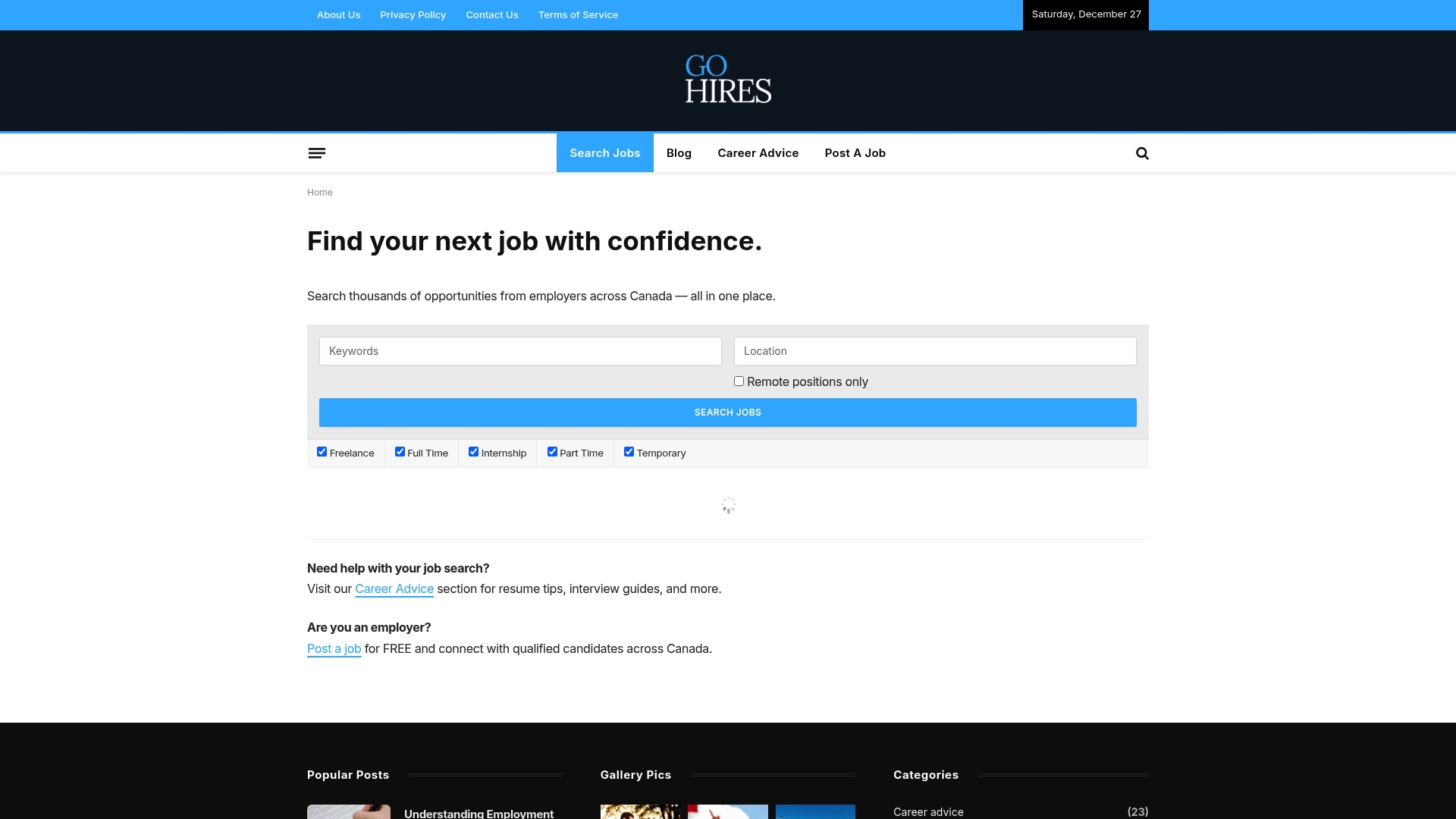
Take control of your Canadian job search today with Gohires.com. Discover tailored job opportunities, leverage expert tips, and build a professional profile that stands out. Visit https://gohires.com now to start applying smarter and seize your dream career in Canada.
Frequently Asked Questions
How can I customize my resume for Canadian job applications?
To customize your resume for Canadian job applications, focus on using a clear, professional format and including quantifiable achievements. Limit your resume to 1-2 pages and tailor the content to highlight skills relevant to the Canadian job market.
What are the key elements of a strong LinkedIn profile for job seekers in Canada?
A strong LinkedIn profile should feature a professional headshot, a concise summary of your career objectives, and detailed work experience that highlights your achievements. Regularly update your profile and engage with industry content to increase visibility and demonstrate active career management.
What should I research about potential employers in Canada?
When researching potential employers, focus on their company culture, mission, recent news, and any industry trends. Create a list of target employers and track your findings, which will help tailor your job applications and prepare for interviews.
How do I write a customized cover letter for job applications in Canada?
To write a customized cover letter, research the specific company and address the hiring manager by name. Clearly highlight your relevant skills, align your experiences with the job requirements, and explain why you are a good fit for the organization.
What strategies should I use to prepare professional references?
Choose references who can speak positively about your work, such as recent supervisors or colleagues. Ask for permission to list them, provide context about the job you’re applying for, and keep their contact information updated to ensure they are prepared to respond when contacted.
How can I effectively track my job applications?
You can effectively track your job applications by creating a dedicated spreadsheet that records key information like application dates, company names, and follow-up actions. Update your tracking regularly to maintain organization and stay on top of your applications.