


Last updated: October 7, 2026.
Quick answer
British Columbia is projected to have 1,052,000 job openings from 2025 to 2035, according to WorkBC. About 687,000 are expected to come from replacement demand, mainly as workers retire, while 365,000 are projected to be new jobs created through economic growth. The strongest long-term career areas include health care, professional and technical services, skilled trades, construction, business and finance, education, transportation, and selected resource and industrial roles.
For job seekers, the important detail is geography. The Mainland/Southwest accounts for about 680,000 projected openings, but northern B.C. is seeing a different kind of opportunity tied to LNG, electricity transmission, mining, ports and industrial projects. On September 28, 2026, LNG Canada reached a final investment decision on Phase 2 in Kitimat, creating a more concrete hiring pipeline for construction, trades, engineering, commissioning and later operations.
This guide combines the B.C. Labour Market Outlook with current major-project evidence to answer a practical question: which B.C. careers have durable demand, what do they pay, where is the work likely to be, and what should a job seeker do next?
Important: projected job openings are not the same as current vacancies. Many openings are expected over a 10-year period, and some major-project employment figures are forecasts rather than jobs already posted.
What is driving B.C. hiring through 2035?
WorkBC projects 1.052 million openings over the decade. The forecast reflects both economic growth and the need to replace workers who retire or leave occupations. Replacement demand matters because an occupation can offer substantial hiring opportunity even if the total number of jobs in that occupation is not growing quickly.
Data graphic 1: where B.C. job openings are concentrated
Sales and service – 219,200
Business, finance and administration – 196,200
Trades, transport and equipment – 168,300
Education, law, social and government services – 120,800
Natural and applied sciences – 118,900
Source: WorkBC Labour Market Outlook 2025, covering 2025-2035. These are forecast openings, not current job postings.

The strongest B.C. career areas
1. Health care and social assistance
Health care and social assistance is projected to generate about 199,200 openings, the largest total of any major B.C. industry in the WorkBC outlook. The demand is broad: hospitals, ambulatory care, long-term care, community services and specialized clinical roles all contribute.
Registered nurses and registered psychiatric nurses are a useful example. WorkBC projects 28,440 openings from 2025 to 2035 and reports annual earnings of about C$87,230, with a provincial median wage of C$47.58 per hour. Nursing normally requires a university degree and professional registration. Health-care careers can offer strong long-term demand, but licensing and clinical training requirements make them less suitable for a quick career switch.
2. Technology and professional services
Professional, scientific and technical services are projected to generate about 162,200 openings. In the Mainland/Southwest region, computer systems design and related services alone account for a projected 75,100 openings, according to WorkBC.
Software developers and programmers are projected to have 11,150 openings across B.C. from 2025 to 2035. WorkBC reports annual earnings around C$107,315. Demand is strongest for workers who move beyond routine coding and build deeper capability in cloud systems, cybersecurity, data, AI-enabled products, architecture, industrial software and complex systems.
Readers interested in the infrastructure side of technology should also see the GoHires guide to AI data centre careers in Canada.
3. Skilled trades and construction
Trades, transport and equipment occupations are projected to account for 168,300 openings. WorkBC separately identifies 15 high-demand skilled trades with a combined 72,070 openings over the decade.
Carpenters are projected to have 10,420 openings, with annual earnings around C$65,082. Electricians, excluding industrial and power-system electricians, are projected to have 3,930 openings and annual earnings around C$68,666. Industrial electricians are projected to have 1,040 openings and annual earnings around C$98,177. Heavy-duty equipment mechanics are projected to have 2,350 openings and annual earnings around C$102,395.
Those earnings are provincial historical labour-market estimates, not guaranteed starting salaries. Project work, union agreements, overtime, remote locations, specialization and experience can materially change compensation.
For the national apprenticeship picture, see Skilled Trades Careers in Canada.
4. Construction management and project delivery
Major-project hiring is not limited to hands-on trades. WorkBC projects 9,050 openings for construction managers from 2025 to 2035 and reports annual earnings around C$111,671. Large projects also need planners, estimators, schedulers, cost controllers, procurement specialists, safety professionals, quality specialists, document controllers and project coordinators.
For experienced tradespeople, moving into supervision, estimating, commissioning or project controls can be a practical path to higher responsibility without abandoning sector experience.
Selected careers: openings, pay and training
| Career | Projected B.C. openings 2025-2035 | WorkBC annual earnings | Typical training signal | Why it matters |
|---|---|---|---|---|
| Registered nurses and registered psychiatric nurses | 28,440 | C$87,230 | University degree plus professional registration | Large health-care demand and strong replacement needs |
| Software developers and programmers | 11,150 | C$107,315 | Usually university degree | Strong professional-services growth, especially in Mainland/Southwest |
| Carpenters | 10,420 | C$65,082 | Apprenticeship or trade training | Housing, commercial work and major infrastructure |
| Construction managers | 9,050 | C$111,671 | Experience plus management or construction education | Needed across housing, infrastructure and industrial projects |
| Heavy-duty equipment mechanics | 2,350 | C$102,395 | Apprenticeship or trade training | Relevant to mining, construction, transportation, forestry and energy |
| Industrial electricians | 1,040 | C$98,177 | Apprenticeship or trade training | Automation, plants, mines, LNG, industrial maintenance and controls |
Source: WorkBC career profiles and the B.C. Labour Market Outlook. WorkBC earnings are based on provincial labour-market information and 2025 Job Bank wage data. They should be treated as labour-market benchmarks, not offers or guaranteed salaries.
Where are the jobs? B.C. is not one labour market
Data graphic 2: projected openings by B.C. region, 2025-2035
Mainland/Southwest – 680,000
Vancouver Island/Coast – 188,600
Thompson-Okanagan – 110,500
Kootenay – 26,800
Cariboo – 21,700
North Coast and Nechako – 13,700
Northeast – 10,700
Source: WorkBC. Regional totals reflect the overall labour market. A smaller region can still have intense demand in specific project occupations.
Mainland/Southwest: the broadest opportunity base
The Mainland/Southwest region is projected to account for about 680,000 openings. The region combines technology, health care, finance, construction, transportation, professional services and a large consumer economy. WorkBC projects about 75,100 openings in computer systems design and related services alone.
Vancouver Island/Coast: health care, services and selected infrastructure
Vancouver Island/Coast is projected to have about 188,600 openings. Hospitals, ambulatory health services, retail and professional services feature prominently. The region also has infrastructure and clean-energy projects that can create temporary project demand.
Thompson-Okanagan: mixed growth with health care and construction
Thompson-Okanagan is projected to have about 110,500 openings. Health care, specialty trades, professional services and retail are important, while major industrial and mining projects can create additional localized demand.
Northern B.C.: smaller labour markets, larger project effects
North Coast and Nechako is projected to have 13,700 openings and the Northeast 10,700. Those totals are far below Metro Vancouver, but a major LNG, mining, transmission or pipeline project can materially affect hiring in a smaller regional workforce. That is why GoHires treats northern B.C. as a project-driven labour market as well as a conventional regional labour market.
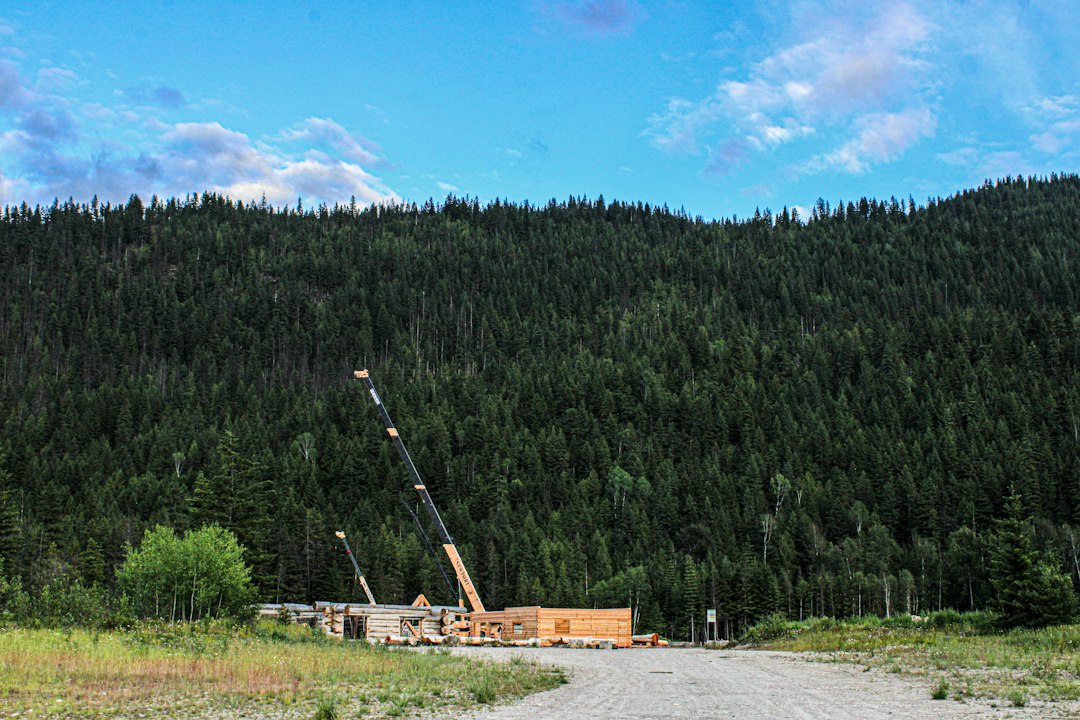
Major B.C. projects creating career signals
LNG Canada Phase 2: final investment decision reached
On September 28, 2026, LNG Canada announced a final investment decision for Phase 2 in Kitimat. The expansion is designed to double LNG production capacity from 14 million to 28 million tonnes per year.
Current hiring signal: LNG Canada now lists BKJV as an awarded Phase 2 construction contractor for demolition work. That does not mean every Phase 2 role is open today, but it is a stronger execution-stage signal than FID alone because identifiable contractor mobilization has begun. Job seekers should monitor LNG Canada procurement updates and the awarded contractors’ own career pages as additional packages are issued.
LNG Canada expects up to 4,000 new construction jobs at peak in Kitimat. When the expanded facility is complete, the company expects about 90 additional full-time roles and 150 contractor positions on top of the existing operational workforce. These are company projections, not current vacancies.
Separately, TC Energy says Coastal GasLink Phase 2 is proceeding and estimates up to 2,100 people at peak construction across five sites. Construction is expected to begin in early 2027, with in-service targeted for the early 2030s.
The federal Major Projects Office describes LNG Canada Phase 2 as expected to attract about C$33 billion in private-sector capital. GoHires treats that as an expected project-capital figure, not money already deployed.
North Coast Transmission Line: electricity as a jobs enabler
B.C. says construction is underway on the North Coast Transmission Line. The province expects up to 1,400 workers at peak construction. It also says the industrial projects enabled by the line could create about 9,700 direct full-time jobs. That 9,700 figure should not be read as employment on the transmission line itself. It includes jobs connected to projects that the expanded electricity system is intended to support.
Mining and critical minerals
WorkBC identifies the Red Chris Mine expansion and the Baptiste Nickel project among major North Coast and Nechako projects to watch. Mining demand can extend beyond miners and engineers to heavy-duty mechanics, electricians, millwrights, environmental specialists, surveyors, safety staff, logistics workers and camp-support roles.
For a national view of this cluster, see Mining & Critical Minerals Careers in Canada.
GoHires project-to-career matrix
| Project stage | Roles that often appear first | Roles that grow later | Job-seeker move |
|---|---|---|---|
| Planning and engineering | Engineering, environmental, procurement, design, permitting, project controls | Construction management and contractor mobilization | Track EPC firms, consultants and owner teams before mass hiring starts |
| Early construction | Site prep, civil, equipment operators, safety, logistics, supervisors | Electrical, mechanical, piping, instrumentation, quality | Prepare tickets, trade registration, safety credentials and project-ready resume |
| Peak construction | Trades, forepersons, planners, QA/QC, material coordination | Commissioning and turnover | Apply to contractors and subcontractors, not only the project owner |
| Operations | Operators, maintenance, reliability, instrumentation, safety | Supervision, specialist maintenance, continuous improvement | Shift from project keywords to operations and maintenance keywords |
GoHires interpretation: a final investment decision is often more useful to a job seeker than a large early-stage announcement because it can trigger procurement, contractor mobilization, detailed engineering and construction planning. It still does not mean every projected role is hiring immediately.
How to choose a B.C. career path
If you want the fastest route into a durable career
Consider apprenticeships and technical occupations where employers combine paid work with structured training. SkilledTradesBC says most apprenticeships average about four years and are approximately 80% work-based training and 20% classroom training. Many trades also offer Red Seal certification, which improves mobility across Canada.
If you already have a degree
Look for adjacent sectors before starting over. A software professional may move toward industrial systems, cloud infrastructure, cybersecurity or data-centre operations. An engineer may move into energy, mining, construction, utilities or project delivery. A business professional may move into procurement, supply chain, project controls, finance or contract management.
If you are changing careers without a degree
Do not assume every high-paying career requires university. Apprenticeship trades, technical diplomas and industry credentials can create strong outcomes, especially where projects need licensed or hard-to-replace skills. Compare training time, cost, certification requirements, geographic mobility and the physical nature of the work before deciding.
If you are a newcomer to B.C.
Start by checking whether your occupation is regulated. A strong overseas resume does not automatically transfer into a regulated profession or compulsory trade. Verify licensing, certification and credential-recognition requirements before paying for new training.
A practical 30-day action plan
- Choose one career family, not ten. Use the GoHires Career Path Finder to narrow options.
- Check the B.C. outlook. Confirm projected openings, regional concentration, education requirements and earnings using WorkBC.
- Identify the hiring engine. Decide whether your target role is driven mainly by health demand, professional services, replacement demand, housing, or major projects.
- Map the credential gap. For trades, review SkilledTradesBC apprenticeship pathways. For regulated professions, check the relevant regulator.
- Build an employer list. Include owners, prime contractors, subcontractors, consultants, utilities, health authorities and public employers.
- Track project milestones. Final investment decisions, permits, contractor awards, site mobilization and commissioning dates can be more useful than general news headlines.
- Benchmark pay carefully. Use provincial wage data and the GoHires Salary Database, but compare experience level, region, union status and overtime.
- Tailor your resume to the role. Use the free GoHires resume and job match tool to identify missing keywords and evidence.
Common mistakes
- Treating a 10-year forecast as today’s job board. Forecast openings occur over time.
- Assuming every major-project job is permanent. Construction can create intense but temporary demand, while operations teams are usually much smaller.
- Applying only to the project owner. Contractors, subcontractors, engineering firms and service providers often hire much of the project workforce.
- Ignoring geography. Vancouver technology demand and Kitimat LNG demand are different labour markets.
- Choosing training before checking licensing. Verify the credential that employers or regulators actually require.
- Following salary headlines without context. Province, occupation, experience, shifts, overtime and union agreements all matter.
What could change this outlook?
Labour-market forecasts are not guarantees. Immigration levels, interest rates, commodity prices, trade conditions, project approvals, technology, AI adoption and population growth can all change the number and type of openings. WorkBC itself notes that its 2025 outlook does not fully capture recently fast-tracked major projects. That makes recurring updates important.
For major projects, GoHires will update this guide when projects move through meaningful stages such as final investment decision, contractor award, construction start, major hiring, commissioning or operations. For Canada-wide project monitoring, bookmark the Canada Investment & Jobs Tracker.
FAQ
What careers are most in demand in British Columbia?
There is no single correct list. WorkBC projects the largest broad volumes of openings in sales and service, business and finance, trades and transport, education and social services, natural and applied sciences, and health. Within those categories, the best choice depends on pay, training time, region and your existing skills.
Which B.C. sector has the most projected job openings?
Health care and social assistance leads the major industry groups in the WorkBC 2025-2035 outlook with about 199,200 projected openings.
Are B.C. skilled trades still in demand?
Yes. WorkBC projects 72,070 openings across its 15 highest-demand trades from 2025 to 2035. Demand varies substantially by trade and region.
Will LNG Canada Phase 2 create permanent jobs?
LNG Canada says Phase 2 could create up to 4,000 new construction jobs at peak and, after completion, about 90 additional full-time roles plus 150 contractor positions. Construction roles and operating roles should be treated separately.
Is Vancouver the best place in B.C. for every career?
No. Mainland/Southwest has the largest and most diverse labour market, but northern B.C. can offer strong project-based demand in energy, mining, electricity, ports and industrial work. Vancouver Island and the Interior also have distinct health, construction, services and professional labour markets.
Sources and methodology
- WorkBC Labour Market Outlook 2025
- WorkBC Top Demand Trades
- LNG Canada Phase 2 final investment decision, September 28, 2026
- TC Energy Coastal GasLink Phase 2 announcement
- B.C. government North Coast Transmission Line update
- SkilledTradesBC apprenticeship guidance
Methodology note: GoHires separates labour-market forecasts, historical earnings, project investment values, projected construction employment and long-term operating roles. We do not add overlapping job estimates unless sources establish that they are additive. Salary and earnings figures are contextual benchmarks, not promises of individual compensation.